Wyze Cam v4: A $37.98 Camera and a Subscription That Tripled in March
Wyze retired its multi-camera Cam Plus bundles in March 2026 and raised the annual price by half. The hardware is fine. The terms around it changed after people bought.
In March 2026 Wyze retired the multi-camera Cam Plus licences. A household running three cameras went from $29.99 a year to $89.97, and four cameras went from $49.99 to $119.96, per the pricing Wyze posted in its own forum. Single-camera Cam Plus Annual rose in the same month, from $19.99 to $29.99. None of that touches the hardware, which is a 2.5K camera listed at $37.98 that records around the clock to a microSD card without anyone being paid. Both halves belong in the same decision.
March 2026: three cameras went from $29.99 a year to $89.97
The change was structural, not a percentage. Wyze had sold Cam Plus as multi-camera licence bundles, so a three-camera home paid $29.99 a year in total. Those bundles ended. Three cameras now means three individual annual licences at $29.99 each, or $89.97, and four means $119.96. That is a threefold jump for the exact same cameras on the same shelves, and one subscriber in Wyze’s forum wrote that a 3x increase is not how Wyze has always been before saying they had cancelled.
The single-camera annual price moved at the same time, from $19.99 to $29.99. Wyze’s support notice on the increase says monthly stays at $2.99, while Wyze’s own service-plans page the same day shows $2.49 a month. The notice also does not say whether existing subscribers are repriced when they renew, which is precisely the question a current owner has.
This is not the first time. On 15 February 2022 Wyze withdrew free unlimited cloud recording and replaced it with a pay-what-you-want tier called Cam Plus Lite: twelve-second event clips, at most one clip every five minutes, fourteen-day retention. Wyze Cam v1 owners were excluded from even that and lost cloud recording outright.
What $37.98 buys before Wyze asks for anything else
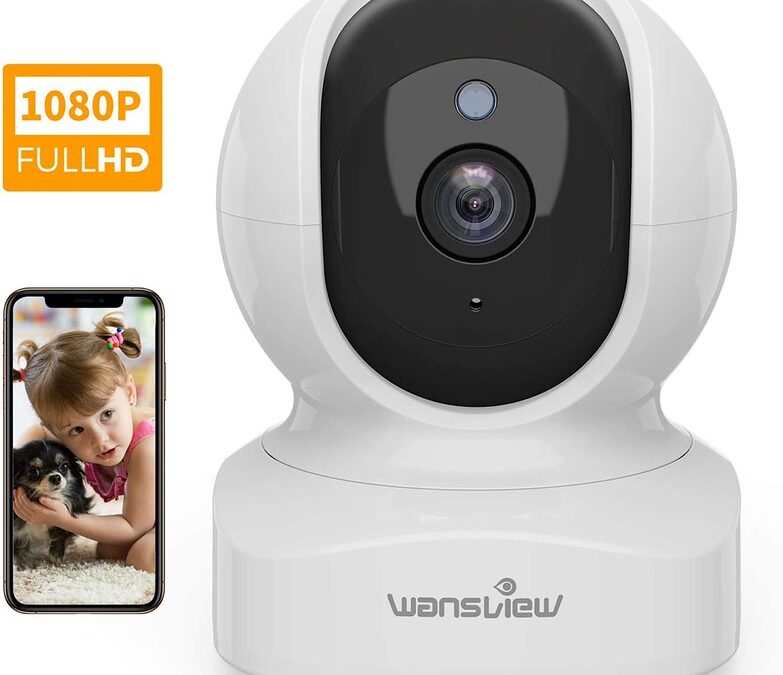
The v4 is a well-specified small camera for the money, and Wyze’s product page is where these figures come from.
- 2.5K QHD at 2560 by 1440
- Colour night vision using infrared plus 72-lumen white spotlight LEDs
- IP65 rating, wired through a six-foot USB cable
- Continuous local recording to microSD up to 256GB, card sold separately
- Two-way talk, a 99dB speaker and a siren
- Wi-Fi 6 but 2.4GHz only, plus Bluetooth 5.2, on a magnetic base
The alerts are the paywall
Cam Plus at $2.49 a month or $29.99 a year per camera buys fourteen days of cloud event history, person, vehicle, package and pet detection, sound alerts and web access. Cam Unlimited at $8.33 a month or $99.99 a year covers unlimited cameras and adds Friendly Faces, a multi-camera timeline and self-arming. Cam Unlimited Pro at $16.67 a month or $199.99 a year adds descriptive alerts, AI Video Search, sixty-day cloud recording and emergency dispatch. A Cloud 60 add-on stretches fourteen days to sixty for $2.99 per camera per month.
Drop all of it and the camera keeps motion and sound detection, local microSD recording, two-way talk and basic alerts. What goes is every form of object classification and every clip stored anywhere but the card. Worth noting: Wyze’s service-plans page does not document the free tier at all, so the capabilities you retain by paying nothing are described on the product page and nowhere in the pricing material.
Three years to patch three flaws
Bitdefender’s disclosure, reported by Consumer Reports, covers an authentication bypass, remote code execution and unauthorised access to SD-card video. All three needed local Wi-Fi access. The sequence is the point.
- March 2019: the flaws are reported to Wyze, which does not respond initially
- September 2019: the account bypass is patched
- November 2020: the code execution flaw is patched
- January 2022: the SD-card flaw is patched on most models
- February 2022: Wyze discontinues the Cam V1, citing hardware limits that made the SD-card flaw unpatchable, and offers owners a $3 discount on a replacement
- March 2022: Bitdefender goes public, three years after the first report
February 2024: 1,504 people watched strangers’ cameras
About 13,000 users were able to reach other users’ camera content, and 1,504 actually viewed it, roughly 0.25 percent of the user base. The exposed material was Events-tab clips. Wyze attributed it to a recently integrated third-party caching client library that buckled when devices reconnected together after an outage, mixing up device ID and user ID mapping and attaching data to the wrong accounts. Co-founder David Crosby said the company had removed the client library and would not use caching until it found a new one.
Two details complicate the account. Wyze blamed an AWS outage, and AWS reported no outage in the relevant window. And this was the second such incident: a smaller cross-account exposure in September 2023 was blamed on a web caching problem, five months before the larger one. Users in February described seeing other people’s porches, living rooms and footage from other time zones.
What Wyze did next is on the record and reasonably prompt: it revoked access to the Events tab, added a verification layer, forced token resets on user accounts and pulled the caching library out. The gap it has not closed is the pattern. A cross-account exposure in September 2023 and a much larger one in February 2024 in the same part of the product, both blamed on caching, is the kind of repetition that raises questions about institutional learning rather than about a single bad week.
Wyze’s own two pages disagree on whether you can buy one
On 1 September 2026 the Wyze Cam v4 product page rendered all three colourways as sold out or unavailable, while Wyze’s camera collection page listed the v4 In Stock at $37.98 the same day. Both are Wyze pages. Treat it as available and expect friction.
There is no Cam v5. Wyze’s full camera catalogue on that date contains no successor to the v4, which remains the current standard camera alongside the Cam Pan v4 at $49.98, the Cam OG at $29.98, the Battery Cam Pro at $59.98 and a floodlight range topping out at $119.98. Multi-packs of the v4 bring the unit price down slightly, to $36.99 in a two-pack and $36.66 in a three-pack, which is exactly the configuration the subscription change punishes.
The case for buying one anyway, with a card in it
Buy the v4 as a local camera and it is hard to beat at the price. A 256GB card, continuous recording, motion and sound alerts, two-way talk and a siren, for under $40 and no recurring cost, is a real proposition. The picture is good, the spotlight is genuinely useful, and IP65 means it survives a porch.
There is also a straightforward way to keep the useful parts and skip the increase. Object detection is what Cam Plus sells; continuous local recording to a 256GB card is what the camera does for nothing. For a driveway or a front door where you want to review what happened rather than be told about it in real time, the card is the feature and the subscription is optional. The households the March change actually hurts are the ones that wanted push alerts on four cameras, and for them the sums now favour Cam Unlimited at $99.99 a year over four separate Cam Plus licences at $119.96.
Buy it as the first of four and the arithmetic that made Wyze attractive is gone. Four cameras with alerts that distinguish a person from a passing car now cost $119.96 a year, or $99.99 for Cam Unlimited, which is a different category of spend than the $49.99 those four cameras used to require. Add the Cam V1 precedent, where discontinuation with minimal notice contradicted Wyze’s own end-of-life policy and drew a verdict of too little, too late from Consumer Reports, and the honest position is this: cheap hardware from a company whose terms have moved several times, worth buying with the assumption that they will move again.
Sources: Wyze · Wyze service plans · Wyze support and community forum · The Register · Consumer Reports
Articles on Read Vault are researched and written by the site’s editorial team.