Vienna is managing visitors with price and Medellin is managing them at the border
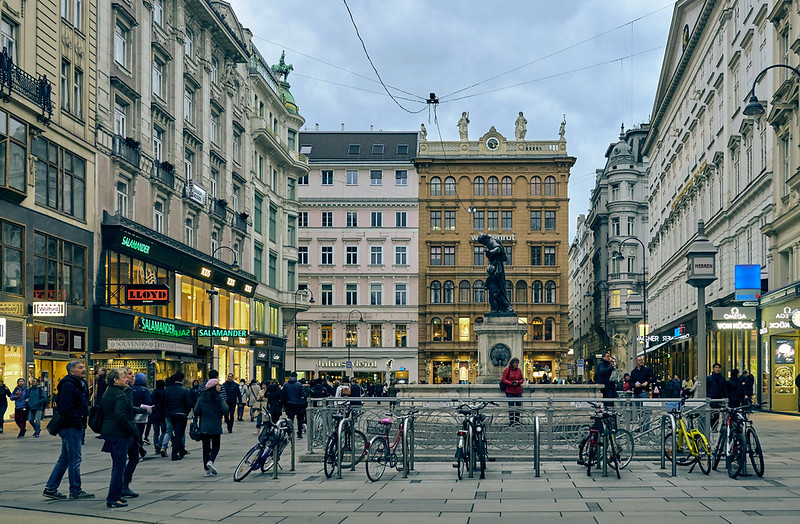
Two cities that have deliberately changed the terms on which travellers arrive. One raised a tax on a record year; the other started refusing entry to a specific kind of visitor.
Nobody weighs a Habsburg capital against a Colombian valley city when choosing a holiday, so the useful comparison is not which to pick. It is that both have recently decided their existing relationship with visitors was unsatisfactory, and both have acted, using instruments about as different as two cities could choose. Vienna has raised the price of staying. Medellin has changed who is allowed to arrive. For a traveller considering a longer stay in either, those two decisions say more about what the next few years will feel like than any list of attractions.
Two cities changing the terms on visitors
The instruments are worth naming precisely. Vienna’s is fiscal and applies to everyone equally: a percentage added to the accommodation bill, collected by hotels, invisible at the point of decision. Medellin’s is selective and applies to almost nobody: enforcement aimed at a particular category of visitor, with the ordinary traveller unaffected.
Both are responses to success rather than decline, which is the thing they genuinely share. Neither city is short of visitors. Both concluded that the composition or the cost of those visitors needed changing.
Vienna is using price
The local tax stood at 3.2 per cent of the accommodation charge until 30 June 2026. From 1 July 2026 it is 5 per cent, and it is scheduled to reach 8 per cent from July 2027. The calculation basis changed at the same time: it is now the accommodation fee less VAT and breakfast, with a previous 11 per cent lump-sum deduction removed, so the real increase is larger than the headline percentages suggest. Guests staying more than three continuous months are exempt.
The city was in no distress when it made that decision. Vienna recorded 20 million overnight stays in 2025, a 6 per cent rise, with accommodation revenue set to exceed the previous record of 1.4 billion euros. It counts 450 hotels and 84,600 beds, about 60 per cent in four- and five-star categories, and roughly 83 per cent of bednights came from abroad. Germany supplied 3.543 million, Austria 3.381 million, the United States 1.259 million, Italy 1.077 million and the United Kingdom 800,000.
Medellin is using the border
Colombia’s approach followed a 2024 case in which police found a 36-year-old American with two underage girls in an El Poblado hotel room. Mayor Federico Gutierrez suspended prostitution around four parks in El Poblado and cut nightclub operating hours. Colombia activated the Angel Watch programme, giving airport officials real-time access to United States sex offender registries.
The enforcement figures are the striking part. A 2026 Medellin travel guide published by a local operator reports that 73 tourists were denied entry at Colombian airports in the first five months of the year, alongside deportations of foreign residents promoting sex tourism carrying five to ten year bans. The same account notes overall tourism rose 26 per cent in 2024. A city can, it turns out, remove a category of visitor without damaging the rest of its market.
- Vienna: 3.2 per cent local tax until 30 June 2026
- Vienna: 5 per cent from 1 July 2026, with the 11 per cent lump-sum deduction removed from the basis
- Vienna: 8 per cent scheduled from July 2027
- Colombia: national advisory remains at reconsider travel, with several departments at the highest do-not-travel tier
A record year against a reputation problem
Vienna’s difficulty is that it has no obvious difficulty, which makes the tax rise hard to justify on need. A city with record bednights, record revenue and a hotel stock weighted to the upper end is choosing to raise money because it can, not because the alternative was decay. That is a legitimate choice and it deserves to be described accurately rather than dressed up as sustainability.
Medellin’s difficulty is the opposite: a reputation that lags a long way behind the city’s own trajectory, in both directions. It is safer and more functional than most visitors expect, and it also sits inside a country the United States places at reconsider travel, with Arauca, Cauca outside Popayan, Valle del Cauca outside Cali, Norte de Santander and the ten-kilometre Venezuelan border strip all at the highest do-not-travel tier. The advisory also notes drugging, extortion, kidnapping and armed break-ins occurring frequently in some regions, and flags landslide risk in mountain cities including Medellin.
What a month in each actually looks like
Vienna suits a long stay badly and a short one beautifully. Rooms are expensive, the tax is now meaningful on an extended booking, and the city is small enough to exhaust in a fortnight of concentrated visiting. The exemption for stays beyond three continuous months is the only real relief, and few travellers will reach it.
Medellin suits a long stay well and has attracted a substantial remote-working population on the back of Colombia’s digital nomad visa introduced in 2022. The honest reservations are that El Poblado and Provenza have become an expensive expatriate bubble with local rents rising accordingly, and that a visitor who never leaves them is not really in Medellin. The city’s own crackdown is a reminder that the relationship between long-stay foreigners and the neighbourhoods they occupy is contested here in a way it is not in Austria.
The limits of both approaches
Price does not change behaviour when the payer is wealthy, which is the flaw in the Viennese method. An 8 per cent levy on a 400-euro room will not alter a single booking, so the city gets revenue without any influence over how visitors behave once they arrive.
Border enforcement changes behaviour sharply but only for the category it targets, which is the flaw in the Medellin method. It does nothing about rents in Provenza, nothing about the pressure on a neighbourhood that has become a foreign enclave, and nothing about the broader security picture the national advisory describes. Both cities have done something real. Neither has done the harder thing, which is deciding what a sustainable number of visitors would be.
Sources: Vienna Tourist Board, local tax for hosts · Vienna Tourist Board, 2025 performance report · US Embassy in Colombia, travel advisory March 2026 · Guanabana Tours, Medellin travel guide 2026 · Medellin Group, Colombia tourism statistics 2025 to 2026
Articles on Read Vault are researched and written by the site’s editorial team.