Pull the Router Out: Which of the Sonos Era 100, the Lutron Caseta Kit and the Nest Hub Still Does Its Job
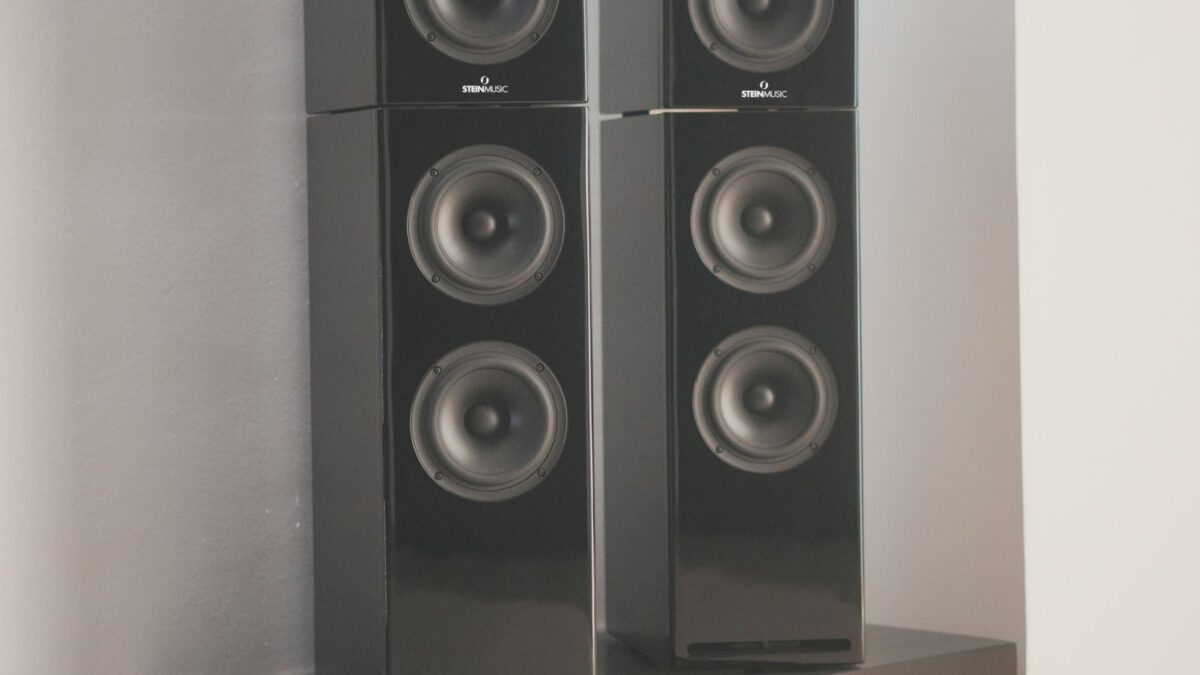
A speaker, a dimmer kit and a smart display are not rivals, and scoring them against each other is meaningless. Ask instead what each one can still do with the connection gone.
Grouping a $219 speaker, a lighting kit and a smart display is a shopping accident rather than a comparison, so this is not a three-way test. There is one question all three answer differently, and every owner eventually asks it: what happens when the connection goes. It is unusually live for the Nest Hub, because Google starts removing Google Assistant on 4 September 2026 and, as Tom’s Guide sets out, once it has gone from a device you cannot switch back. The other two fail in ways that have nothing to do with a router.
The dimmer never used your Wi-Fi in the first place
Lutron’s Diva Smart Dimmer Switch Kit, model DVRF-BDG-1D, contains a dimmer rated for 150W of dimmable LED or 600W of incandescent and halogen, a Pico Original remote, a Claro wallplate and bracket, a Smart Hub, and the wire connectors, screws, power supply and ethernet cable to install it. The switches do not run on Wi-Fi at all. They use Lutron’s proprietary Clear Connect RF, which the kit page states explicitly.
The consequence is mundane and valuable. The dimmer is a dimmer: it is screwed to the wall, it has buttons, and pressing them works whether or not anything else in the house does. Caseta also has no subscription of any kind, on any tier, for any feature, which in this category is worth stating out loud.
The price of that self-containment is isolation from the standards everyone else is converging on. Neither Matter nor Thread appears anywhere on Lutron’s Caseta pages. The system integrates broadly through its hub, naming Alexa, Apple Home, Google Home, SmartThings, Ring, Sonos, ecobee and IFTTT among others, but each of those is a bilateral arrangement rather than a standard, and every one of them runs through a cloud connection the switch itself does not need.
The speaker’s worst outage was not a network failure
Sonos owners lost functions in May 2024 without anybody unplugging anything. The app released on 7 May removed sleep timers, alarms, song-queue editing and screen-reader accessibility for blind and low-vision users, from speakers that had worked perfectly the day before. That is the failure mode to plan for on this product: not the router, the update.
The knock-on effects were not confined to software. TechRadar’s account of the year records that the Sonos Ace headphones were expected to sell around 2,500 units a day and reached roughly a tenth of that. A company that spends a year restoring functions is a company not shipping new ones, which is context for anyone buying an Era 100 today expecting the roadmap that was implied in 2023.
What the Era 100 can do with the app closed
Less than an owner might hope, and the fix costs extra. What Hi-Fi notes that the Era 100 has no 3.5mm socket, and that the USB-C to 3.5mm adapter is sold separately at $19, which the review calls a rather steep price. That adapter is the analogue input, which is to say the only path into the speaker that asks nothing of the network.
Two further limits deserve attention before purchase. Trueplay room correction remains iOS-only, with Android owners restricted to the reduced Quick Tuning that uses the speaker’s own microphone. And the Era 100 shipped without Google Assistant entirely, with Sonos citing a change in technical requirements; Sonos Voice Control, the alternative, is aimed at music playback rather than at controlling a smart home. If the plan was to run lights by voice from the speaker, that plan does not survive the specification sheet, let alone an outage.
Set against the other two devices here, that puts the Era 100 in the middle. It is not the dimmer, which needs nothing but mains power and a finger. It is not the display, which needs a data centre to answer a question about the weather. It is a speaker with physical controls on the top and a single wired input that costs $19 extra, which will play a turntable preamp with the internet switched off and will not do much else.
What the Era 100 is worth in 2026, and to whom
The honest position is conditional. If the household is on iOS, wants multi-room audio and treats voice control as a convenience rather than the interface, this is a well-reviewed speaker at $219 from a company that has spent two years repairing self-inflicted damage. If the household is on Android, the room correction that justifies part of the price is unavailable in its full form.
And if the reason for buying is smart-home control by voice, the Era 100 is the wrong purchase at any price, because Sonos Voice Control does not do it and Google Assistant is not there to. That is not a flaw discovered in use; it is on the review record from launch.
The display is the one that needs the data centre
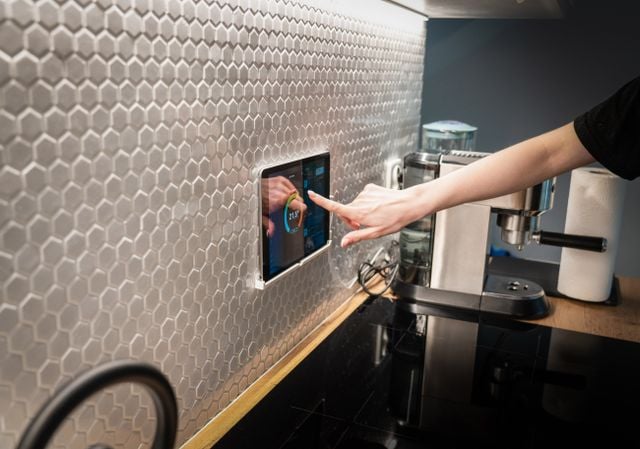
A Nest Hub without a working connection is a clock. Everything anybody actually asks it for is resolved somewhere else, which is why the move to Gemini has been felt so sharply. TechRadar reported in April 2026 that users were seeing seven to ten second delays on commands as basic as turning on a light, and in the worst cases delays of around five minutes on routines, quoting one owner saying it was so slow as to be almost worthless. Google’s own remediation claim, a 40 percent reduction in smart-home latency, is an admission of the size of the regression it was fixing, and it arrived alongside a rollout to 16 more countries and seven more languages rather than a pause.
Then there is the removal itself, beginning 4 September 2026 across phones, tablets, watches and paired devices, a process Google says may take a few weeks to reach everyone. Google TV and Google Home devices keep Assistant for now, so a Nest Hub is not scheduled to go dark this week. But the direction is set, the replacement is measurably slower on the exact tasks a kitchen display is used for, and there is no route back once a device has been moved across.
Three questions to ask about any device before you buy it
- Is there a physical control that works with the phone in another room? A Pico remote passes that test. A touchscreen that has to reach a server to dim a lamp does not.
- Does the basic function need an account? Dimming and playback do not. Voice assistance, video history and AI alerts always do, and those are the features being added fastest.
- What did the vendor do the last time its own software broke something? Sonos removed alarms and screen-reader support from working speakers and spent a year putting them back. Google is withdrawing an assistant with no way to return. Both answers are more predictive than any specification.
Sources: Caseta Wireless (Lutron) · TechRadar · What Hi-Fi? · TechRadar · Tom’s Guide
Articles on Read Vault are researched and written by the site’s editorial team.