Iceland’s Ring Road or the Cape: opposite hemispheres, so the calendar decides first
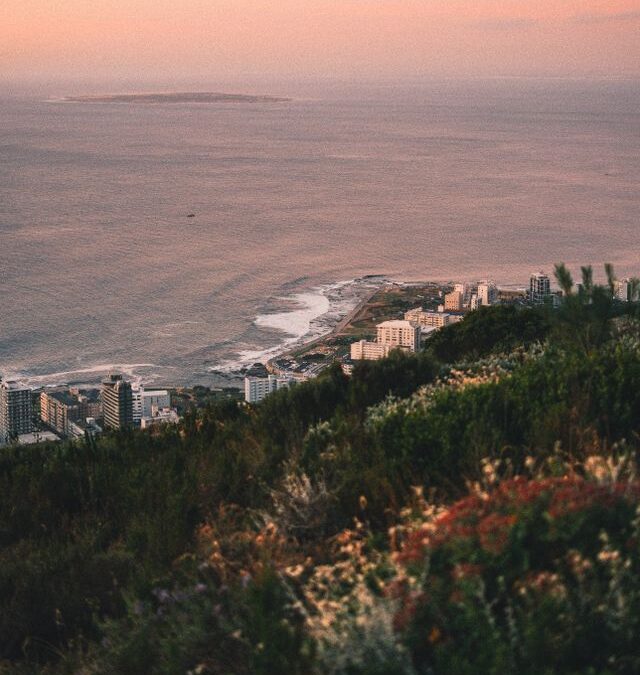
Both are long self-drive trips with a coastline and a big landscape. Because their seasons are inverted, the month you can travel eliminates one before anything else matters.
There is a legitimate comparison buried in this pairing, and it is not about which landscape is more impressive. Both are two-week self-drive trips where the road is the itinerary and the weather is the variable. Because they sit in opposite hemispheres, the first filter is the calendar rather than the budget: whichever months a reader can actually take will usually remove one of them outright. What remains after that is a genuine choice between two different kinds of risk on the road, and two very different ways of charging a visitor.
Season and charge, side by side
- Iceland accommodation tax: 800 kronur nightly in hotels and guesthouses, 400 on campsites
- Iceland cruise arrivals: 400 kronur per 24 hours plus a 1,600 kronur infrastructure fee per passenger
- South Africa launched an Electronic Travel Authorisation, announced on 14 May 2026, with dedicated airport lanes
- Cape Town dams stood at 70.5 per cent on 31 December 2025, 19.2 per cent below the previous year
The calendar filters before the budget does
Iceland’s usable driving season runs across the northern summer, when daylight is close to continuous and the highland tracks are open. The Cape’s warm, dry stretch falls across the southern summer, from roughly November to March. These do not overlap, which means a reader with fixed leave in July has effectively chosen Iceland, and one with fixed leave in January has chosen the Cape.
It is worth resisting the urge to travel either in its off-season. Iceland in winter is a different and much more constrained trip, and the Cape in June is wet and windy with the whales gone. Both can be done, but neither is the trip described in the marketing.
Iceland’s window is short, and that concentrates everyone
The season is narrow enough that the Ring Road in July is not a lonely road. The FCDO notes that many highland tracks open only for a short part of the summer, and that some routes require four-wheel drive. Booking in sequence along a loop is standard, which means accommodation fills early and a change of plan is expensive.
The volcanic question deserves a flat answer. The FCDO reports a series of eruptions on the Reykjanes peninsula since December 2023, the latest starting on 16 July 2025, with Grindavik and its surroundings the affected area and further activity considered likely. It states explicitly that Reykjavik, the international airport at Keflavik and the remainder of the country are not affected, and warns only against walking on newly solidified lava whose crust can give way. This is a localised problem rather than a national one.
The Cape’s window is long and comes with a water warning
The southern summer is generous, which makes the Cape the more flexible of the two on dates. The constraint is supply rather than season. At the end of December 2025 Cape Town’s dams stood at 70.5 per cent, some 19.2 per cent below the same point the previous year, with daily consumption at 1,025 million litres against a city target of under 975 million.
Officials were explicit that this is a call for restraint rather than a crisis, and visitors are named among those asked to help. Practically that means short showers, capped at a modest flow rate, and choosing accommodation that is honest about its water use. The city’s own guidance goes as far as recommending garden watering only before nine in the morning or after six in the evening, which is a useful signal of how seriously it is being taken.
Two kinds of risk behind the wheel
Icelandic risk is environmental and financial. Main routes may be gravel or dirt, bridges are often single-lane with passing areas, river crossings should be taken at five to ten kilometres per hour, and wind-driven sand and ash have left British tourists paying large sums for hire car damage. None of this is dangerous with sensible driving; all of it is expensive with careless driving.
South African risk is criminal and specific. The FCDO reports an increase in violent crime and targeted attacks on routes to and from Cape Town airport, including incidents involving visitors driving hire cars, and advises using the M3 and N2 rather than the R300 and avoiding Borcherd’s Quarry Road towards Nyanga. It also records recent violent attacks and muggings against hikers in Table Mountain National Park, particularly on quieter trails at either end of the day, recommending groups of four or more on busy marked routes. These are constraints a visitor can comply with, but they have to be known in advance.
What each actually charges once you are there
Iceland taxes lodging directly at 800 kronur a night for hotels and guesthouses and 400 for campsites, with cruise passengers paying 400 kronur per 24 hours plus a separate 1,600 kronur infrastructure fee. VAT is 24 per cent generally, with an 11 per cent band covering lodging, transport and food, and that reduced rate does a good deal of quiet work in a country this expensive.
South Africa’s visitor charges are minimal by comparison, and its recent change is administrative rather than financial. An Electronic Travel Authorisation was announced at Africa’s Travel Indaba in Durban on 14 May 2026, reporting a 94 per cent approval rate and sub-minute processing through dedicated lanes at O.R. Tambo, Cape Town and Lanseria. Renewals, family profiles and wider country coverage were still rolling out.
Neither is cheap, and they are expensive in different places
Iceland is expensive everywhere and predictably so: the fuel, the food, the beds and the vehicle all cost more than a European traveller expects, and there is very little scope to economise once the route is set. What it offers in exchange is near-total safety and roads that will not require a security briefing.
The Cape is far cheaper on the ground and considerably more demanding to plan. Food, wine and accommodation are excellent value, and the money saved is spent instead on care: routing decisions, guides for certain areas, and a willingness not to walk the empty trail at dusk. For a first long self-drive by a nervous traveller, Iceland is the safer recommendation despite the cost. For a traveller with more experience and less money, the Cape gives a great deal more for the same sum.
Sources: PwC Worldwide Tax Summaries, Iceland other taxes · FCDO travel advice, Iceland safety and security · FCDO travel advice, South Africa safety and security · SAnews, South Africa rolls out Electronic Travel Authorisation · TimesLIVE, Cape Town sounds water alarm before 2026
Articles on Read Vault are researched and written by the site’s editorial team.