Queenstown or Bali: the classic either-or, recosted for 2026
For anyone flying from Australia or south-east Asia these two really are alternatives. One charges heavily before you board; the other charges almost nothing and hopes you pay.
This is a comparison that survives contact with reality, because a very large number of travellers do choose between exactly these two: a week of cold-weather adrenaline on New Zealand’s South Island, or a week of heat and low daily costs on an Indonesian island. Both are heavily marketed, both are busy, and both have changed their charging in the past two years. The decision usually turns on money rather than taste, so this piece deals with money first, then with what each place is genuinely bad at, and finally with the weather that quietly settles it.
The either-or, priced as it actually falls in 2026
New Zealand collects at the border and it is not a token sum. The International Visitor Levy is NZ$100, charged at the point of an NZeTA request or visa application, and Immigration New Zealand is explicit that it is not refunded even where the application is declined. The NZeTA costs NZ$17 through the official app or NZ$23 online. Australian and New Zealand passport holders are exempt from the levy, as are many Pacific Island passport holders and Auckland transit passengers, which matters a great deal to the Australian market in particular.
Indonesia collects far less and collects it badly. The Bali tourism levy is Rp150,000 per person per entry, roughly the price of a decent lunch, payable through the official provincial portal or at airport counters that take cards only. The visa on arrival is a separate Rp500,000 for thirty days. Nothing about this materially affects a holiday budget.
Why the New Zealand cost is front-loaded and unavoidable
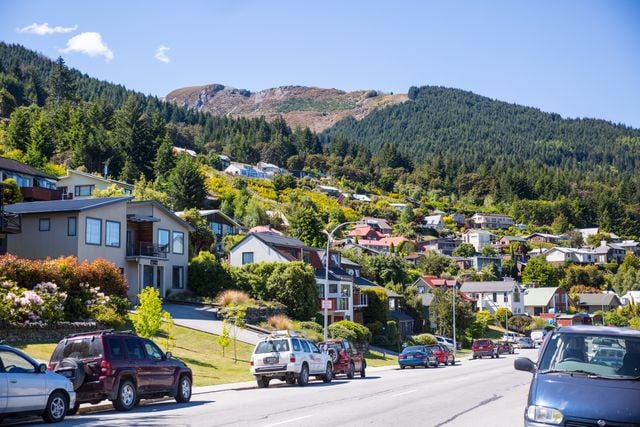
The levy is only the start of it. Queenstown is one of the most expensive places in New Zealand to sleep, particularly across the southern summer and the ski season, and the activities the town exists for are priced individually. A week of guided walks, a jet boat and a flight over the Remarkables adds up faster than the accommodation does.
There is also no local charge funding any of the infrastructure that visitors use. Three Otago councils pursued a bed-night levy applying to domestic and international guests, and an April 2026 regional deal committed the government to consider it in 2027. On 24 August 2026 the National Party ruled it out as part of a no-new-taxes election platform, with Queenstown Lakes mayor John Glover describing the reversal as collateral damage from policy being made in panic. Visitors save a few dollars a night and the town gets nothing.
Why the Balinese costs are small, scattered and easy to overpay
The levy has a compliance problem rather than a price problem. By early 2026 only around 35 to 40 per cent of eligible arrivals had paid it. Spot checks happen at Tanah Lot, Uluwatu and Besakih, where officers scan the QR voucher, and an unpaid visitor can settle it there by card. As of April 2026 there was no fine.
That vacuum has been filled by intermediaries. Drivers and messaging-app contacts offer to arrange payment at prices that are not the official price, and the only legitimate route is the provincial government portal. Pay it before flying and the whole issue disappears for the cost of a coffee.
- Request the NZeTA through the official app rather than the website if New Zealand is the choice, since it is cheaper
- Treat the NZ$100 levy as sunk at the moment of application, because it is not returned
- Pay the Bali levy on the official provincial portal before departure and save the QR voucher
- Buy the Indonesian visa on arrival separately and do not let a third party bundle the two
What each does badly
Queenstown’s weakness is fragility. Almost everything worth doing is outdoors and weather-dependent, and a week of low cloud can cancel the exact activities the trip was built around, with no refund on the flights. The town itself is small and its dining scene is thin relative to its prices.
Bali’s weakness is visible and getting worse. The island’s largest disposal site at Suwung has closed without an adequate replacement, and the waste-to-energy plant intended to succeed it is not expected to be finished until November 2027, with operation from that December. Residents in the tourist south report rubbish accumulating uncollected. Traffic in the southern strip is the other well-documented complaint, and neither problem is being solved on the timescale of anybody’s holiday.
Weather is the tiebreak, not the brochure
Bali’s dry season and New Zealand’s summer overlap awkwardly, which means a single set of dates rarely suits both. Anyone travelling in the middle of the year gets Bali at its best and Queenstown in ski season, which is its most expensive and most crowded. Anyone travelling around the turn of the year gets a fine New Zealand summer and the Balinese wet season.
One further point is worth making about shoulder dates. Queenstown between the ski season and the summer walking season is markedly cheaper and markedly less reliable, while Bali either side of the wet months is barely less pleasant and noticeably quieter. The flexible traveller gains far more by shifting Balinese dates than New Zealand ones.
The honest conclusion is unglamorous. If the budget is tight, Bali wins on cost by an enormous margin and the trade is waste, traffic and a levy system that puts the moral burden on the individual. If the point of the trip is to do things rather than to be somewhere warm, Queenstown is worth the front-loaded expense, but only with slack in the budget for weather days. A traveller who wants both cheapness and mountains is choosing badly, and should look elsewhere entirely.
Sources: Immigration New Zealand, International Visitor Levy · Tourism New Zealand, NZeTA costs · B2B News NZ, National rules out Queenstown bed tax · Bali Travel Life, Bali tourism levy guide · The Jakarta Post, tourism worsens Bali waste crisis
Articles on Read Vault are researched and written by the site’s editorial team.