One Went Up 40 Percent, One Fell From 849 Dollars, One Has No Published Price: Hue, Roomba and Kasa in 2026
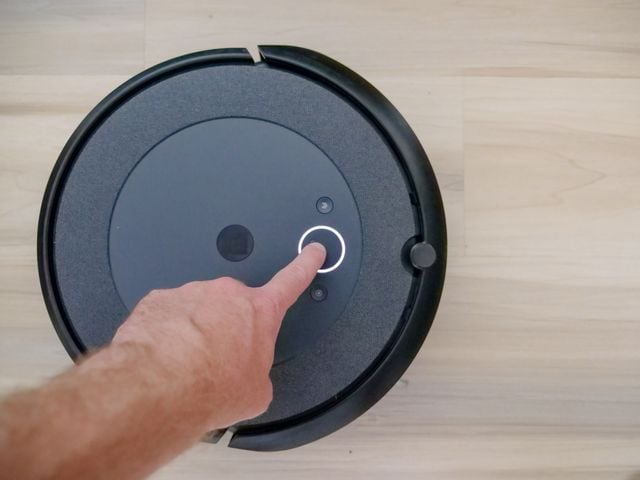
The Roomba j7+ is discontinued and iRobot was sold out of bankruptcy. Set beside Philips Hue and Kasa, it shows how differently prices have moved in this category since 2025.
Start with the product that cannot be bought. The Roomba j7+ is gone from iRobot’s own store, and iRobot filed for Chapter 11 on 14 December 2025, emerging in January 2026 wholly owned by Shenzhen Picea Robotics. Nothing here is a recommendation to buy one. What the j7+ is useful for is measurement: put it beside a Philips Hue starter kit and a four-pack of Kasa plugs and you have three products whose prices have moved in three directions since 2025, for three stated reasons, and the reasons predict the next two years better than any feature list.
Three price stories
- Hue Bridge Pro: $98.99 on the US store at launch in September 2025, $139.99 by 3 June 2026, with no public explanation from Signify
- The same bridge rose only about 11 percent in Europe over that period
- Roomba j7+ was announced in September 2021 at $849 with its Clean Base
- The nearest current equivalent, the Roomba 105 Combo with AutoEmpty Dock, is $269.99 on iRobot’s own store
- TP-Link prints no price at all for its Kasa plugs on its own product pages
The vacuum is not for sale, and neither is the company that made it
iRobot’s Roomba page lists no j7 and no j7+. The j7 survives only as a model you can trade in against something else. The current range runs from the Roomba 105 Vac with AutoEmpty Dock at $249.99 and the 105 Combo at $269.99, through the Plus 405 Combo at $799.99 and the 205 DustCompactor Combo at $469.99, up to the Max 705 Combo at $1,299.99 and the Combo 10 Max at $1,399.99.
The corporate story behind that is not background colour, because it determines whether an existing j7+ keeps working. The Robot Report records that Santrum Hong Kong, a subsidiary of Shenzhen Picea Robotics, bought $190.6 million of iRobot’s principal and interest from Carlyle Group affiliates in November 2025, that iRobot separately owed Picea $161.5 million for manufacturing with $90.9 million past due, and that Picea set a January 2026 deadline for audited financials or a forced bankruptcy. iRobot emerged from Chapter 11 as a wholly owned US subsidiary of Picea, still based in Bedford, Massachusetts, with Gary Cohen continuing as chief executive.
To address concerns about Chinese ownership, iRobot created iRobot Safe Corp, a US subsidiary governed by an independent board of US citizens with dedicated data-security staff. The company says it supports a fleet of more than 50 million devices already sold. That is the structure now standing behind the app a j7+ talks to.
What a j7+ owner should do this year
Nothing dramatic, and nothing that assumes the status quo holds. The vacuum works; no remote removal of j7+ features has been documented. The risks are continuity risks, and they are ordinary ones: cloud services for a discontinued model now run by a post-bankruptcy business under new ownership, and spare parts, which The Robot Report’s readers describe as thin even for recent machines.
So buy the consumables you know you will need while they are still stocked, keep the vacuum working rather than replacing it pre-emptively, and do not pay a legacy price to a third-party seller for a four-year-old flagship. If the machine does die, the self-emptying replacement from the same company costs $269.99, which is roughly a third of what the j7+ cost at launch.
Signify blamed tariffs in 2025, and said nothing in 2026
Philips Hue moved the other way, and said so on the record. Signify’s statement was unambiguous: it would raise prices across the Philips Hue portfolio in the US from 1 July 2025 as a direct result of tariffs. That is a manufacturer confirming in writing that American buyers pay more for identical hardware, which is more candour than most of this category offers.
The Hue Bridge Pro is the clearest case of what followed. It reached the US store in September 2025 at $98.99. By 3 June 2026 it was $139.99, an increase of roughly 40 percent, while the same product rose about 11 percent in Europe over the same period. Signify offered no public explanation for the American figure.
For a buyer that changes the shape of the decision. The bridge is not an accessory to a Hue system, it is the system’s ceiling, and it is the component that has inflated fastest. Anyone buying a starter kit should work out which bridge they will end up on before choosing between kits, because that is the number that will move again.
A plug whose maker will not print a number
TP-Link occupies the third position, with no price movement to report because there is no manufacturer price to move. Its Kasa plug pages carry specifications and a buy button that hands the shopper to a marketplace listing. Whatever a four-pack costs in a given week is a retailer’s decision, and there is no MSRP to check it against.
The version worth buying is a different model number from the one most guides name. The EP25 in the four-pack is not Matter-certified. The KP125M is, and can be set up by QR code straight from the Alexa, Google Home or Apple Home app, with no Kasa account in the process at all; it also works with Apple Siri and Samsung Bixby. For roughly comparable money, one plug binds a house to a vendor app and the other does not.
Why the three moved in different directions
None of this is general inflation, and treating it as such leads to the wrong purchases. Lighting has a dominant ecosystem with high switching costs, so prices rise and buyers absorb them, because the alternative is replacing every bulb. Robot vacuums had a manufacturer that ran out of money and a category filling with competent cheaper machines, so the flagship price collapsed and the same job now sells for a third of the 2021 figure. Smart plugs are a commodity with no lock-in worth defending, so the maker leaves pricing to whoever is selling them.
The advice follows from the structure rather than from the specifications. Buy the Hue bridge you actually need once, and assume everything around it creeps upward. Buy the Matter plug rather than the app-bound one, since the price is the same and only one of them survives a change of ecosystem. And do not pay a 2021 price for a 2021 flagship whose manufacturer spent 2025 in a bankruptcy court.
Sources: iRobot · The Robot Report · Hueblog · 9to5Google · Kasa Smart (TP-Link)
Articles on Read Vault are researched and written by the site’s editorial team.