Mexico City Is Arguing About You
Anti-gentrification protests, a fourteen-point city plan, a 180-day ceiling on short lets and World Cup hotel rates up by four figures. How to visit a capital mid-backlash.
In July 2025 a march through Roma and Condesa turned on the people who had made those neighbourhoods expensive, and slogans telling foreigners to leave went up on the walls. Within a week the city government answered with a fourteen-point plan aimed squarely at rents and short-term lets. This is not a reason to stay away. It is a reason to understand what a booking does here. The capital is enormous, most of it has never met a remote worker, and the districts under pressure are a small handful of colonias that any visitor can consciously decide to spread out from.
Fourteen measures, a rent cap and a 180-day ceiling
Mayor Clara Brugada presented her fourteen actions on 16 July 2025, days before a further demonstration. The headline items are a cap on rent increases at the official inflation rate, tighter oversight of short-term rental platforms, a tenant ombudsman handling illegal evictions, priority for public housing construction in central districts under real-estate pressure, and a housing observatory tracking prices and contracts.
That plan sits on top of an earlier and sharper measure. In October 2024 the city legislature approved a limit of 180 nights a year on any property let through a platform such as Airbnb, alongside a registry that hosts must join and twice-yearly occupancy reporting, with fines up to about 21,000 pesos for breaches. By April 2026 a constitutional reform to entrench rent controls was under discussion. Critics, including some of the plan’s own supporters, note that enforcement has consistently lagged the announcements.
Roma and Condesa are two colonias out of hundreds
Almost every complaint about tourist pressure in Mexico City concerns a contiguous strip perhaps four kilometres across. Outside it, Coyoacan and San Angel are older and quieter, Santa Maria la Ribera has the Kiosco Morisco and a fraction of the queues, Escandon and Narvarte are ordinary residential districts with excellent food, and the Centro Historico contains more genuinely significant architecture than the whole of Condesa.
Choosing accommodation outside the pressure zone is the single most useful thing a visitor can do, and it also produces a better trip. The metro is cheap, extensive and far quicker than a car at almost any hour, and the neighbourhoods further out are where the city’s cooking is least adapted to visitors.
The World Cup left a price memory
The tournament opened in Mexico City on 11 June 2026, with five matches at the Estadio Azteca. Hotel pricing around it was extraordinary: an analysis of six hotels near the ground found an average of about 1,572 dollars a night for the opening week against roughly 172 dollars in mid-May, an increase of some 961 per cent, with one Reforma property moving from 157 to 3,882 dollars.
Prices of that kind do not simply return to where they were. Operators have seen what the market will bear at peak, and the city’s lodging tax receipts rose sharply through the tournament. For anyone booking now, the practical advice is to check rates against a date two months either side of any major event, and to treat quoted room prices in Roma and Condesa as a negotiation rather than a market.
There is a broader lesson in those numbers about how this city prices. Mexico City runs two parallel economies for almost everything, one quoted in the international listings and one quoted on the street, and the difference is frequently a factor of five for a comparable meal. Neither is a scam. Knowing which one you are standing in is most of the skill of visiting cheaply here.
Altitude, drills and the four o’clock rain
- Give the altitude two days. The city sits at roughly 2,240 metres, and alcohol, exertion and sleep all behave differently at first.
- Learn the seismic alert. It sounds citywide, it is tested periodically, and the correct response is to move to a marked safe zone rather than to run into the street.
- Plan mornings for anything outdoors between May and October, when rain arrives as a heavy late-afternoon event rather than an all-day condition.
- Carry cash in small denominations for markets and the metro, and use cash machines inside banks rather than on the street.
- Check museum closures before travelling across the city: most of the major institutions close on Mondays, not Sundays.
Spending money where the city wants it spent
The anti-gentrification argument is not an argument against tourism receipts; it is an argument about which receipts reach residents. Hotels pay the lodging tax and employ people under contract. A significant share of short-let income leaves the neighbourhood entirely, and the 180-night cap exists precisely because the city concluded that year-round letting was removing housing from the market.
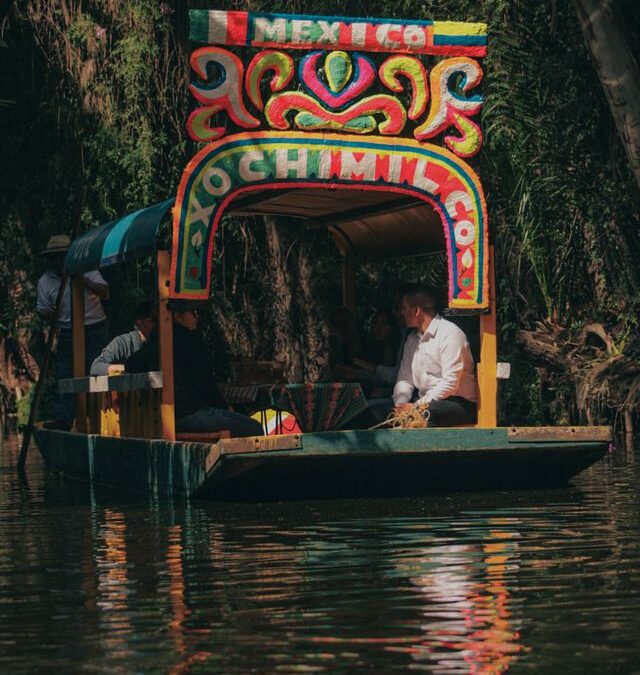
The version of a Mexico City trip that stands up to the criticism is not austere. It is a licensed hotel or a compliant short let outside the pressure zone, meals in fondas and markets as well as in tasting rooms, the metro rather than a private driver, and a willingness to visit Xochimilco, Tlalpan or the Bosque de Chapultepec’s fourth section instead of another brunch in Condesa.
Water is the constraint the argument keeps circling
Beneath the rent dispute sits a physical problem: a metropolis of more than twenty million people built on a drained lakebed, sinking as it draws down the aquifer under it. Supply is unequal by district, delivered by tanker in parts of the periphery, and the neighbourhoods with the most reliable taps are not the poorest ones.
No visitor fixes that, and a visitor can decline to make it worse. The habits that matter are short showers, refilling a bottle rather than buying by the crate, and recognising that a rooftop pool in this city is a political object in a way it simply is not in Lisbon or Vienna. It is also worth knowing that tap water is not drunk here even by residents, which is why purified water is delivered to almost every building.
Sources: Mexico Solidarity Media: Brugada’s 14 actions against gentrification · Mexico News Daily: Mexico City caps Airbnb rentals at 180 days · Mexico News Daily: Mexico City hotel prices spike ahead of the World Cup · El Universal: lodging tax receipts during the 2026 World Cup
Articles on Read Vault are researched and written by the site’s editorial team.