Roomba j7+, Sonos Era 100 and Nanoleaf Shapes: What Happened to the Three Companies Behind Them
A vacuum, a speaker and a set of light panels were never cross-shopped. What they share in 2026 is that all three makers hit serious trouble, and one of them stopped existing.
A robot vacuum, a bookshelf speaker and a set of wall-mounted light panels have never been alternatives, and this was not a real comparison to begin with. What connects them in 2026 is corporate rather than technical. iRobot filed for Chapter 11 on 14 December 2025, its shares stopped trading, and the company was bought outright by a Shenzhen manufacturer; the j7+ had already gone from its own store. Sonos lost roughly 100 million dollars of revenue to a software release. Nanoleaf was sold in May 2026 for about 40.5 million dollars, having never turned a profit. Corporate survival is the question here, not specifications.
Three makers, three outcomes
- iRobot filed a pre-packaged Chapter 11 on 14 December 2025; Shenzhen Picea Robotics and its Santrum Hong Kong subsidiary acquired the company outright.
- iRobot’s own Roomba store lists no j7 or j7+; the j7 appears only as a trade-in eligible model.
- Sonos FY2024: revenue 1.518 billion dollars, down 8.3 percent, with a net loss of 38.15 million dollars.
- Sonos management estimated the app rollout cost about 100 million dollars in lost revenue.
- Nanoleaf revenue was 30.9 million dollars in 2025 with a 1.7 million dollar net loss; OneRobotics announced a 40.5 million dollar acquisition on 15 May 2026.
The j7+ was discontinued before its maker went bankrupt
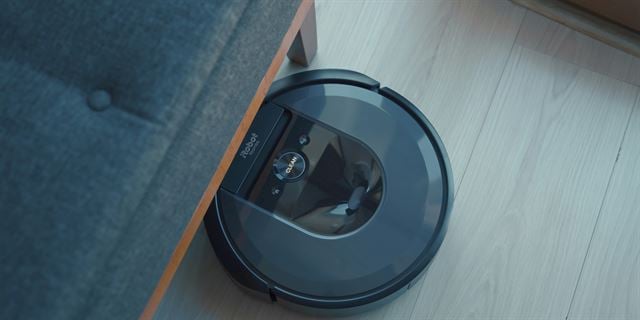
iRobot’s own Roomba store page carries no j7 and no j7+. The j7 survives there only as a model iRobot will accept as a trade-in, which is a different thing from a product. Anyone who arrives at a j7+ buying guide in 2026 is reading about hardware the manufacturer will take off them rather than sell to them.
The current Roomba range on that page runs from a Roomba 105 Vac with an AutoEmpty Dock at 249.99 dollars and a 105 Combo with the same dock at 269.99 dollars, up through a 205 DustCompactor Combo at 469.99 dollars and a Plus 405 Combo at 799.99 dollars, to a Max 705 Combo at 1,299.99 dollars and a Combo 10 Max at 1,399.99 dollars. The self-emptying, obstacle-dodging job the j7+ was sold for now starts at under 300 dollars from the same company.
The corporate sequence behind that is documented and grim. Amazon’s 1.7 billion dollar acquisition collapsed in early 2024 after the European Commission raised antitrust objections and withheld approval; Amazon paid a 94 million dollar break fee, part of which went to repaying a Carlyle Group loan, and iRobot cut 31 percent of its staff. Chapter 11 followed in December 2025, and the common stock ceased to be publicly traded.
The Robot Report records what came out the other side. The company that came out the other side in January 2026 is a wholly owned United States subsidiary of Picea, still based in Bedford, Massachusetts, with Gary Cohen still running it as chief executive. It also created iRobot Safe Corp, a US subsidiary governed by an independent board of US citizens with dedicated data-security staff, explicitly to answer concerns about Chinese ownership. The same report notes a reader describing poor spare-parts availability even for recent products.
Sonos put a number on what a bad app costs
Sonos is the only one of these three companies still standing on its own, and its damage was entirely self-inflicted. The audited figures for the financial year ended September 2024 show revenue of 1.518 billion dollars, down 137.2 million dollars or 8.3 percent from 1.655 billion. Net loss widened from 10.27 million dollars to 38.15 million. Operating loss went from 20.55 million to 48.1 million dollars, and adjusted EBITDA fell 30 percent to 107.9 million.
Management’s own estimate was that the app rollout cost about 100 million dollars in lost revenue. Sonos spent 7 million dollars in the fourth quarter of that year on app recovery alone and guided to a further 5 to 10 million in the following quarter. First-quarter guidance implied revenue down another 15.2 percent year on year.
For a buyer, the useful reading is not that Sonos is fragile. It is that a company can put an existing speaker into a worse state through software than any competitor could through hardware, and that the cost of doing so is measurable in the accounts afterwards.
Nanoleaf was bought for its shelf space, not its panels
OneRobotics, the Shenzhen-based, Hong Kong-listed parent of SwitchBot, announced the acquisition of Nanoleaf on 15 May 2026 for 40,536,679 dollars. The filed figures behind that price are the story: revenue of 29.7 million dollars in 2024 and 30.9 million in 2025, against net losses of 6.4 million and 1.7 million. Nanoleaf has never been profitable.
inside.lighting characterises the deal as a channel play rather than a technology bet. What OneRobotics is paying for is Nanoleaf’s placement in Best Buy, Costco, Apple and Home Depot, which it wants for sports robotics, companion robotics and home-service robots. The light panels are the door, not the destination.
That is not the same as saying the panels are doomed. It does mean nobody has committed publicly to keeping the Nanoleaf app and cloud running for the benefit of people who already own Shapes, and the buyer’s stated interest lies elsewhere.
New ownership is not the same as abandonment
It would be easy, and wrong, to read all three of these as death notices. iRobot says it supports a fleet of more than 50 million devices sold, and it built a separate governance structure specifically to keep US customer data at arm’s length from its new owner. That is more than most acquired hardware companies bother with.
Sonos was never acquired and never filed anything. Its problem was execution, and execution can be fixed, which is a materially better position than insolvency. Nanoleaf’s new parent bought distribution, and distribution is worth nothing if the brand on the shelf stops being sold.
The honest distinction is between companies that might stop caring and a company that has already stopped existing in its old form. Only one of the three is in the second category.
What each of the three could still lose
None of those risks is a certainty and none is disclosed on a box. They are the reason a smart-home purchase should be assessed on who is behind it, not only on what it does on the first day.
- A discontinued vacuum: cloud mapping and app features run by a post-bankruptcy company under new ownership, plus the spare parts a mechanical product needs more than an electronic one does.
- A speaker: nothing structural, but the 2024 release is proof that a routine update can remove working functions from a device already in the room.
- Light panels: app and cloud continuity, from a buyer whose stated interest is retail placement for robots rather than lighting software.
If you are choosing between them anyway
The vacuum is the simple case. Do not buy a j7+ new, because iRobot does not sell one, and do not pay a premium for one used when the same company’s current self-emptying model starts at 269.99 dollars. If a listing offers a j7+ at anything approaching its old positioning, the listing is trading on a name.
The speaker and the panels are both defensible purchases with different weak points. Sonos has the worse recent record of breaking things for existing owners and the better balance sheet. Nanoleaf has no record of removing features from Shapes owners and the weaker company behind it. Neither answer generalises: one reader should worry about the software, another about who will be running it in 2029.
Sources: iRobot · Silicon Republic · The Robot Report · Strata-gee · inside.lighting
Articles on Read Vault are researched and written by the site’s editorial team.