Hoi An After 5.62 Metres
The Thu Bon broke a record that had stood since 1964, the province Hoi An belonged to no longer exists, and the Old Town ticket now comes in two tiers.
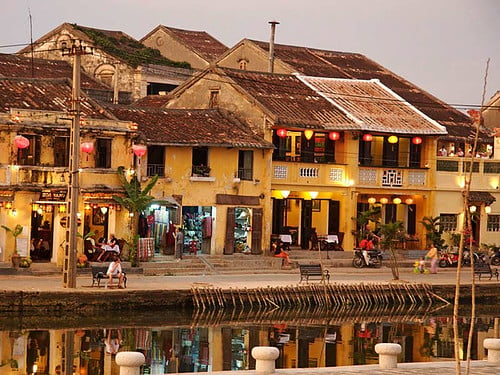
Hoi An’s charm and its vulnerability are the same fact: a low-lying merchant town built where a river meets the sea. In late October 2025 the Thu Bon rose to 5.62 metres, fourteen centimetres above a mark that had stood since 1964, and the shophouses of the Old Town took in mud instead of customers. It reopened within days, as it usually does. But a trip planned from lantern photographs alone will miss what the town has actually been doing: pricing its heritage in tiers, absorbing a provincial merger, and treating an annual flood as a season rather than a disaster.
5.62 metres, and a record that had held for sixty-one years
The flooding of 27 to 30 October 2025 was part of a wider catastrophe across central Vietnam. VnExpress International recorded the Thu Bon at Hoi An exceeding the historic 1964 peak by 0.14 metres, with mud and debris left through the ancient town’s streets and houses. Regionally the toll was severe: 28 deaths, tens of thousands of properties flooded, and rainfall at Bach Ma Peak of 1,739.6 millimetres in a single day.
This is not an argument for avoiding Hoi An. It is an argument for reading the calendar honestly. The flood season runs broadly from late September into November, and while most years produce nothing worse than knee-deep water on Bach Dang street and a brisk trade in sampan rides, the extremes have been getting more extreme. Travel insurance that actually covers weather disruption is worth more here than in almost any other Southeast Asian town.
The ticket, the timetable and the two hours worth avoiding
Entry to the protected zone runs on a ticket sold in two tiers, and the Da Nang city tourism portal sets out what each covers. It is valid across a stay of up to three days rather than for a single visit, which is the detail most people miss and most touts rely on.
The lantern-lit riverfront is a scheduled production rather than a spontaneous one, and knowing the hours changes what an evening feels like. The Da Nang tourism portal gives the ancient town’s walking hours as 9am to 9.30pm in summer and 9am to 9pm in winter, with Phan Chau Trinh street pedestrianised from 5.30pm. Traditional performances run at 10.15am, 3.15pm and 4.15pm, and a Japanese tea ceremony at 9.30am and 4.30pm.
The candid assessment is that between about six and nine in the evening the central lanes are close to impassable and the riverbank is a queue for the same photograph. The town is markedly better at seven in the morning, when the market is working and the shutters are going up, and again after ten at night when the coach parties have gone back to Da Nang.
- 80,000 dong: the shared streets, one landmark of the Japanese Covered Bridge or Quan Cong Temple, plus two other cultural sites.
- 120,000 dong: the same, with access to the museum system and three additional sites.
- One purchase covers up to three days in the town.
- Groups of eight or more tickets receive a guide at no extra charge.
Quang Nam has gone from the map
Vietnam’s National Assembly adopted Resolution 202/2025/QH15 on 12 June 2025, cutting provincial units from 63 to 34, and the new structures began operating on 1 July that year. Quang Nam, the province Hoi An had always belonged to, was merged into an enlarged Da Nang City administered from Hai Chau.
Nothing about the physical journey changed, but a great deal of published information did. Older guidebooks, booking confirmations and official addresses still say Quang Nam, and district-level units ceased to exist on the same date. Anyone dealing with permits, long-stay paperwork or an insurance claim should expect the province name on their documents to disagree with the one now in use.
A ninety-day e-visa changes the shape of a Vietnam trip
Vietnam’s electronic visa now runs to ninety days with multiple entries, a loosening the national tourism authority promoted heavily, and it is available to a broad list of nationalities alongside separate short visa-free arrangements for some passports. The practical effect on Hoi An is that the town has stopped being a two-night stop between Hue and Da Nang for a growing share of visitors.
That is a mixed blessing. Longer stays have brought a co-working and long-let market to An Bang and Cam Chau, and with it the rents and the cafe economy that follow anywhere digital nomads settle. The old town itself has been substantially converted to visitor use, and residents who once lived above the shops largely no longer do. Hoi An is beautifully preserved and, in the central blocks, no longer especially inhabited.
Booking around the water rather than the lanterns
February to May is the reliable window: dry, warm and not yet at the humid peak. June to August is hot and busy with domestic holidaymakers, and the beaches carry the crowds the old town cannot. Late September to November is the flood risk, and also the cheapest and emptiest the town ever gets.
The full-moon lantern nights are the town’s signature event and take place monthly. They are worth seeing once and are not worth building an entire itinerary around, because the crowd density on those evenings is roughly what the streets are like every night in high season, only worse.
One further note on the ticket. Enforcement at the checkpoints is inconsistent and a good many people walk the zone without buying one, which is a false economy: the revenue funds conservation of the very buildings being photographed, and the sum involved is roughly the price of a bowl of cao lau.
Sources: Da Nang City Tourism Portal: Hoi An Ancient Town entrance tickets · VnExpress International: A year under water · Vietnam Briefing: provincial mergers, Resolution 202/2025/QH15 · Vietnam Tourism: e-visas extended to 90 days
Articles on Read Vault are researched and written by the site’s editorial team.