Going alone for the first time: countries that make the opening week easy
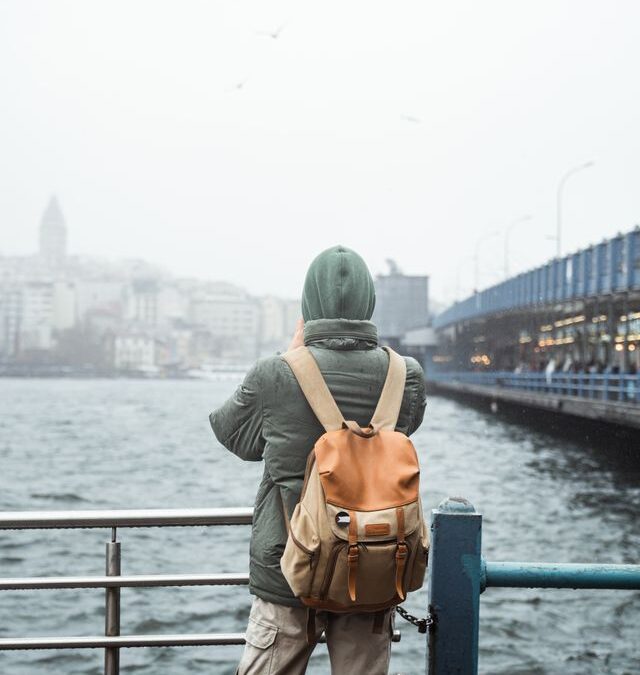
First solo trips rarely come unstuck on safety. They come unstuck on the midnight transfer, the table for one, and the day nobody speaks to you.
Advice for a first trip alone concentrates almost entirely on danger, which is the wrong emphasis for most people setting out. What actually derails an opening solo journey is a bad first three days: a baffling airport transfer at midnight, a restaurant culture that makes a table for one feel like a mistake, and a long stretch of hours with nobody to talk to. Countries differ enormously in how gracefully they handle those three problems, and the differences have almost nothing to do with crime statistics. The FCDO’s country pages remain the place to check risk; everything below is what those pages leave out.
Three things that decide whether a first solo trip works
Arrival friction comes first. A destination where a train runs from the terminal into the centre, tickets are buyable without a local bank card and the accommodation is findable in the dark removes most of the fear before it starts. A destination where the only option is negotiating with a taxi driver at two in the morning does the opposite.
Eating alone comes second, and it is underrated as a make-or-break factor. Some food cultures are built around counters, single portions and quick turnover; others are built around long tables and sharing plates, and treat a solo diner as an awkward gap in the seating plan.
Structured contact with other people comes third. Not nightlife, and not forced sociability, but the ordinary architecture of meeting someone: a guesthouse that serves breakfast communally, a walking route that people do at the same pace, a language exchange, a bar where standing at the counter is normal.
Japan, for anyone anxious about being by themselves
Japan is the strongest first solo destination in the world, largely because eating alone is the unremarkable default. Ramen counters, kaiten sushi, standing soba bars at stations and the whole convenience-store ecosystem are designed around one person in a hurry. Nobody looks up.
The transport does the rest. IC cards work across most of the country, luggage forwarding will move a suitcase to the next city overnight for a modest fee, and station signage is bilingual on every main route. The Japan National Tourism Organization publishes the practical detail in English, and it is accurate.
Two costs have risen sharply and should be planned for. Travel Voice reports that the international departure tax tripled from 1,000 to 3,000 yen on 1 July 2026, with the proceeds directed at overtourism measures and spreading visitors beyond the main cities. Kyoto goes further: from March 2026 its lodging tax runs on a scale from 200 yen per person per night for the cheapest rooms up to 10,000 for rooms above 100,000, replacing a top band of 1,000.
The corollary is a genuine recommendation rather than a complaint. A first solo trip does not need Kyoto in April or November, when the city is at its least forgiving. Kanazawa, Matsue and Takamatsu offer the same qualities at a fraction of the density, and Kyoto keeps until a second visit.
Europe’s gentlest starts
Portugal north of Lisbon is the softest landing on the continent. Porto is small enough to learn in a day, English is widely spoken in the service trades, and the Douro railway offers a day out that requires no planning beyond turning up at Sao Bento. Coimbra adds a student city with cheap food and live fado that does not feel staged.
Estonia and Latvia work for a different reason: everything is close together. Tallinn and Riga are walkable within an hour, hostels are good and cheap, and the bus network reaches the coast and the national parks without a car. Winter is dark and genuinely cold, so a first attempt is better made between May and September.
Ireland’s west solves the conversation problem better than anywhere. In Westport, Dingle or Sligo a person sitting alone at a bar with a book will be spoken to within the hour, which is either the entire appeal or a reason to go elsewhere.
Vietnam and Georgia for a first long-haul attempt
Vietnam’s national tourism board publishes a forty-five day visa exemption for British citizens, alongside a ninety-day multiple-entry e-visa available to nationals of every country and usable at more than forty air, land and sea entry points. That removes the paperwork anxiety that puts people off a first long-haul solo trip.
The country is also cheap enough that mistakes do not matter much, and the north-to-south railway gives a spine to an itinerary without requiring decisions. Hoi An and Hue reward slow days. The Ha Giang loop deserves a warning rather than a photograph: riding it requires a licence that most visitors do not hold, and travel insurance is routinely void without one.
Georgia is the alternative for anyone who wants somewhere less travelled. Tbilisi has an enormous guesthouse and hostel scene, the food is exceptional and the shared-taxi network makes independent movement straightforward. Check the FCDO page before booking, as its advice on the areas near the administrative boundary lines is specific and worth reading properly.
Where solo travellers are sold a version that no longer exists
Canggu is the clearest example. The marketing still shows rice terraces and a laptop; the reality is a congested strip where a two-kilometre journey can take forty minutes and construction runs from dawn. It is not dangerous and it is not unpleasant, but it is a suburb, and travellers arriving expecting Bali find they have booked a business park with surf.
The old backpacker circuit through Bangkok’s Khao San Road and the Thai islands has similarly hardened into a transaction. It is easy and it is social, but the social part is with other visitors on the same three-week rotation, which is precisely the trip most first-timers say they want to avoid.
One more warning worth having. A great many hostels have quietly become hotels with bunk beds: no kitchen, no shared table, no evening meal, and a common room that is a corridor with a sofa. Since the communal element is the whole reason to book one when travelling alone, it is worth checking the photographs for a kitchen before paying.
Sources: Foreign travel advice, Foreign, Commonwealth and Development Office · Travel information for visitors, Japan National Tourism Organization · Departure tax to rise to 3,000 yen, Travel Voice · Kyoto lodging taxes to increase from March 2026, Japan Travel · Visa requirements, Vietnam National Authority of Tourism
Articles on Read Vault are researched and written by the site’s editorial team.