The Ortstaxe, the Ninety Days and the Annual Pass
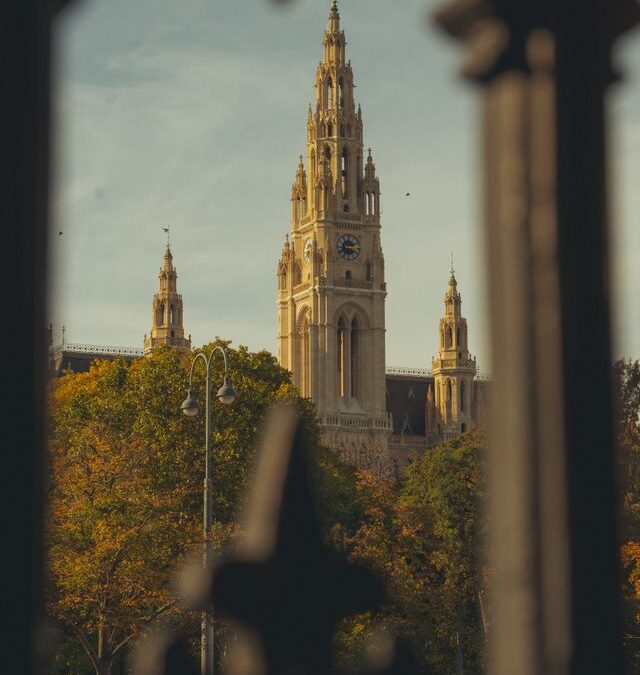
Vienna's overnight tax goes from 3.2 to 5 per cent on 1 July 2026 and to 8 per cent a year later, parking rose 30 per cent, and short letting has been capped at ninety days.
Vienna has spent two years adjusting the price of being a visitor here, and most of it lands in 2026. The overnight tax, held at 3.2 per cent for years, becomes 5 per cent on 1 July 2026 and 8 per cent the following July, a phased schedule the city adopted after abandoning a sharper rise that had been set for December 2025. Parking charges went up 30 per cent in January. Short-term letting has been limited to ninety days a year in most residential buildings since 2024. None of this will change anyone’s mind about coming; all of it changes the arithmetic of how long to stay, and where.
Vienna’s 2026 price changes
- Ortstaxe: 3.2 per cent currently, 5 per cent from 1 July 2026, 8 per cent from July 2027.
- A planned rise to 8.5 per cent on 1 December 2025 was dropped in favour of the phased schedule.
- Parking tickets rose 30 per cent on 1 January 2026; residents’ monthly permits went from 10 to 13 euros.
- Wiener Linien annual pass: 467 euros, or 461 bought digitally; a 24-hour pass is 9.70 euros digital.
Why the increase was halved and postponed
The city had legislated a jump to 8.5 per cent from 1 December 2025. Hotel operators objected that trips already booked would be repriced after the fact, and the increase was both reduced and pushed back: 5 per cent from 1 July 2026, 8 per cent from July 2027. City councillor Barbara Novak framed the staged approach as keeping Vienna competitive as a destination while giving relief to bookings already made.
The tax is charged on the accommodation element of a bill, excluding breakfast, and it is normally included in the displayed price rather than added at the desk. Listings should show whether the rate is inclusive. Stays of more than three months continuously are outside it. Municipal finance officials describe the revenue as funding streetscape works outside hotels, green space, public transport and cultural services, which is a broader claim than most city taxes make and is correspondingly harder to audit.
Ninety days, and a permit you probably cannot get
Since 1 July 2024 Vienna has run one of the tighter short-let regimes in Europe, and it has materially changed what is available to book.
- An apartment may be let to tourists for at most ninety days a year, with the owner living there for the rest of it.
- Exceeding ninety days requires a special permit from the building inspectorate, valid five years.
- That permit is not available in residential zones or for subsidised buildings outside them.
- In owner-occupied buildings, every flat owner must consent.
- All listings must appear on the city’s accommodation register, and enforcement includes analysis of listing photographs.
- Lets of more than thirty consecutive days, and non-tourist temporary housing, fall outside the rules.
467 euros a year, 9.70 for a day
Vienna’s transport pricing is the strongest practical argument for the city. From 1 January 2026 the Wiener Linien annual pass costs 467 euros, or 461 bought digitally, which the operator points out is about 1.26 euros a day. A 24-hour pass is 9.70 euros digital, a single trip 3 euros digital, and new discounted annual passes at 300 euros cover under-26s, over-65s and disabled passengers.
The city notes that this adjustment sits below the 37 per cent cumulative inflation of the previous thirteen years, which is unusual enough to be worth stating. For a visitor the calculation is simple: two days of walking plus the U-Bahn will beat any taxi budget, and a 72-hour pass is almost always better value than counting individual journeys.
One caveat about that arithmetic: the annual pass is a resident product and a visitor cannot extract value from it. The relevant comparison for a short stay is a 72-hour pass against a handful of single tickets, and the break-even arrives sooner than most people expect once Schonbrunn or the Zentralfriedhof is on the list.
Biometric checks at Schwechat, and ETIAS still ahead
Non-EU travellers arriving in Austria now pass through the European Union’s Entry/Exit System, which began a progressive rollout on 12 October 2025 and became fully operational on 10 April 2026, replacing passport stamps with an electronic record of entries and exits. There is no advance application and no fee.
ETIAS is the separate scheme still to come, expected late in 2026, and it will require an online authorisation before travel for nationals who currently enter without a visa. The two are frequently conflated, including by commercial sites charging for assistance with a process that is free and, for the Entry/Exit System, does not exist as an application at all.
The Ring is the tour; the city is in the outer districts
The first district is a museum with residents in it, and an itinerary that never leaves the Ringstrasse will produce the most expensive and least characteristic version of Vienna available. The Hofburg, the Staatsoper and the Kunsthistorisches justify their reputations. The streets between them are priced for people who will be there once.
The seventh district for design and small restaurants, the fifteenth and twentieth for the immigrant food that Viennese cooking has quietly absorbed, Ottakring for its brewery and its market, and the Donaukanal in warm weather are where the city actually operates. Public transport reaches all of it in under twenty minutes, which is the point of the annual pass arithmetic above.
Two candid notes. The coffee houses that appear on every list run tourist pricing and often tourist service; the ones two streets away do not. And the ubiquitous Mozart concerts in costume have almost no connection to Vienna’s actual musical life, which is at the Konzerthaus, the Musikverein and the Staatsoper’s standing places.
Advent turns six weeks into a different city
From mid-November the squares fill with market huts and Vienna becomes a specific and heavily marketed proposition. It is genuinely good and it is also the busiest and priciest stretch of the year outside high summer, with the added feature that the new Ortstaxe rate will be in force for the 2026 season.
The counter-programme is late January and February: freezing, empty, cheap, and the moment the concert calendar is at its most serious. Anyone whose interest is music rather than mulled wine should book then and save both money and queueing.
There is a final observation about Vienna that visitors rarely hear before arriving. It is a city with an unusually large amount of free public value: the parks, the Prater, the Danube island, the Naschmarkt, the churches, the Zentralfriedhof and a set of municipal swimming baths that would be private members’ clubs elsewhere. The museum passes are excellent and they are not the point. A week here can be spent very well on transport, coffee and standing tickets, and the tourist tax rise will not change that arithmetic much.
Sources: Stadt Wien: fees from 2026, Ortstaxe, parking and Wiener Linien · VIENNA.AT: Ortstaxe increase reduced and postponed to 2026 · The Local Austria: the new Airbnb rules in Vienna · France Diplomatie: the EU Entry/Exit System
Articles on Read Vault are researched and written by the site’s editorial team.