Slovenia, Marrakech and Cape Town ranked by friction, not by scenery
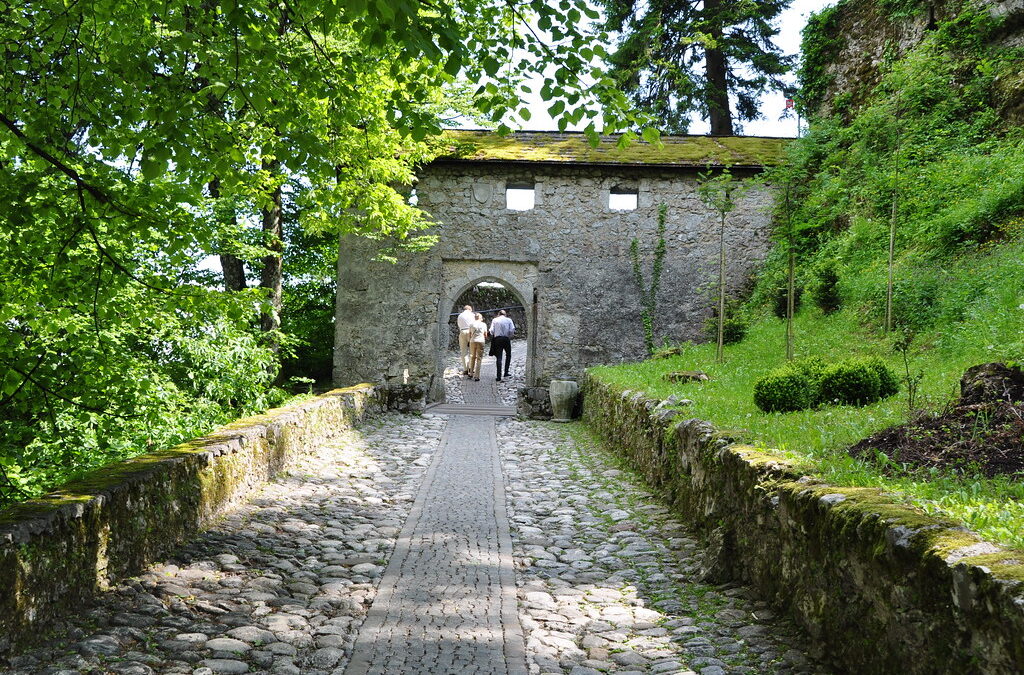
For a first independent trip, the question is how much the destination asks of you. These three sit at very different points on that scale, and the gaps are large.
A traveller planning a first trip without a tour company is not really asking which of these is most beautiful. They are asking how much attention the destination will demand: how often they will need to say no, how much they will have to plan around advice from a foreign ministry, and how easily a mistake is recovered. Slovenia, Marrakech and Cape Town sit at three quite separate points on that scale, and the distance between them is much larger than the distance between their sights. This piece sets out where each one is easy and where each is not.
Friction is the axis that matters for a first independent trip
Friction here means the running cost in attention: negotiating, being approached, checking routes, working out whether an area is safe at eight in the evening. It is not the same as danger and it is not the same as difficulty. A destination can be very safe and very tiring, and it can be objectively riskier while feeling entirely relaxed in the places a visitor actually goes.
Read across these three and the ordering is consistent. Slovenia asks almost nothing. Marrakech asks constant low-level vigilance and a willingness to refuse people politely. Cape Town asks planning, and the planning is specific and published.
Slovenia asks close to nothing of you
The tourist tax in Bled runs to around 3.13 euros per person per night in 2026, buses reach the main sights, and the region is compact enough that mistakes are cheap. English is widely spoken, the euro is the currency and nobody will follow you down a street offering to be your guide.
Even the country’s busiest attraction is administered rather than improvised. Vintgar Gorge charges 10 euros for adults, students and seniors and 5 euros for children aged three to fifteen, with 5-euro parking and a free shuttle from the official car parks. Helmets are mandatory and there is a 50-euro penalty for walking the trail in the wrong direction or for damaging or losing one. Guided tours run daily at four in the afternoon at 28 euros for adults and 18 for children, and shuttle users are asked to arrive 45 minutes before their entry time. Under-threes are advised against because of the trail length. That level of prescription is either reassuring or infantilising depending on temperament, but it is not friction.
- Bled tourist tax: around 3.13 euros per person per night in 2026
- Vintgar Gorge: 10 euros adults, 5 euros for ages three to fifteen, 5 euros parking, helmets mandatory
- Marrakech: taxe de sejour of around 11 dirhams a night for a high-category riad plus a 15 dirham city tax, with under-12s exempt
- South Africa: Electronic Travel Authorisation announced 14 May 2026, with dedicated lanes at three airports
Marrakech asks you to refuse people all day
The medina is the whole appeal and the whole difficulty. The FCDO records that petty crime is common in tourist areas and particularly in the historical medina quarters, that credit card fraud and scams are common, and that bogus guides harass tourists, advising visitors to use only officially badged ones. It notes that violent crime involving knives has occurred in street attacks, and that there is a high threat of terrorist attack.
There are also legal differences a first-time visitor should know before arriving rather than after. Alcohol is legal only in licensed venues and street drinking can lead to arrest. Same-sex relations are illegal and public affection risks prosecution. Flying a drone requires permission from the Directorate General for Civil Aviation, with fines and confiscation otherwise, and photography near military or political sites is prohibited. Morocco also sits in an active seismic zone; the 2023 earthquake killed nearly 3,000 people.
Cape Town asks you to plan around published advice
The friction here is concentrated and specific, which paradoxically makes it easier to manage than Marrakech’s diffuse version. The FCDO describes a high crime rate including violent muggings, carjacking and house robbery, with risk higher after dark. It reports an increase in violent crime and targeted attacks on routes to and from the airport, including incidents involving visitors driving hire cars, and advises using the M3 and N2 rather than the R300, and avoiding Borcherd’s Quarry Road towards Nyanga.
For anyone intending to walk, the Table Mountain guidance is the passage that matters: recent violent attacks and muggings against hikers, particularly on quieter trails early and late in the day, with a recommendation to go in groups of four or more on busy marked routes. The same guidance warns off township visits unless a responsible guide is arranged, and records violent attacks on the MyCiTi service running to Khayelitsha. Follow all of it and the trip is straightforward and hugely rewarding. Skip the reading and it may not be.
Money, language and getting from A to B
Slovenia is a euro country with reliable card acceptance and public transport that does what the timetable says. Morocco runs largely on cash in the medina, with haggling as the default and card fraud a documented risk, so a visitor needs a working relationship with an ATM and a habit of counting change. South Africa is card-friendly and cheap for European visitors, but the transport answer in Cape Town is usually a metered ride or a hire car rather than a bus.
The upshot is that the daily admin load differs sharply even where the language barrier does not. English will get a visitor through all three.
The paperwork, briefly
Slovenia sits inside the Schengen area, so the border formality is the one now applying across the bloc rather than anything national. Morocco requires no visa for most Western passports. South Africa has introduced an Electronic Travel Authorisation, announced at Africa’s Travel Indaba in Durban on 14 May 2026, reporting a 94 per cent approval rate and processing in under a minute through dedicated lanes at O.R. Tambo, Cape Town and Lanseria, with renewals, family profiles and expanded country coverage still rolling out.
Where each one stops being the right answer
Slovenia stops being the right answer for a traveller who wants to be somewhere that feels genuinely unfamiliar. It is orderly, small and closer to central Europe than to anywhere exotic, and a fortnight can feel like a long time.
Marrakech stops being the right answer for anyone who finds constant solicitation exhausting rather than colourful, and there is no technique that removes it entirely. Cape Town stops being the right answer for a solo traveller who wants to walk quiet trails at dawn or to move around freely after dark without thinking about it, because the published advice rules exactly that out. For a genuine first independent trip, Slovenia is the sensible recommendation and the other two are better as a second or third.
Sources: Trippz, Bled tourist tax · Vintgar Gorge official price list · FCDO travel advice, Morocco safety and security · FCDO travel advice, South Africa safety and security · SAnews, South Africa rolls out Electronic Travel Authorisation
Articles on Read Vault are researched and written by the site’s editorial team.