Twelve Eruptions and a Lodging Tax: The Ring Road Now
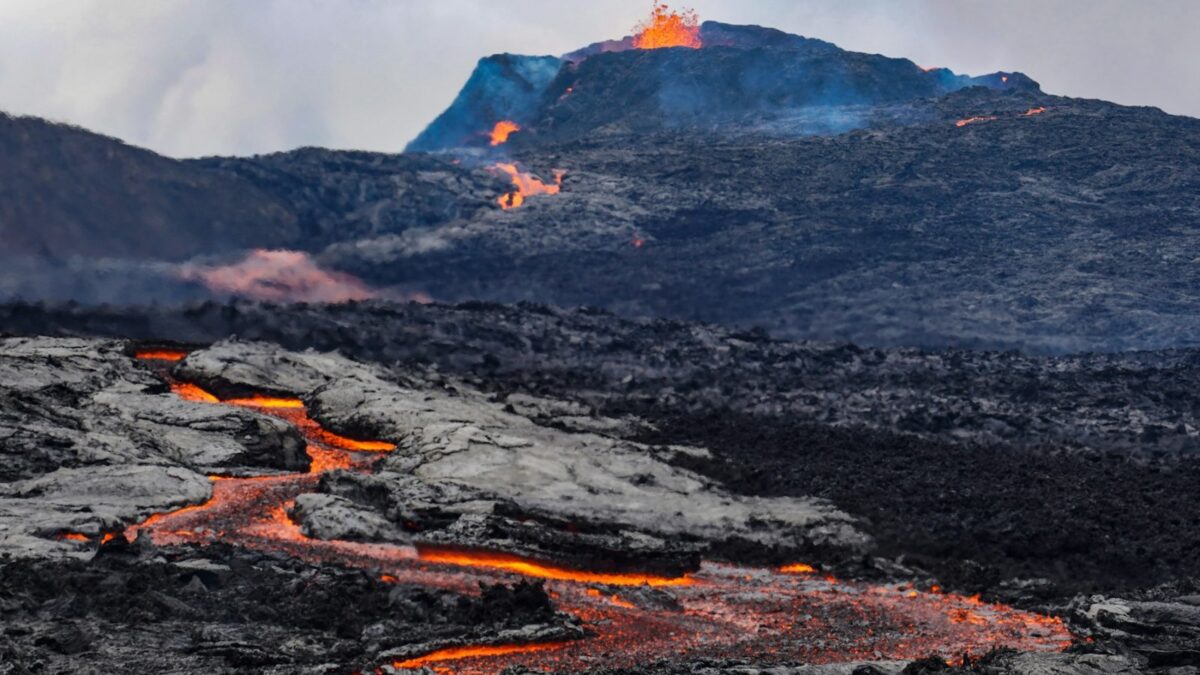
Reykjanes has erupted twelve times since 2021, the accommodation tax came back and then rose, and the government has signalled it wants more of tourism's margin.
Iceland advertises its volcanoes and understates the one that matters to logistics. The Reykjanes peninsula, which holds the international airport, the road into Reykjavik and the Blue Lagoon, has erupted twelve times since March 2021, most recently between 16 July and 5 August 2025, and the sequence is not regarded as finished. That is a planning problem rather than a safety crisis, because these eruptions are small, localised and closely monitored. The larger change for visitors is fiscal: the lodging tax returned in 2024, rose again in 2025, and ministers have said openly that they want a bigger share of what tourism earns.
What Iceland charges per night
- Hotels and guesthouses: 800 kronur per unit per night, from 1 January 2025.
- Campsites and motorhome pitches: 400 kronur per unit per night.
- International cruise ships: an infrastructure fee of 2,500 kronur per passenger for each started day in Icelandic customs territory.
- Iceland recorded 1.792 million international visitors between January and September 2025.
Twelve eruptions since 2021, and the twelfth ended in August 2025
Visit Reykjanes, the regional tourist board, keeps a running eruption log, and its count reached twelve with the event that ran from 16 July to 5 August 2025. There was no ongoing eruption at the time of its most recent update. What the sequence has produced is a peninsula where the town of Grindavik has been repeatedly evacuated, where the Blue Lagoon has closed and reopened several times, and where access to the eruption sites themselves is restricted or forbidden depending on gas readings and lava behaviour.
The practical implication is not that visitors should avoid the southwest, which would mean avoiding the airport. It is that a Reykjanes itinerary should be treated as provisional, that a pre-booked Blue Lagoon slot is a booking rather than a guarantee, and that gas dispersal forecasts are a real consideration for anyone with a respiratory condition.
The accommodation tax returned, then rose
Iceland suspended its lodging tax during the pandemic and reinstated it on 1 January 2024, extending it at the same time to cruise passengers. Iceland Revenue and Customs sets the current rates from 1 January 2025 at 800 kronur per unit per night for hotels and guesthouses and 400 kronur for campsites and motorhome parking, with international cruise ships charged an infrastructure fee of 2,500 kronur per passenger for every started day inside the customs territory.
These are per-unit rather than per-person charges, so the effect on a family room is trivial and the effect on a solo traveller in a guesthouse is not. The cruise charge is the more consequential number, and it was designed to correct a competitive imbalance between floating and land-based accommodation rather than to raise significant revenue.
A note on what these charges are not. Iceland levies no general entry fee, no city tax and no charge for access to the great majority of its landscape, which remains open under long-standing rights of public access. What has appeared instead is paid parking at the busiest sites, at Seljalandsfoss, Skogafoss, Kerid and elsewhere, typically administered by the landowner rather than the state. Budget for a few hundred kronur a stop and carry a card.
Road closures are a daily condition, not a winter exception
Route 1 is paved for its full circuit and is closed somewhere along it with considerable regularity. Wind is the usual reason rather than snow, and Icelandic wind is capable of taking a car door off its hinges, which is a specific and commonly excluded item on rental insurance.
- Check road conditions the morning of every driving day, not the night before.
- Submit a travel plan, which SafeTravel presents as the first step for any visitor rather than an optional extra.
- Treat highland F-roads as a summer-only, four-wheel-drive proposition with river crossings that are not covered by standard insurance.
- Assume sand, ash and door damage are excluded from a basic rental policy unless the contract says otherwise.
- Build one spare day into any circuit with a flight at the end of it.
The Golden Circle is a day; the Ring Road is a fortnight
The most common mistake is compressing Route 1 into a week, which produces six hours of driving a day and a holiday spent looking through a windscreen. Ten days is a workable minimum in summer, and in winter the circuit is a genuinely serious undertaking that many visitors would be better replacing with the south coast and a return.
The east fjords and the north are where the ratio of scenery to other people is best, and where the tour buses largely do not reach. Conversely, the Golden Circle, Reynisfjara and Jokulsarlon are so heavily visited that the experience is closer to a queue than to wilderness. Reynisfjara also kills people with regularity through sneaker waves, and the warning signs there are not decorative.
Northern lights are the other conversation worth having honestly. They need darkness, a clear sky and geomagnetic activity at the same moment, which is why the season runs roughly from September to April and why no operator can promise anything. The tours that offer a free repeat trip when nothing appears are being straightforward about the odds.
Reykjavik is a base, and a short one
The capital holds two thirds of the country’s population and is a pleasant, expensive, walkable town with a serious music scene and a handful of very good museums. It is not the reason anyone flies to Iceland, and three nights is generous.
The geothermal pools are the honest recommendation over the marquee lagoons: municipal, cheap, chlorinated lightly, and full of Icelanders having conversations. Sundhollin and Laugardalslaug are civic institutions in a way that a spa with a swim-up bar is not.
The airport transfer is the first budget shock. Keflavik is around fifty kilometres from the capital, there is no rail link, and the choice is a coach service or a hire car collected on arrival. Anyone driving the full circuit should take the car at the airport rather than in town and save both the transfer fare and a day.
The government wants more of the margin, and will probably take it
Visitor numbers reached 1.792 million between January and September 2025, ahead of the same period in 2024 and well past the 2019 benchmark. Against that, the government signalled in late 2025 that it would propose a considerably higher tourism tax, with analysts describing an intention to capture a larger share of the value added by a sector that has become a national success story.
Anyone budgeting an Iceland trip for the next couple of years should therefore treat published nightly taxes as a floor. The far larger costs remain fuel, car hire and food, and the single most effective saving is still a supermarket rather than a restaurant, which in Iceland is advice rather than parsimony.
The Blue Lagoon is a booking, not a destination
The lagoon sits on the Reykjanes peninsula, a few kilometres from a volcanic fissure system that has erupted repeatedly since 2021, and it has closed and reopened several times as a result. It is also the most expensive bathing water in the country by a wide margin, is booked out weeks ahead in summer, and is a manufactured pool fed by the outflow of a geothermal power station rather than a natural hot spring.
None of that makes it a bad afternoon. It does make it a poor thing to build a trip around, and a poor thing to book non-refundably as a first or last day when the peninsula’s access can change at short notice. The Sky Lagoon outside Reykjavik, the Myvatn Nature Baths in the north and the Secret Lagoon at Fludir all offer the same idea at different prices, and the country’s municipal pools offer it at a tenth of the cost.
Sources: Iceland Revenue and Customs (Skatturinn): lodging tax · Visit Reykjanes: eruption news · SafeTravel Iceland · Euronews Travel: Iceland sets new visitor record and weighs a higher tourist tax
Articles on Read Vault are researched and written by the site’s editorial team.