Caseta, Echo and a Ring Doorbell: Three Purchases With Three Very Different Exit Costs
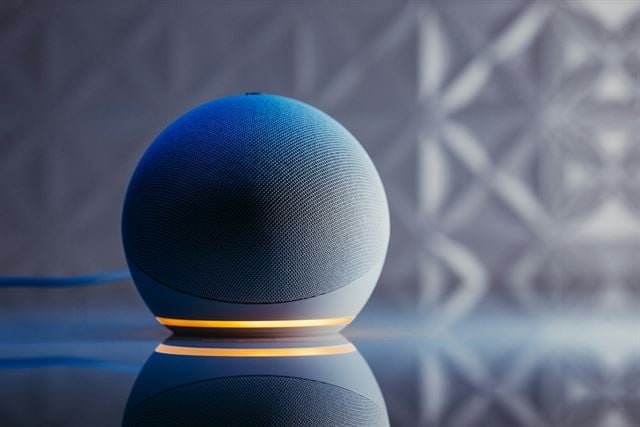
A dimmer kit, a speaker and a doorbell are not alternatives, and one of them is not a product at all. The question they do share is what it costs to change your mind.
A dimmer switch kit, a smart speaker and a video doorbell are not alternatives to one another, and no buyer has ever stood in a shop choosing between them. That comparison was never a real question. One of the three is not even a product: Amazon has never made an Echo (5th Gen). The full-size Echo line stopped at its fourth generation in 2020, and the fifth generation belongs to the smaller Echo Dot. There is a question all three do share, though, and it is the one worth asking before any smart-home purchase. If you change your mind in two years, what does leaving cost?
What each one asks of you after the sale
- Lutron publishes no price for the Diva Smart Dimmer Switch Kit on its own Caseta pages, and offers no subscription of any kind.
- Ring sells the 2021 doorbell as Wired Doorbell Pro at 129.99 dollars, marked down from 229.99.
- The 4K model that reused the Pro name went on sale 29 October 2025 at 249.99 dollars.
- Tom’s Guide: a Ring subscription is mandatory to access video recordings, and the 4K model has no local storage option.
- Alexa+ went generally available on 4 February 2026: free for Prime members, 19.99 dollars a month for everyone else.
The Echo (5th Gen) is a search term, not a device
ThingLabs’ generation-by-generation list of the Echo line runs 2014, 2017, 2019 and 2020, and stops there. The fourth generation is the last full-size Echo Amazon made. The only Echo-branded product carrying a fifth-generation label is the Echo Dot from 2022, which is a smaller speaker at a lower price. Anyone typing the phrase into a search box is being shown one of those two things.
What Amazon actually sells now was announced at the end of September 2025: an Echo Dot Max at 99.99 dollars and a new Echo Studio at 219.99 dollars, both from 29 October 2025, plus an Echo Show 8 at 179.99 dollars and an Echo Show 11 at 219.99 dollars from 12 November. Amazon’s own announcement says all four ship with Alexa+ Early Access included at no extra cost.
Read that last clause slowly, because it is the whole shape of the purchase. Amazon opened Alexa+ to everyone in the United States on 4 February 2026. Amazon prices it at 19.99 dollars a month for non-Prime customers and gives it free to Prime members, household-wide. A speaker whose headline capability is bundled with one subscription and sold separately to everyone else is not a one-off purchase in the way a light switch is.
Lutron’s kit stops asking for money the day it arrives
The kit Lutron currently markets is the Diva Smart Dimmer Switch Kit, model DVRF-BDG-1D. This matters more than it sounds: the phrase Caseta starter kit has historically meant the older dimmer package, so a listing using that wording may be selling different hardware.
Nothing on the Diva kit page or the wider Caseta system page offers a subscription, a plan or a premium tier. Lutron also does not publish a price on either page, which is unusual and worth naming plainly: the number you pay is set by whichever retailer you buy from, and the manufacturer will not tell you what it should be.
The switch talks to the hub over Clear Connect, Lutron’s own radio, explicitly not over Wi-Fi. The trade is straightforward. Caseta will not join your network directly, so you cannot lose it to a router change or a Wi-Fi password reset, but everything it does off-device runs through Lutron’s hub. Neither Matter nor Thread appears anywhere on the kit page, four years after Matter shipped.
That is the trade to weigh, and it is not a small one. Caseta will not appear to a Matter controller as a native device, so a household that standardises on Matter later will still be running Lutron’s hub alongside it. In exchange, the switch on the wall is a switch: it dims the light with a finger whether or not anything else in the house is working, and no part of that behaviour is licensed.
- In the box: one Diva smart dimmer, rated 150W for dimmable LED and 600W for incandescent and halogen
- One Pico Original remote, one Claro wallplate and a bracket for the Pico
- One Smart Hub, which Lutron’s support pages still describe as formerly the Smart Bridge
- Wire connectors, screws, a power supply and an ethernet cable
Which Ring doorbell you are looking at, and what recording costs
Ring’s page at the video-doorbell-pro-2 address now sells a product called Wired Doorbell Pro: 1536p HD+, 3D Motion Detection with Bird’s Eye View, 129.99 dollars against a struck-through 229.99. Ring’s own FAQ on that page states that the only difference between the Video Doorbell Pro 2 and the Wired Doorbell Pro is the name. The hardware a reader remembers is still on sale, cheaply, under different words.
A different and much newer doorbell also carries Pro branding. Tom’s Guide reports that the 4K Retinal Vision model was announced on 30 September 2025 and went on sale on 29 October at 249.99 dollars, and that it replaces the previous model in the lineup. So the 120-dollar gap between the two prices is not a discount. It is two products.
Whichever one goes on the wall, Tom’s Guide is blunt about the ongoing cost: a Ring subscription is mandatory to access video recordings, and the 4K model does not support Ring Edge local storage. A doorbell that cannot keep its own footage is a device you rent the useful half of.
What each one still needs from a company
Strip the marketing away and the three products sit at different distances from their manufacturers. That distance, not resolution or bass response, is what determines how a purchase ages.
- The Diva kit needs Lutron for firmware and for the hub’s cloud-side integrations, and for nothing else. No account tier exists to be changed later.
- The Ring doorbell needs an account, an app and a paid plan before it will keep a single clip, and the 4K version has no local fallback at all.
- An Echo needs Amazon continuously. Its best-marketed features arrived as a service that is free to one group of customers and 19.99 dollars a month to another.
Buy the reversible one first
If this is an early purchase rather than a fifth, the ranking follows from the exit cost rather than the spec sheet. Lighting control bought as a switch keeps working as a switch on the wall whatever happens to the app, and it charges nothing after the till. That is the safest of the three to be wrong about.
The doorbell is the one to think hardest about, because it is the only one whose value depends on a payment you have not yet made and a policy you cannot see. If you want it, the honest version is the 129.99-dollar 1536p unit rather than the 249.99-dollar 4K one, on the grounds that both need the same subscription and only one of them costs 249.99 dollars.
The speaker is the easiest to undo physically and the hardest to undo in habit. Unplugging it takes five seconds. Rebuilding a household’s routines somewhere else takes rather longer, which is precisely why the free-for-Prime pricing works.
One more thing separates these three that no reviewer can measure for you. Two of them can be handed to the next occupant of the house with nothing more than a factory reset. The third is a doorbell whose recorded footage lives under an account and a plan, which makes moving out a data question as well as a hardware one.
Sources: ThingLabs · About Amazon · About Amazon · Lutron · Ring · Tom’s Guide
Articles on Read Vault are researched and written by the site’s editorial team.