Smart Plugs and Switches in 2026: The TP-Link Position Stated Exactly, and What Actually Automates
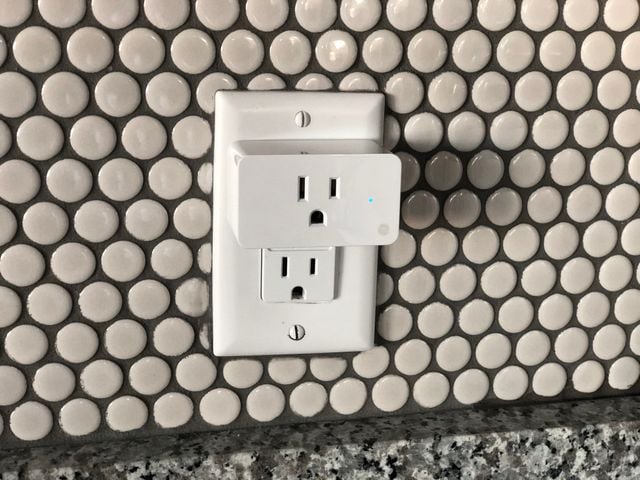
There is no US ban on Kasa smart plugs. There is an FCC order about routers, and there is a hard choice between a plug that moves a lamp and a switch that moves the fixture.
Two questions decide this category and they get asked in the wrong order. The first is electrical: a plug can switch anything with a plug on it, and a switch is the only thing that can control the light in the ceiling. The second is regulatory, because the largest plug brand in America is TP-Link, and a year of headlines has left buyers believing something that is not true. We will take the regulatory question precisely, because precision is the whole point of it.
Where TP-Link stands, precisely
- There is no US ban on Kasa smart plugs as of 1 September 2026
- The FCC’s Covered List order of 23 March 2026 names consumer-grade routers produced in a foreign country
- The order is not retroactive, and previously authorised routers keep updates through 1 March 2027
- Crowell notes it is unclear whether the FCC will act on further categories such as IoT cameras and recorders
- The proposed federal router ban was shelved by the White House on 18 February 2026
A plug switches a socket, a switch switches the fixture
Everything else in this guide follows from that sentence. A smart plug sits between the wall and a lamp, a fan or a heater, and it is a binary device: the appliance is powered or it is not. A smart switch replaces the control in the wall, which means it can dim, and it means the light still works normally for a guest who has never heard of your app.
Lutron’s Diva Smart Dimmer Switch Kit is the reference product for the second approach. The box contains a Diva dimmer rated for 150W of dimmable LED or 600W of incandescent and halogen, a Pico Original remote, a Claro wallplate and bracket, a Smart Hub, and the wire connectors, screws, power supply and ethernet cable needed to fit it. It runs on Lutron’s proprietary Clear Connect radio, which the company is explicit is not Wi-Fi.
Choosing between them is not a preference. If you rent, or you will not open a wall box, the switch category is closed and the plug category is the entire market.
Neither of these companies will print a price
This is a small scandal that nobody treats as one. Lutron publishes no manufacturer price for its Caseta products on either lutron.com or casetawireless.com. TP-Link publishes no price on its Kasa plug pages either, and its Buy Now button for the four-pack sends shoppers to Amazon. Two of the biggest names in home electrical control have decided that what their products cost is a retailer’s business.
Consumer Reports fills the gap with figures a buyer can plan around. It cites the Lutron starter kit at $100 and individual Caseta switches at $60 to $70, with low-voltage dimmers at $120. Against those it puts Aqara switches at $36 to $46, Leviton at $40 to $50 and TP-Link at $20 to $50.
That spread is Consumer Reports’ primary criticism of Caseta, and it is a fair one: a whole-house retrofit at Lutron prices costs roughly two to three times the same job done with the cheaper brands.
Where TP-Link stands with the US government, stated exactly
Read this paragraph as written, because the summarised versions circulating are wrong in both directions. The Covered List order dated 23 March 2026 bars new equipment authorisation for one class of hardware: consumer-grade routers whose production happens abroad. Scope is written broadly, reaching any major stage of the manufacturing process outside the United States, a phrase the order spells out as manufacturing, assembly, design and development, so a US brand is not automatically outside it. Cited as justification were the Chinese-linked operators behind the Salt, Flax and Volt Typhoon intrusion campaigns.
Three qualifications matter to a shopper. The order is not retroactive, so routers already on the US market or already FCC-approved are unaffected. Previously authorised routers keep receiving software and firmware updates through 1 March 2027. And manufacturers can apply for an 18-month conditional approval through DHS or the Department of War.
Now the part that applies to this guide. The order names routers. Crowell’s analysis states it is unclear whether the FCC will take further action on additional categories of device, naming IoT cameras, video recorders and storage as the open questions. Smart plugs are not on the Covered List. There is no ban on Kasa plugs, and anyone telling you otherwise has read a router story and changed the noun.
The wider picture is genuinely unsettled, which is a different thing from being decided. A proposed federal ban on TP-Link routers was shelved by the White House on 18 February 2026 ahead of a Trump-Xi summit. State-level action continued regardless: Texas Governor Greg Abbott barred state employees from using TP-Link products in January 2026, and Attorney General Ken Paxton sued the company on 17 February 2026. Whether Kasa products are named in that suit is not established by the filings we could read, so we are not going to assert it.
The Pico is what makes a switch feel automatic
The single most underrated component in this category is the small battery remote in the Lutron box. Per Lutron’s own brochure, each switch pairs with up to ten Pico remotes and one Pico can control up to ten devices. Stick one beside the bed, one at the top of the stairs and one on the arm of a chair, and the system stops requiring a phone.
That is also why Caseta survives comparison with much cheaper switches. Lutron lists compatibility with Amazon Alexa, Apple Home, Google Home, Samsung SmartThings, Ring, Sonos, Honeywell, ecobee, Serena, IFTTT and XFINITY Home, and no subscription appears anywhere on its Caseta pages. Whatever you pay, you pay once.
Two ceilings: 75 devices, and a protocol that never arrived
Consumer Reports records that the Caseta hub caps at 75 controllable devices, which is a real constraint on a whole-house retrofit and a number worth checking against your plan before the second order of switches.
The second ceiling is protocol. Neither Matter nor Thread appears on Lutron’s Caseta system page, on the Diva kit page or in the official Caseta brochure, four years into Matter’s existence, and Consumer Reports says plainly that Caseta works with essentially everything except the emerging Matter standard.
TP-Link has the same split inside one shelf label. The EP25 Plug Slim with energy monitoring does not claim Matter. The Matter-certified model is a different product, the KP125M, which is set up by scanning a QR code in the Alexa, Google Home or Apple Home app without the Kasa app being involved at all. For a buyer who wants the plug to outlive the manufacturer’s app, that distinction is the whole purchase.
The four-pack we will not recommend, and what we would buy instead
We would not buy the Kasa HS103P4 Plug Mini four-pack. There is no end-of-life notice and TP-Link’s US page for it still resolves, but the page renders no specifications, no price and no compatibility information, so there is no way to establish from the manufacturer what the product supports. A four-pack whose maker will not describe it is not a product a guide can responsibly rank, and a buyer has better options at the same shelf.
If you want plugs, buy the Matter-certified KP125M rather than the EP25, and accept the modest premium for a device that can be commissioned in your ecosystem’s own app. If you want the ceiling light, and you can legally open the wall, the Caseta kit is still the most reliable thing in this category, provided you have priced 75 devices as the limit and made peace with never seeing the word Matter on the box.
One reader will be right to buy each. What nobody should do is buy a Kasa plug because they were told routers were banned, or avoid one for the same reason.
Sources: Crowell & Moring · 9to5Mac · Consumer Reports · Lutron · Kasa Smart (TP-Link)
Articles on Read Vault are researched and written by the site’s editorial team.