Matter on the Box: What the Aqara Hub M3 Bridges, and What the August Wi-Fi Smart Lock Never Claimed
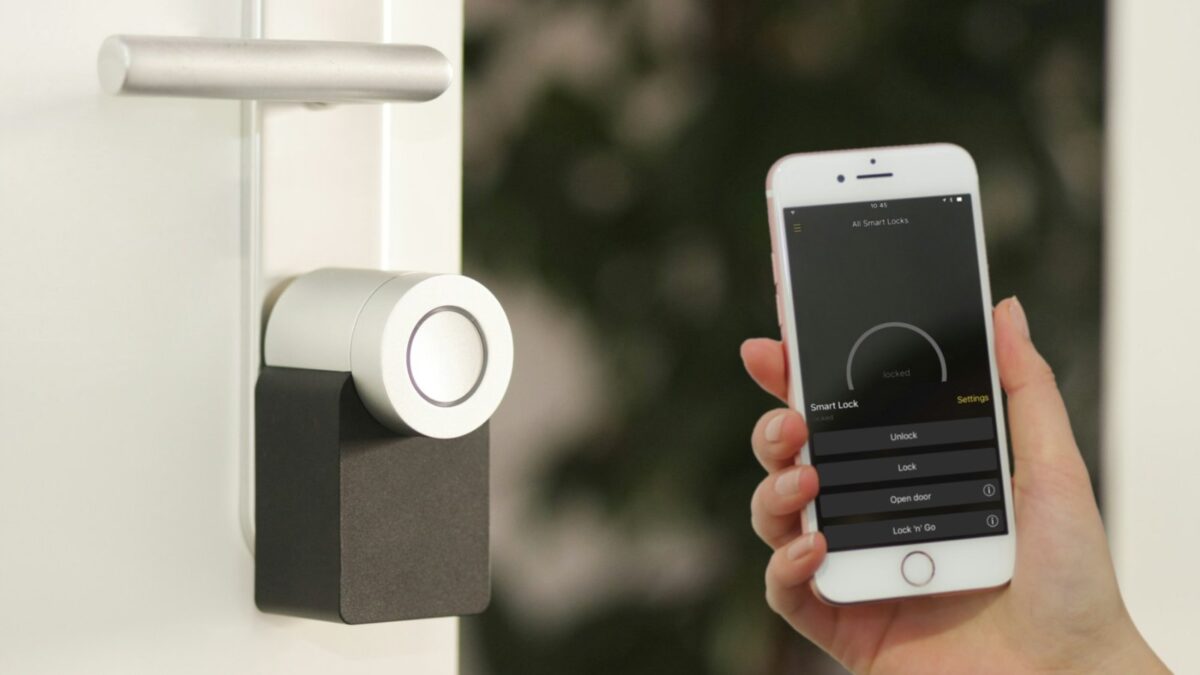
A hub and a lock are not alternatives. The question they share is what a standard printed on a box guarantees inside a house, and the 2026 answer is less than the packaging implies.
Nobody weighs a smart home hub against a front door lock; buy one and you may well still need the other. These two names sit together because of a label. The Aqara Hub M3 is sold as a Matter bridge and a Thread border router. The August Wi-Fi Smart Lock supports neither, while its own corporate sibling sells a Yale lock that does. Before any of that, though, one fact belongs at the top: on 1 September 2026 August’s product page showed the lock at $199.99 with an out of stock buy widget, while August’s homepage advertised the same lock at $229.99.
A lock advertised on the homepage and out of stock on its own product page
Two first party stores disagree about this product on the same day. August’s product page lists $199.99 with a Labor Day promotion and renders an out of stock state in the purchase widget. August’s homepage lists the Wi-Fi Smart Lock at $229.99 with 25 percent off and no stock warning at all. Yale’s own shop, meanwhile, shows $199.99, out of stock, with a notify me button. Neither company has posted an end of life notice or named a successor, so this is not a discontinuation; it is a product being actively marketed while it cannot be bought from its maker.
Note also that no generation number comes from the manufacturer. August calls it simply the August Wi-Fi Smart Lock; the fourth generation label that appears in retail listings and reviews is press shorthand. It launched at a $200 MSRP, and Android Police’s March 2024 review, which scored it 8 out of 10, advised against paying that, calling it a reasonable purchase at around $150 and warning off full retail pricing of $200 and up.
The corporate footing has moved too, and much published advice still gets it wrong. In the United States and Canada, August is not an ASSA ABLOY product. ASSA ABLOY sold the US and Canadian Yale and August residential smart lock businesses to Fortune Brands Innovations for $800 million, a deal completed on 19 June 2023, and CE Pro reported that the divestiture happened under Justice Department antitrust pressure over ASSA ABLOY’s $4.3 billion purchase of Spectrum Brands’ hardware business. Outside North America, Yale remains ASSA ABLOY. The split is geographic, and it means the brand you are buying changed hands for reasons that had nothing to do with the product.
No Matter, no Thread, and a Yale lock down the corridor that has both
What the August lock does support is Wi-Fi and Bluetooth, with Apple HomeKit and Siri, Alexa and Google Assistant, and no bridge required. Matter is not mentioned anywhere on August’s page. Yale’s own store confirms the position from the other side: Wi-Fi and Bluetooth and HomeKit for this lock, while separately selling a Yale Smart Lock with Matter. The absence is a decision made inside one company, not a limitation of the category.
Android Police’s measured criticisms are the ones to weigh at $199.99 or $229.99. Two CR123 batteries are rated at only around three months. The radio is 2.4GHz Wi-Fi only, which the reviewer notes drains the batteries faster at the edge of network coverage. The body is bulky at 2.8 by 1.8 inches. There is no keypad and no biometric backup in the box, so a flat battery or a dropped connection leaves you with a physical key. And the reviewer’s own warped door defeated auto-lock entirely, which is the kind of failure that no firmware update reaches.
There is a documented security incident as well, and it is worth stating precisely rather than dramatically. Bitdefender found a hardcoded encryption key, CVE-2019-17098, used between the August Smart Lock and its configuration app, which allowed an attacker within radio range to eavesdrop, intercept the home Wi-Fi password and mount further attacks against the home network. Bitdefender is explicit that it would not let an attacker unlock the door. Published in August 2020 and updated in May 2021, it affects the Smart Lock and the Connect Wi-Fi Bridge.
What the M3 bridges depends on which app you added it to
The Aqara Hub M3 has every badge the August lock lacks: Matter bridge, Thread border router, Zigbee 3.0, up to 127 Thread and Zigbee devices with repeaters, and Apple Home, Alexa and Google Home listed on the product page. All of that is accurate, and almost none of it answers the only question that matters, which is whether a given device will do a given thing in a given app.
HomeKit News documented the sharpest example. Add the M3 to Apple Home through Matter and it can expose air conditioning control, but it loses its security system functionality. Add it through HomeKit instead and the security system comes back while the air conditioning exposure disappears. The two paths are mutually exclusive, and the hub cannot expose non air conditioning infrared devices to HomeKit at all. Thread support is Matter over Thread only, so HomeKit over Thread devices are excluded outright.
The same review recorded two more things a buyer should price in. At launch the hub could not add Aqara’s own Matter over Thread sensors, which was patched later. And its Thread network was unstable, with devices sluggish and dropping offline, until the hub was moved off a network switch and connected directly to the router. A border router is not an appliance you install and forget; it is a piece of network infrastructure with opinions about your topology.
The specification reached 1.6 in June, and the ecosystems have not
The standard itself keeps moving. The Connectivity Standards Alliance released Matter 1.6 on 17 June 2026, adding commissioning over NFC, a Joint Fabric mechanism that lets several authorised controllers co-administer one network, and thermostat suggestions that stop competing automations fighting each other. On paper that is a mature specification.
In houses it is not. The 2026 status review published by matter-smarthome.de reports that Amazon and Google are still running Matter 1.2 to 1.3, that Apple Home supports selective 1.4 features while lacking most of 1.4, and that Google Home has still not released basic Matter 1.0 generic switches to users. The consequence is exactly the thing the standard was meant to abolish: certified devices that do not work on particular platforms. The same review names IKEA’s Bilresa remote and Klippbok water detector as non functional in Google’s ecosystem, and notes that Alexa lacks leak sensor support entirely.
Two further findings deserve to be on every box and are on none. Feature loss when a device is bridged is routine, with button programmability, single and double and long presses, varying by which ecosystem is in charge. And vendors do not disclose which Matter version they implement; references to Matter are frequently buried in technical data, leaving a buyer unable to work out what a device actually supports. A Matter logo is a statement of intent, not a compatibility guarantee.
Five checks before you trust either badge
- Ask which Matter version your controller runs, not which one the device claims. The gap between the two is where advertised features quietly vanish.
- For a bridge, insist on knowing which devices work in which app. The M3 behaves differently depending on whether you joined it through Matter or through HomeKit.
- For a lock, decide in advance what happens when it is flat or offline. On this one the answer is a metal key, because nothing else is in the box.
- Trust the purchase widget over the promotion. Two of the manufacturer’s own storefronts showed this lock unbuyable on a day its homepage was advertising it at a third price.
- Budget time for Thread as network administration rather than setup. This hub needed relocating onto the router before its mesh stayed reliable.
Sources: Android Police · CE Pro · Bitdefender · HomeKit News · matter-smarthome.de
Articles on Read Vault are researched and written by the site’s editorial team.