The Echo Amazon Actually Sells in 2026 (There Is No 5th Gen)
There has never been a fifth-generation full-size Echo. Here is the range Amazon really sells, what the August 2026 price rise did to it, and what Alexa+ costs.
Search for a review of the Amazon Echo (5th Gen) and you will find plenty of them. What you will not find is the product. The full-size Echo line ran to four generations and stopped there: 1st in 2014, 2nd in 2017, 3rd in 2019, 4th in 2020. The fifth generation belongs to the Echo Dot, which reached it in 2022. So this piece covers the Echo range Amazon does sell, announced on 30 September 2025, repriced upward overnight in August 2026, and now built around an assistant that costs 19.99 dollars a month if you are not a Prime member.
Where the fifth generation actually lives
The generation numbers on Amazon’s speakers do not run in one line, and that is where the confusion starts. A generation-by-generation listing at Thinglabs puts the standard Echo at four releases, the last in 2020, and the Echo Dot at five, the last in 2022. A shopper who half-remembers reading about a fifth-generation Echo has almost certainly read about the Dot, which is a smaller, cheaper speaker and has never been the same product.
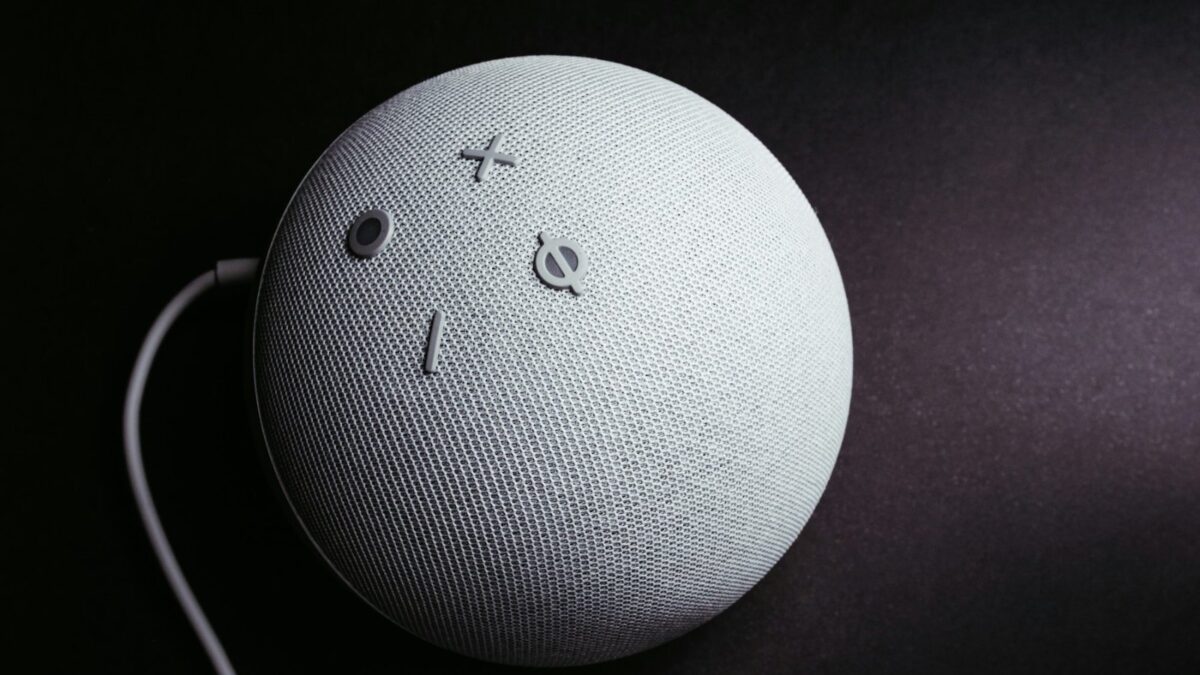
Nor did a fifth generation quietly replace the 4th Gen sphere. Amazon’s late-2025 refresh skipped the full-size Echo altogether. That matters if the big round speaker is the thing you were shopping for, because it has no current equivalent in the range Amazon announced.
The practical consequence is that any article promising a verdict on a fifth-generation Echo is either describing an Echo Dot or describing nothing at all. Check which speaker a review is holding before you trust its conclusions about sound.
The four devices Amazon put on sale at the end of 2025
Amazon’s own newsroom announcement, dated 30 September 2025, lists four new Echo devices with a price and an availability date for each.
Two things are missing from that list. There is no full-size Echo in it, and there is no successor to the Echo (4th Gen) of 2020 anywhere in the announcement. The refresh went outward into displays and downward into the Dot, and left the sphere where it was.
- Echo Dot Max, 99.99 dollars, available from 29 October 2025. Amazon’s AZ3 chip, the first two-speaker system in the Dot line, and a claim of nearly three times the bass of the Echo Dot (5th gen).
- Echo Studio, 219.99 dollars, available from 29 October 2025, built on the AZ3 Pro chip.
- Echo Show 8, 179.99 dollars, available 12 November 2025, with a 13 MP camera and Amazon’s Omnisense sensor fusion.
- Echo Show 11, 219.99 dollars, available 12 November 2025, sharing that camera and sensor package.
The overnight price rise of 21 August 2026
On 21 and 22 August 2026 Amazon raised device prices with no announcement. Engadget documented the changes and quoted Amazon blaming significant increases in memory and storage component costs. The Echo Dot moved from 50 dollars to 80, a rise of 60 percent. The Echo Show 21 went from 400 dollars to 500. Beyond the Echo line, the Fire TV Stick 4K Max went from 60 dollars to 85, the 16GB Kindle from 110 to 150, the Kindle Paperwhite 16GB from 160 to 200, and the eero 7 three-pack from 350 to 400.
A 60 percent overnight increase on the cheapest device in a range is unusual enough to change the shopping advice around it. It also lands badly next to the Echo Dot Max, which was introduced at 99.99 dollars less than a year earlier: the gap between the entry speaker and the better one has narrowed for reasons that have nothing to do with either product.
Those figures come from Amazon’s press statements and from outlets quoting an Amazon spokesperson, not from a live storefront, because Amazon’s retail pages block automated retrieval. Some aggregator sites have since listed further rises for the Echo Dot Max and the Echo Spot. Those numbers appear in a single place and are not repeated here.
Alexa+ is free with Prime and 19.99 dollars a month without it
Alexa+ became generally available in the United States on 4 February 2026. Amazon’s announcement sets the price at 19.99 dollars a month for customers who are not Prime members and free for those who are, household-wide, across Alexa devices, Alexa.com and the Alexa app. A free chat experience exists on the web and in the app, which Amazon describes as limited based on use.
Two things that announcement does not contain are a device compatibility list and any statement about how well older hardware copes. Consumer Reports fills part of that gap, noting that older devices may run into performance limits and that some capabilities, the smart-home control panel among them, are effectively designed for the Echo Show screens. Consumer Reports also found that Alexa+ can sit on top of other paid tiers rather than replacing them: AI video search for Ring cameras needs a Ring Home Premium subscription as well.
Consumer Reports found it wrong about a snowstorm, an address and a pie
Consumer Reports published its Alexa+ assessment on 19 December 2025, having had access since October. The failures it lists are specific rather than general. Alexa+ misstated which day a forecast snowstorm would arrive. Asked to book an Uber, it got both the pickup address and the destination wrong. It forgot a saved apple pie recipe after a fortnight. A motorised kitchen curtain added through the app was not recognised at all.
Consumer Reports also raised an objection that has nothing to do with accuracy: Amazon continues to run advertising on Echo Show displays even as Alexa becomes a paid service. That is worth holding in mind before spending 219.99 dollars on an Echo Show 11.
The setting Amazon deleted from speakers people already owned
On 28 March 2025 Amazon removed the Do Not Send Voice Recordings option, which had let owners keep voice processing on the device rather than in the cloud. The Register reported the change and named the affected hardware: Echo Dot (4th gen), Echo Show 10 and Echo Show 15. Amazon’s notice said only that it had decided to no longer support the feature, and the company told The Register it was concentrating on the privacy controls that work with generative AI experiences relying on its cloud. Owners who react by switching off recording storage entirely lose Voice ID and the personalised responses that depend on it.
This is not an abstract worry. On 31 May 2023 the FTC and the Department of Justice imposed a 25 million dollar civil penalty on Amazon over children’s privacy and Alexa, alleging that it kept children’s voice recordings indefinitely despite promising deletion, used the unlawfully retained data to improve the Alexa algorithm, and failed to delete transcripts of what children said from all of its databases even after parents asked. The order bars training on retained data and requires inactive child accounts to be deleted.
What that leaves a buyer who wants a plain round Echo
Nothing in the current range, is the short answer. The nearest new device to a full-size Echo is the Echo Dot Max at 99.99 dollars, with the Echo Studio at 219.99 above it. If a screen is what you are after, the Echo Show 8 and Echo Show 11 are the current pair. If the assistant is the reason you are buying, weigh the Consumer Reports findings against the 19.99 dollar monthly charge that lands the moment a Prime membership lapses, and remember that the entry Echo Dot costs 60 percent more than it did in July.
And if a comparison page sent you here looking for a fifth-generation Echo, the mistake belongs to the page, not to your memory.
Sources: Thinglabs · About Amazon · Engadget · Consumer Reports · The Register
Articles on Read Vault are researched and written by the site’s editorial team.