The Theragun Mini Second Generation Is Officially Discontinued, and Still $189.99
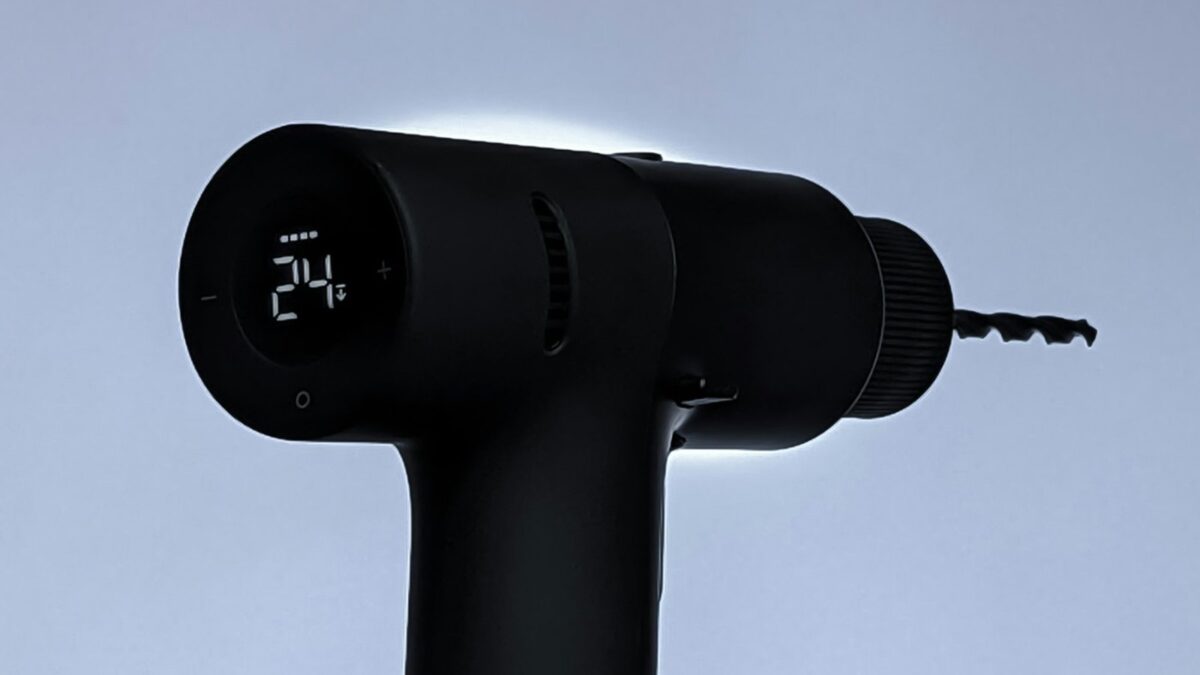
Therabody's own site marks the Gray second-generation Mini as discontinued while still selling it, and a cheaper third generation already beats it on most specs.
Therabody’s website lists the Gray colorway of the Theragun Mini, second generation, as discontinued – on the same page that still takes orders for it. A third-generation Mini has already replaced it in Therabody’s lineup: 150 minutes of battery against the second generation’s 120, 0.40 kilograms against 0.45, and a $179.99 sale price, $219.99 regular, undercutting the older model’s $189.99 list on the sale price alone. The newer device wins on nearly every published spec. What’s left to ask is whether the second generation was the right buy even before it was discontinued, and Tom’s Guide’s testing suggests it wasn’t.
A Discontinued Product Still Listed at $189.99
The second-generation Theragun Mini in Gray carries a Discontinued label on Therabody’s own product page, according to the company’s site – yet the device is still listed for sale at $189.99. That’s a higher price than the third generation’s current sale price of $179.99, for a product Therabody itself has marked as being phased out. The third generation’s regular price is $219.99, so the second generation only wins on price against the newer model’s non-sale figure, and loses to it whenever the sale is running.
Buying a discontinued colorway at a price higher than its in-production, improved replacement’s sale price is a specific kind of bad timing, not a general argument against the product line.
Stalling on Quads and Glutes, per Tom’s Guide
Tom’s Guide’s testing found the Mini’s motor stalling and recoiling when used on larger muscle groups – specifically the quads and glutes – under pressure. That’s a meaningful limitation for a percussion device, since those are exactly the muscles a lot of buyers reach for a massage gun to treat after a leg day or a long run. The outlet measured 12mm of amplitude, describing it as about average for the category, and noise in the 50 to 65 decibel range.
Amplitude describes how far the head travels with each strike; an average amplitude paired with stalling on large muscles points to a device whose motor isn’t matched to its own stroke length under real load – adequate for smaller muscle groups, strained by the ones that need the most work.
One Attachment in the Box, Four With the Prime
The second-generation Mini ships with a single attachment. Therabody’s own Prime model, priced roughly $100 higher, ships with four. That gap matters beyond the accessory count itself: a massage gun with one head is built for one kind of contact with the muscle, and a buyer who wants a broader, flatter head for large muscle groups or a bullet head for trigger points has to buy those separately if they own the Mini.
No Bluetooth Means No App Tracking
The Mini has no Bluetooth connectivity, which rules out the app-based guided routines and pressure tracking that Therabody builds into its higher-tier devices. For a buyer who wants to be told how hard they’re pressing, or to follow a programmed routine for a specific sport or recovery goal, that’s not a small omission – it’s the entire feature layer Therabody sells its premium devices on. None of this makes the Mini defective; it was designed as the stripped-down, portable option in the lineup. But it means the device’s usefulness narrows quickly for anyone who wants guidance rather than just a motor and a head.
Combined with the stalling Tom’s Guide observed on quads and glutes, the lack of pressure tracking is a compounding problem rather than an independent one: a device that struggles under pressure on larger muscles, with no readout telling the user how much pressure they’re actually applying, and only one attachment shape to try instead, leaves a user with fewer ways to work around the limitation than a pricier Theragun would.
Second Generation Versus Third, Spec by Spec
Both generations run the same percussion range, so speed isn’t the differentiator. Weight, battery, and attachment count are.
- Speed: 1750/2100/2400 PPM on both generations – unchanged
- Battery: 120 minutes (2nd gen) versus 150 minutes (3rd gen)
- Weight: 0.45 kilograms (2nd gen) versus 0.40 kilograms (3rd gen)
- Attachments included: one (2nd gen) versus three (3rd gen)
- Price: $189.99 list (2nd gen) versus $179.99 sale / $219.99 regular (3rd gen)
- Warranty: 1 year on both generations
The Case Against Buying This One
At $189.99, for a device Therabody has already marked discontinued, that stalls on two of the muscle groups people most often use a massage gun for, and that ships with one attachment against a step-up model’s four, the second-generation Mini is a hard product to recommend on its own merits. A reader set on the smallest, lightest Theragun should buy the third generation instead, which costs less on sale and beats the second generation on both weight and battery. A reader who wants more attachments and app control from the start should look at the Prime.
There’s a version of this review that hedges toward still fine for light use, and it would even be defensible – the Mini’s speed range is unchanged from the newer model, and light use on smaller muscles is where Tom’s Guide didn’t report the stalling problem. But hedging isn’t honest here: the device Therabody wants a shopper to buy today is the third generation, at a lower sale price, with more battery, less weight, and three times the attachments.
The second-generation Mini’s remaining use case – a reader who specifically wants this exact discontinued colorway, at a price above what the current model costs on sale – is narrow enough that it’s worth naming as close to the only real reason to choose it.
Sources: Therabody · Therabody · Tom’s Guide
Articles on Read Vault are researched and written by the site’s editorial team.