The Samsung T7 Shield 2TB Now Costs Almost Double Its Launch Price
Samsung's own site listed the 2 TB T7 Shield at $574.99 on 31 August 2026, against a $289.99 original MSRP, as the 2026 NAND shortage pushes flash storage prices up.
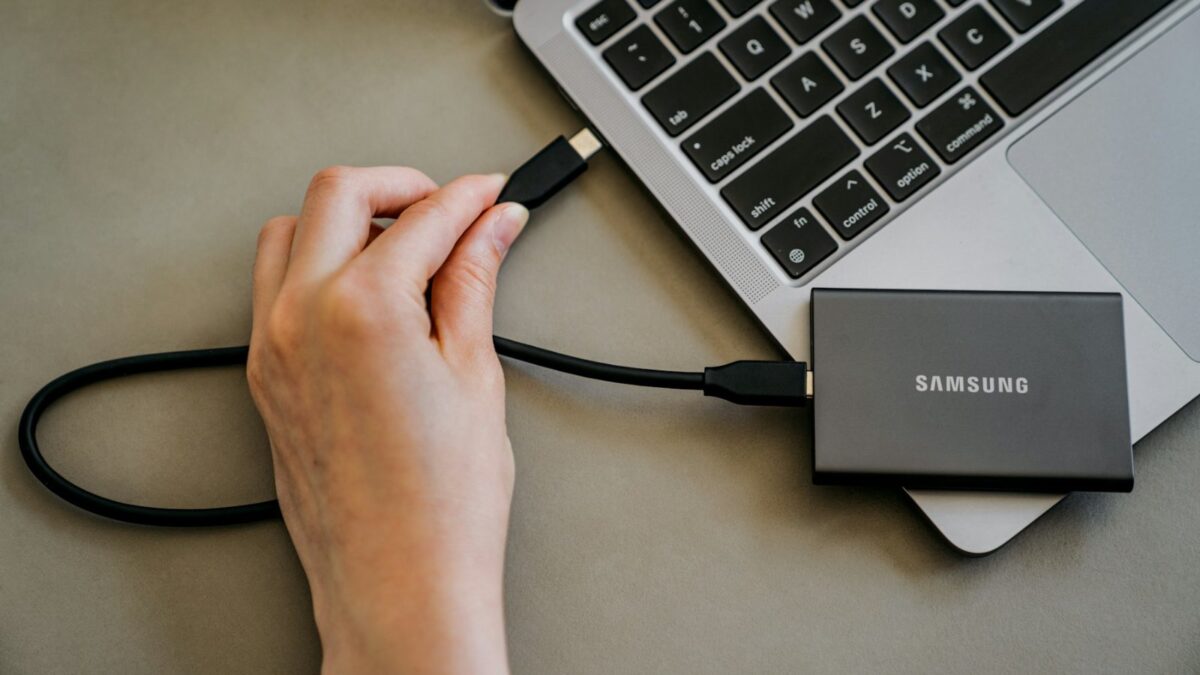
On 31 August 2026, Samsung’s own site listed the 2 TB Samsung T7 Shield at $574.99. The drive’s original MSRP was $289.99. That is not a typo or a temporary spike – Newegg Insider’s coverage of the broader market ties pricing like this to a 2026 NAND flash shortage driven by AI-datacenter demand for flash memory, which has pushed prices up across portable SSDs generally, not just this one drive. The T7 Shield itself has not changed since it launched. Its price has, and that changes the recommendation.
T7 Shield: then and now
- 2 TB original MSRP: $289.99
- 2 TB price on Samsung.com, 31 Aug 2026: $574.99
- 1,050/1,000 MB/s rated sequential read/write
- IP65 rated, drop-rated to 9.8 ft (3 m)
- USB 3.2 Gen 2 (10 Gbps), 88 x 59 x 13 mm
A drive that has not changed, at a price that has doubled
The T7 Shield’s specifications are the same ones it launched with: rated sequential speeds of 1,050 MB/s read and 1,000 MB/s write over USB 3.2 Gen 2, an IP65 rating, and a drop rating of 9.8 feet (3 meters). Nothing about the hardware justifies a near-doubling in price on its own. The increase is external to the product – Samsung has not re-engineered a faster or more durable drive and repriced it accordingly. It is selling the same drive it always did, at a price set by flash memory market conditions rather than by anything Samsung changed about the T7 Shield itself.
That is worth stating plainly because it is easy to assume a large price jump reflects a large change in the product. It does not here. A buyer comparing today’s listing against a review or price screenshot from a year or two ago is looking at the identical drive, not a revised one, which makes the $285 difference entirely a story about the market the drive is sold into rather than about the drive itself.
The NAND shortage behind the number
Newegg Insider’s reporting on the 2026 SSD price surge attributes the run-up to a NAND flash shortage driven by AI-datacenter demand – data centers buying flash storage at a scale that competes directly with consumer supply. That is a market-wide story, not a Samsung-specific one, and it means a shopper cannot simply wait out a T7 Shield sale and expect competing portable SSDs to be meaningfully cheaper right now. The shortage is upstream of any single brand’s pricing decisions.
It also means the usual advice for a price spike on one product – shop a competitor’s equivalent drive instead – is weaker guidance than it would normally be. When the constraint is the flash memory itself rather than one company’s margins, a rival rugged portable SSD built on the same constrained supply of NAND chips is exposed to the same upward pressure.
What independent testing actually measured
Tom’s Hardware measured real-world sustained write speeds of roughly 900 MB/s on the 1 TB model and roughly 1,000 MB/s on the 2 TB model – both close to Samsung’s rated figures and evidence that the drive performs close to spec rather than falling short of it in practice. That is worth separating from the pricing question: the T7 Shield remains a competent, accurately rated drive. The problem for a 2026 buyer is not the hardware’s honesty, it is what that hardware now costs.
That distinction matters more than it might seem. A price increase is easier to accept when it comes with a performance gain to point to – a faster interface, a higher sustained write speed, a new durability rating. None of that applies here. A buyer paying $574.99 today is not buying a faster or more capable drive than a buyer paid $289.99 for previously.
A compact case built for the price it used to be
Part of what made the T7 Shield’s original $289.99 price reasonable was its size relative to what it protected against: an 88 by 59 by 13 millimeter case rated to IP65 and to a 9.8-foot drop is small enough to travel in a pocket, not just a bag, while still surviving the kind of accident – dust, a splash, a drop off a desk – that ends a bare drive’s working life. None of that physical durability changed when the price did.
It is worth being specific about what IP65 and a 9.8-foot drop rating do not cover, too. IP65 protects against dust ingress and low-pressure water jets, not submersion – a drive dropped in a pool is a different failure case than one splashed with rain, and only the second is squarely within the T7 Shield’s rating.
When to pay the current price, and when to wait
The honest way to shop the T7 Shield right now depends on how immediate the need is.
- If a rugged, drop-rated drive is needed now – for travel, fieldwork, or backing up data before a trip – the shortage does not change the practical need, and $574.99 is simply the current cost of that need.
- If the purchase can wait, treat $574.99 as shortage pricing tied to 2026 NAND demand rather than as the drive’s new normal value, and revisit the price periodically rather than assuming it is fixed.
- Before assuming the T7 Shield specifically is overpriced, check whether comparable rugged portable SSDs show similar increases – Newegg Insider’s coverage frames this as a market-wide shortage, not a Samsung-specific markup.
The uncomfortable arithmetic for anyone who needs storage this year
None of this changes the fact that a $574.99 asking price for a 2 TB portable drive is a hard number to recommend, regardless of how well-explained the cause is. A doubling in price is a large move for a category of product that shoppers generally expect to get cheaper, not more expensive, over time as manufacturing costs fall. This review’s job is to explain why that expectation broke down here – a NAND shortage tied to AI-datacenter demand, not a defect or a Samsung decision – not to pretend the resulting price is a good deal because the drive itself still performs well. Those are two separate claims, and only the first one holds up.
Sources: Tom’s Hardware · Newegg Insider
Articles on Read Vault are researched and written by the site’s editorial team.