Nintendo Switch OLED in 2026: The Screen Argument, and Everything Against It
The Switch 2 arrived on 5 June 2025 and went up to 499.99 dollars today. The OLED model's only surviving advantage is its panel.
The Nintendo Switch OLED Model went on sale on 8 October 2021 at 349.99 dollars. Its successor, the Switch 2, launched on 5 June 2025, had shipped more than 19 million units by March 2026, and as of today, 1 September 2026, sells for 499.99 dollars in the United States after a 50 dollar increase Nintendo announced on 9 May 2026 and attributed to the ongoing global memory shortage. The older machine still has one thing the newer one does not, which is an OLED screen. Whether that is worth buying into a superseded platform is the entire question here.
Key facts
- Nintendo Switch OLED Model: released 8 October 2021 at 349.99 dollars
- Switch 2: launched 5 June 2025 at 449.99 dollars, 499.99 dollars from today
- Nintendo raised US prices of the Switch, Switch Lite and Switch OLED by about 50 dollars each on 3 August 2025, citing tariffs
- Screens: 7-inch OLED on the older model, 7.9-inch LCD on the Switch 2
- Switch 2 compatibility: 122 of 122 first-party titles tested, roughly 170 problem titles out of more than 15,000 third-party games
The 7-inch OLED panel is the one thing the newer machine cannot do
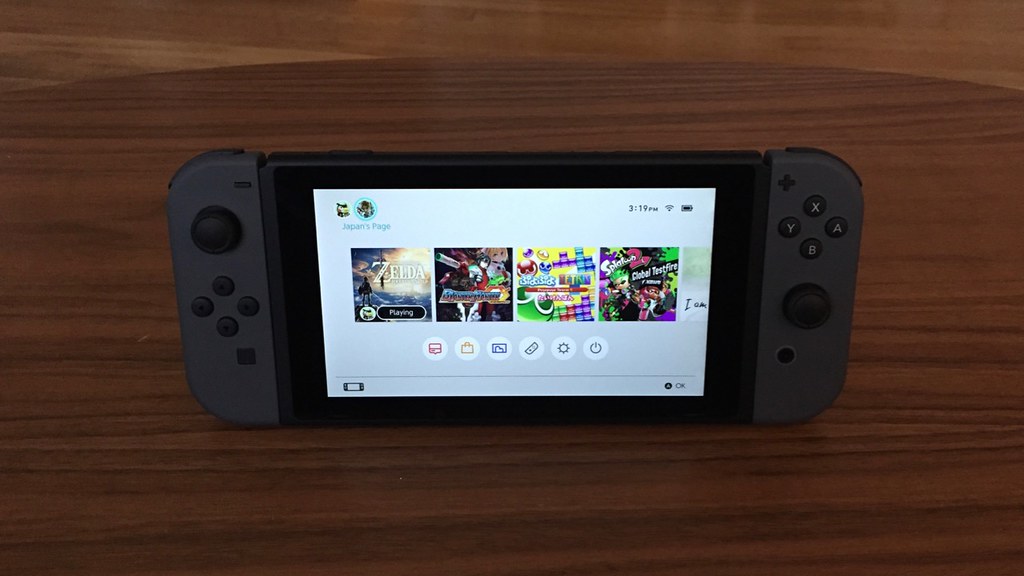
Wikipedia’s entry for the OLED model sets out exactly what the 2021 revision changed against the original Switch: a 7-inch OLED display in place of the 6.2-inch LCD, 64 GB of internal storage instead of 32 GB, better speakers, a magnesium alloy body, a wider adjustable kickstand and a dock with a wired LAN port. What it does not change is anything about how games run. The same entry is explicit that the OLED model is technically similar to the base Switch and compatible with the same games and accessories. It is a screen and a chassis, not a faster console.
The Switch 2 went the other way. Its display is a 7.9-inch LCD running at 1080p and up to 120 Hz in handheld mode, with 4K output at 60 Hz when docked, driven by an Nvidia Tegra T239 with an octa-core ARM processor, 12 GB of LPDDR5X memory and 256 GB of internal storage expandable to 2 TB over microSD Express. Nintendo bought resolution, refresh rate and horsepower, and paid for it by dropping back to LCD. That trade is the whole reason anyone is still weighing up a five-year-old handheld.
Nintendo has not published what one costs today, and that matters
On 3 August 2025 Nintendo raised US prices on the Switch, the Switch Lite and the Switch OLED by about 50 dollars each, and attributed the increase to tariffs imposed during 2025. Wikipedia records the size of the rise but not the resulting price for the OLED model, and Nintendo’s own US store pages could not be loaded on 1 September 2026 because of redirect loops. Read Vault does not print prices it cannot read off a live page, so no current figure for the Switch OLED appears in this article. Anyone buying should check nintendo.com themselves on the day.
There is a second gap, and it is larger. Nothing published today confirms whether Nintendo still manufactures the OLED model or still lists it for sale new. Nintendo’s gaming systems page continues to reference the Switch OLED Model in the context of Virtual Game Cards, which demonstrates continuing software support and nothing at all about production. Read Vault will not call the console discontinued and will not call it current. If a retailer has one, verify that it is new stock and not a remainder before parting with anything.
Tariffs raised one console, a memory shortage raised the other
These are two separate events with two separate causes, and the coverage tends to blur them. The August 2025 rise applied to the original Switch family and was blamed on tariffs. The rise that took effect today applies only to the Switch 2, was announced on 9 May 2026, and Nintendo cited the ongoing global memory shortage. Canada moves to 679.99 Canadian dollars and Europe to 499.99 euros; Japan’s price rose on 25 May 2026, ahead of the rest. TechRadar reports the UK moving from 395 to 430 pounds and Australia from 699.95 to 769.95 Australian dollars.
One detail is worth crediting. TechRadar reported on 13 August 2026 that Nintendo warned shoppers about the September increase through in-store kiosks, and called that advance notice a move not every console or PC maker has bothered to replicate. That is a low bar, and Nintendo cleared it. TechRadar also notes that its own report carries no official Nintendo explanation beyond the memory shortage, attributing the rise to DRAM constraints affecting nearly every hardware manufacturer this year.
122 of 122, and where new releases are actually going
The strongest argument against the older handheld is not its screen or its age. It is that the Switch 2 plays almost everything the Switch played, so the library is not a reason to stay. Nintendo tested 122 first-party Switch titles as of May 2025 and found all of them compatible except the Labo VR Kit, excluded on physical size grounds. Across more than 15,000 third-party titles, roughly 170 had compatibility problems. That is not a rough migration; that is a clean one.
The install base has followed. Nintendo shipped 3.5 million Switch 2 units in the first four days, 5.8 million by the end of June 2025, 17.4 million by 31 December 2025 and more than 19 million by March 2026, against a Switch family lifetime figure of over 155 million units as of December 2025. Fifteen months in, the newer machine is where publishers are aiming. Buying the OLED model now means buying into the platform that new releases are leaving rather than joining.
The price gap closed, then reopened this morning
The arithmetic here moved twice and in opposite directions. At the Switch 2’s launch in June 2025 the two consoles were separated by 100 dollars, at 349.99 against 449.99. The August 2025 tariff increase pushed the OLED model up by about 50 dollars while the Switch 2 held at 449.99, which cut the gap roughly in half for more than a year. Today’s 50 dollar rise on the Switch 2 pushes it back out to something close to 100 dollars again.
That is arithmetic, not a quoted price, and it depends on the unconfirmed post-August-2025 figure discussed above. What can be said with confidence is that for most of the past twelve months the saving on offer was around 50 dollars for a machine a full hardware generation behind, which is a considerably worse deal than the headline suggests and one many buyers made without knowing it.
Three buyers this still adds up for
There is a defensible case for the Switch OLED, but it is narrow and it is not the case a first-time buyer is looking for. If someone is choosing their only Nintendo console in September 2026, the answer is the Switch 2, memory-shortage price rise included. The OLED model earns its keep in three specific situations.
- A second console for a household that already owns a Switch 2, where the existing game library transfers and nobody is buying new releases on it
- A first console for a young child, where a cheaper machine and a large back catalogue matter more than frame rates or 4K output
- A handheld-only buyer who genuinely prefers the OLED panel for portable play and has decided that the newer releases are not for them
Sources: Wikipedia: Nintendo Switch (OLED model) · Wikipedia: Nintendo Switch 2 · Wikipedia: Nintendo Switch · TechRadar · Nintendo
Articles on Read Vault are researched and written by the site’s editorial team.