A $24.90 Pan’s Lifetime Warranty vs. a Desk’s 15-Year One — and Why the Cheap One Has More Fine Print
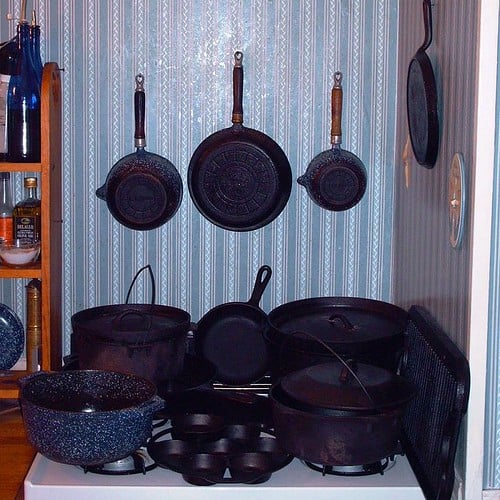
Warranty length usually tracks price. A Lodge skillet and a FlexiSpot desk invert that: the cheaper item's "lifetime" promise excludes more of what actually breaks.
This piece was assigned as a comparison between the Lodge Cast Iron Skillet and the FlexiSpot Standing Desk — the cheapest and one of the more expensive items in Read Vault’s home-and-living coverage, and not a pairing any real shopper would weigh against each other. What connects them is a question worth asking of any warranty: does length track generosity? Lodge backs a $24.90 skillet with a lifetime warranty; FlexiSpot backs its desk frame with 15 years. On paper, lifetime beats 15 years. Read the exclusions on each, though, and the pan’s promise turns out to be the more conditional of the two.
Two prices, two warranties, and the assumption they invert
The Lodge Classic 10.25-inch Cast Iron Skillet weighs 5.66 pounds, has a 10.31-inch cooking surface, and lists for $29.95 but sells for $24.90. It’s covered by Lodge’s “Made Right” limited lifetime warranty to the original purchaser — a phrase worth pausing on, since it means the coverage doesn’t automatically follow the pan if it’s sold, gifted, or handed down, even though cast iron is exactly the kind of product people pass along for decades. The FlexiSpot E7 standing desk frame runs $299 to $339 on its own, or about $369 complete, and is covered by a 15-year limited warranty on the frame, motor, and controller specifically — the desktop itself carries a shorter 2- to 5-year warranty depending on material.
The instinct is that the longer-lasting promise belongs to the pricier, more complex product with a motor and a controller board in it, and that a $24.90 hunk of cast iron with no moving parts should be the easier thing to guarantee forever. The exclusions on each warranty say otherwise.
That non-transferability clause is a small detail with real consequences: a Lodge skillet inherited from a parent or bought secondhand at an estate sale — a common way cast iron actually circulates — isn’t covered by the “lifetime” warranty at all, regardless of how it was cared for. FlexiSpot’s warranty documentation, by contrast, is not described in FACTS as limited to an original purchaser, so the comparison isn’t just about what’s excluded by use, but about who is allowed to claim the warranty in the first place.
Lodge’s lifetime warranty excludes cast iron’s most common real problems
Lodge’s lifetime warranty covers cracks and warping from normal cooking use. It excludes commercial use, dishwasher use, soaking, microwave use, rust, pitting, and flaking seasoning — and dishwasher use in particular explicitly voids the warranty outright, despite being the instinctive way most kitchen owners clean cookware. Rust and pitting are also the failure modes cast iron is most prone to when it isn’t dried and re-oiled promptly, and both are carved out of the warranty entirely, along with the flaking seasoning that Lodge’s own materials acknowledge can happen at the factory.
Lodge’s own product guide states that seasoning starts to break down around 650°F of sustained heat — a temperature that’s easy to hit accidentally on a hot burner or under a broiler, and flaking factory seasoning is itself a documented criticism of the pan. Forbes notes the skillet runs heavier than premium rivals: Field Company points out that vintage 10-inch cast iron pans ran 4 to 4.5 pounds against Lodge’s 0.160 to 0.220-inch casting, and the surface itself has a rougher, unmachined “pebbly” texture compared to smoother competitors. None of that is covered or excluded by the warranty; it’s simply what $24.90 buys, and there is no CPSC recall on file for the Lodge skillet to add to the picture either way.
- Covered: cracks and warping from normal cooking use
- Excluded: commercial use, dishwasher use, soaking, microwave use, rust, pitting, flaking seasoning
FlexiSpot’s 15 years is narrower in scope but plainer in language
FlexiSpot’s warranty doesn’t cover the whole desk for 15 years — it covers three specific mechanical components: frame, motor, and controller. The desktop surface, arguably the part most exposed to daily wear, gets 2 to 5 years depending on material. That’s a real limitation, and it means a scratched or delaminating desktop is a shorter-window problem than a failed motor.
But within its stated scope, the language is plain: frame, motor, controller, 15 years, with no list of excluded behaviors comparable to Lodge’s. A base E7 frame is rated to 355 pounds of lift capacity across a 22.8 to 48.4-inch height range, and nothing in the warranty as documented excludes ordinary use at or under that rating the way Lodge’s excludes dishwasher use or rust. A buyer who stays within the stated weight and height range has a clearer sense of what’s guaranteed than a Lodge owner does, even though the desk’s warranty runs three years shorter.
Price and warranty length don’t move together here
A $369 desk frame outlasting, on paper, a $24.90 pan by name only — 15 years against a lifetime — undersells how much more the pan’s promise gives away. “Lifetime” sounds unconditional; Lodge’s version excludes the specific things that actually happen to a cast iron pan in a real kitchen: it gets left in the sink to soak, it goes in the dishwasher at some point despite the label, it rusts if it sits wet. Fifteen years sounds finite; FlexiSpot’s version covers exactly the mechanical parts a standing desk depends on, without a matching list of ways to void it.
The honest takeaway isn’t that either warranty is bad, or that either product is a poor buy at its price — it’s that the word attached to a warranty’s length is marketing, and the exclusions list is the actual contract. A shopper comparing two warranties should read the exclusions before the duration, because the duration is the number designed to be memorable, and the exclusions are the number designed to be skimmed past.
Reading the fine print before the headline number
None of this means the Lodge skillet is a bad purchase at $24.90, or that the FlexiSpot frame is obviously the better-warrantied product overall — the desk costs roughly fifteen times as much, and its desktop surface is covered for a fraction of the frame’s 15 years. It means that “lifetime” and “15 years” aren’t directly comparable numbers without reading what sits underneath them: who the warranty applies to, what use voids it, and which of a product’s normal failure modes are carved out before the warranty even starts.
Sources: Lodge · Lodge Cast Iron Product Guide · Field Company · Forbes · FlexiSpot
Articles on Read Vault are researched and written by the site’s editorial team.