Adding a Fire TV Stick 4K Max to an LG C4: What a Stick Can and Cannot Fix
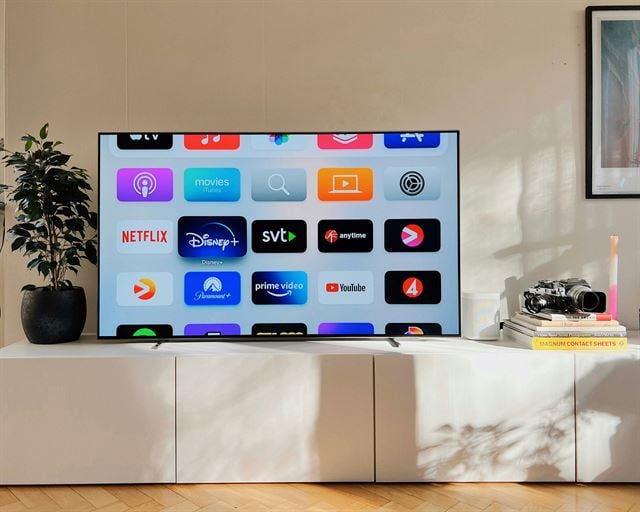
A television and a streaming stick are not alternatives. The real decision is whether an 84.99 dollar stick is worth putting in front of a smart TV that already has a platform built in.
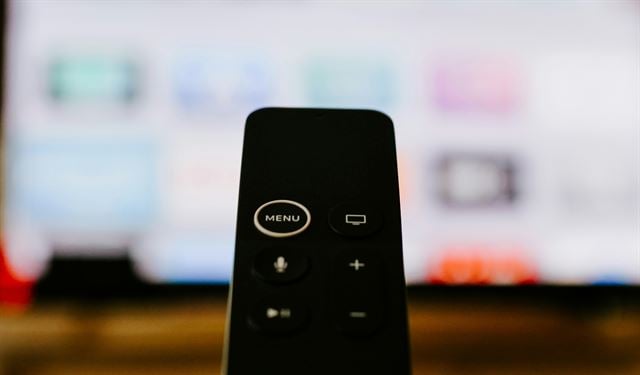
You cannot choose between a television and a streaming stick, because one displays the picture and the other feeds it. The decision people actually face is narrower, and it deserves an answer: you own or are considering an LG C4, it has webOS built in, and a Fire TV Stick 4K Max sits on a shelf at 84.99 dollars. Does adding it improve anything? Two facts shape the whole answer. The C4 is a 2024 set that LG still lists at full price, and the stick is 2023 hardware that got 25 dollars more expensive last month with no announcement at all.
A 2024 television LG still lists at 2,699.99 dollars
On 1 September 2026 LG’s own US page for the OLED65C4PUA was live at 2,699.99 dollars, carrying a banner reading “There is a newer model of this TV available” and linking through to the C5. There was no out-of-stock notice, no discontinuation notice and no discount. That is the unchanged list price of a set two model years behind the current one, not clearance, because LG does not mark down old model years on its own storefront.
If you already own the C4, none of that costs you anything and the platform question below is the only one that matters. If you are buying one now at LG’s price, the stick is beside the point; the 2,699.99 is the problem.
The stick you would plug into it is 2023 hardware at a 2026 price
The Fire TV Stick 4K Max on sale today is the second generation, announced on 21 September 2023 and released on 27 September 2023 at 59.99 dollars, according to Tom’s Guide’s review of it. It is three years old and Amazon has not replaced it.
Pocket-lint reported on 21 August 2026 that Amazon had raised the price of the entire Fire TV Stick line without any public announcement. The 4K Max went from 59.99 to 84.99 dollars, the Fire TV Stick HD from 34.99 to 39.99, and the Fire TV Cube from 139.99 to 199.99. Amazon’s statement to that outlet: “The consumer electronics industry is facing significant increases in memory and storage component costs. After absorbing these increases for as long as we could, we recently adjusted pricing.”
The rise itself is defensible; the silence around it is less so, given that Apple and Roku both announced theirs. It also changes the shape of this decision. At 59.99 a stick was an experiment. At 84.99 it is a considered purchase, and it should have to earn the money.
Two advertising businesses, and you would be picking which one to look at
LG’s side of this is not a rumour, it is a published product. LG Ad Solutions, the company’s own advertising arm, sells inventory across LG smart televisions and markets “precise targeting with our proprietary ACR technology”. ACR is automatic content recognition, which identifies what is on the screen. The same site claims reach across 49 million US LG smart TVs and 216 million globally, and sells placements it describes as being “in the LG Universe”.
Amazon’s side is the interface itself. Tom’s Guide summarised its review of the 4K Max as a “good streaming stick hampered by Amazon-centric interface”, finding that “the home screen feels like a giant ad for Prime Video, Freevee and even MGM Plus”, with a Continue Watching row “populated solely by titles from Prime Video”.
So whatever else this swap achieves, it is not a move from a commercial platform to a neutral one. It is a move from a manufacturer that monetises what you watch to a retailer that merchandises what it wants you to watch next.
What a stick cannot do to a panel
Brightness, black level, colour volume and input lag belong to the television. No accessory in the HDMI port alters any of them, which rules out most of the reasons people reach for a stick in the first place.
FlatpanelsHD’s review of the C5 is the useful reference here, because the C5 is the C4’s direct successor and the review compares the two directly. It found the C5 only “roughly 10 percent” brighter than the C4 on a 10 percent window, with full-screen brightness unchanged between the generations and “little has changed” in the design.
That makes the C5’s measured numbers a reasonable guide to the older set: about 1,200 nits on a 10 percent window, about 200 nits full screen, input lag of 10.8 milliseconds at 4K60 and 5.9 milliseconds at 2K120, and 96 to 98 percent coverage of DCI-P3. Those are derived figures for the C4, not measurements of one, and should be read that way. They still settle half the question. The panel is not the weak part of a C4, and nothing you plug into it will make it better.
The cases where adding one is the right call
There are three, and the list is short because the honest answer usually is.
Against all three, at 84.99 dollars, you are buying three-year-old hardware that got 25 dollars more expensive last month in order to replace one commercially motivated home screen with another that a reviewer described as an advertisement for its manufacturer. If the C4 in your living room still opens the four or five apps your household actually uses, the stick buys you nothing, and the money is better kept.
- An app you actually need never shipped on webOS, or shipped and then stopped working. A stick is a cheap fix for one missing app. It is not a fix for a platform you merely find irritating.
- You run several televisions from different manufacturers and want one interface and one remote layout across all of them.
- The set’s own platform has slowed to the point where navigating it is the reason you stop watching, which is a real failure mode on older smart TVs.
Sources: LG · FlatpanelsHD · LG Ad Solutions · Tom’s Guide · Pocket-lint
Articles on Read Vault are researched and written by the site’s editorial team.