When ‘Built to Last’ Gets Tested: A Bottle, a Drive and a Clog
Hydro Flask, Samsung's T7 Shield and Crocs aren't cross-shopped by any real buyer, but each makes a durability promise with a different record of what happens once it's tested.
A vacuum bottle, a portable SSD and a pair of clogs are not competing purchases — nobody stands in an aisle choosing between them. What they share is a claim about durability: sealed, rugged, built to hold its shape. This piece sets aside the idea that the Hydro Flask Wide Mouth, the Samsung T7 Shield and the Crocs Classic Clog are alternatives to one another and instead asks what each maker’s durability promise has actually meant once it left the lab.
A sealed enclosure versus a bottle you can inspect
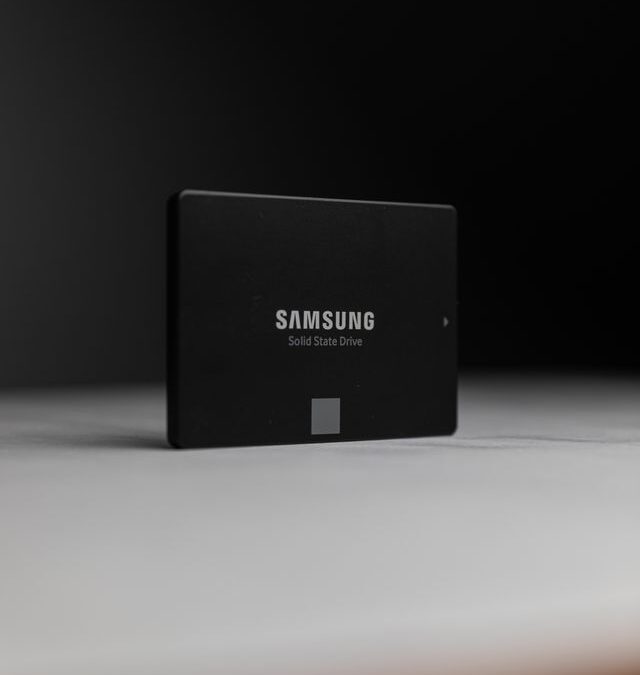
Samsung rates the T7 Shield to IP65 and to survive a drop of up to 9.8 feet (3 m), in an 88 x 59 x 13 mm shell connected over USB 3.2 Gen 2 (10 Gbps). Tom’s Hardware measured sustained write speeds of roughly 900 MB/s on the 1 TB model and about 1,000 MB/s on the 2 TB version, close to Samsung’s rated 1,050/1,000 MB/s sequential figures. That ruggedness comes from a fully sealed case: there is nothing inside for an owner to open, inspect or reseal if a gasket ever degrades. If the drive survives a drop, it’s because Samsung’s engineering held up; if it doesn’t, there’s no way to find out why, and no part to replace.
The Hydro Flask Wide Mouth works on the opposite principle. It’s a double-wall vacuum bottle with no electronics and only a cap gasket to fail, rated by Hydro Flask to keep drinks cold for 24 hours and hot for 12. Its durability shows up as visible mass rather than a sealed promise: CleverHiker measured the 32-ounce size at 16.8 ounces empty, among the heaviest bottles the outlet tested — a straightforward tradeoff of steel for insulation rather than a hidden one. OutdoorGearLab scored it 84 out of 100.
The practical difference for an owner is what happens after something goes wrong. A dented or scratched Hydro Flask is still obviously the same bottle, doing the same job, and any failure is visible the moment it happens. A T7 Shield that stops working gives no such warning — the failure happens inside a case nobody is meant to open, and there’s no dent or crack to signal that something’s wrong before the drive simply doesn’t mount anymore.
Crocs in court over whether Croslite holds its shape
The Classic Clog’s durability claim is the only one of the three that has actually been litigated. Valentine et al. v. Crocs Inc. (3:22-cv-07463, N.D. Cal.), filed 1 December 2022, alleges that Croslite — the closed-cell resin the clogs are made from — shrinks when exposed to heat, sunlight or water, despite Crocs marketing the shoe for beach and pool use. In April 2024, Judge Trina L. Thompson denied Crocs’ motion to dismiss on four claims, so the shrinkage and advertising allegations are still active. There’s no CPSC recall involved; this is a dispute over whether the product performs as advertised, not a safety hazard.
Crocs also markets the Classic Clog’s Croslite as containing 25% bio-circular material under an ISCC PLUS mass-balance certification — a claim about where the material comes from, not about how it holds up over years of wear, which is exactly what’s being tested in the lawsuit and in independent reviews. OutdoorGearLab ranked the Classic Clog 12th of 16 shoes tested, with an overall score of 62/100, rating both traction and construction at 5.0 out of 10. A shoe sitting in the middle of a durability ranking, with a live lawsuit over whether its material holds its shape, is a different kind of promise than a manufacturer’s drop-tested spec sheet.
Hydro Flask’s own history with an unverified claim
Hydro Flask isn’t without its own durability-adjacent history. The company used lead in its bottle-sealing process until 2011, and only reformulated after independent testing by activist Tamara Rubin caught it. There’s no CPSC recall tied to the issue, and Hydro Flask has sold lead-free bottles for more than a decade since — but it’s a reminder that a manufacturer’s own account of what its product is made of isn’t self-verifying. It took outside testing, not a company disclosure, to change the formulation, which is worth keeping in mind before taking any of these three makers’ claims at face value.
None of that means the current Wide Mouth is suspect — the reformulation is now fifteen years old, and no fresh complaint about the bottle’s materials turned up in the reporting for this piece. The point is narrower: a bottle that looks identical from one year to the next can still change quietly in ways a buyer has no way to check without an outside test, and Hydro Flask’s own history is the proof that this has happened before.
What toughness costs when nothing has gone wrong
The T7 Shield’s ruggedness now comes with a price spike unrelated to any drop test. Samsung listed the 2 TB model at $574.99 as of 31 August 2026, against an original MSRP of $289.99. Newegg Insider ties the jump to a 2026 NAND flash shortage driven by AI-datacenter demand, not to any change in the drive’s build. A buyer paying nearly double the launch price is still getting the same IP65 housing and the same rated speeds; they’re paying for scarcity, not for extra toughness.
The Hydro Flask has held closer to its original pricing — the Wide Mouth starts at $44.95 for the 32-ounce size — and its cost of ownership shows up mostly as the extra weight in a bag, not in a fluctuating price tag. The Crocs Classic Clog sits at roughly $49.99 to $50, unaffected by either story, which puts all three products within about $30 of each other at the low end even though the underlying durability question — and the underlying supply story — is completely different for each one.
Three different kinds of evidence for the same kind of promise
None of these three products compete for the same purchase, and nothing here suggests they should. But each asks a buyer to trust a claim about what will still be true a year or five years on, and each claim rests on different evidence: a manufacturer’s drop rating and an independent lab’s write-speed test for the T7 Shield, an active court docket and a mid-pack independent score for the Crocs, and a decade-old reformulation prompted by outside testing for the Hydro Flask. ‘Built to last’ means something different depending on which of the three is making the claim, and depending on who — the manufacturer, a lab or a judge — has actually checked it.
Sources: CleverHiker · OutdoorGearLab · Tom’s Hardware · Newegg Insider · TopClassActions
Articles on Read Vault are researched and written by the site’s editorial team.