Crocs Says Its Clogs Are Beach-Ready. A Federal Judge Let a Shrinkage Suit Test That.
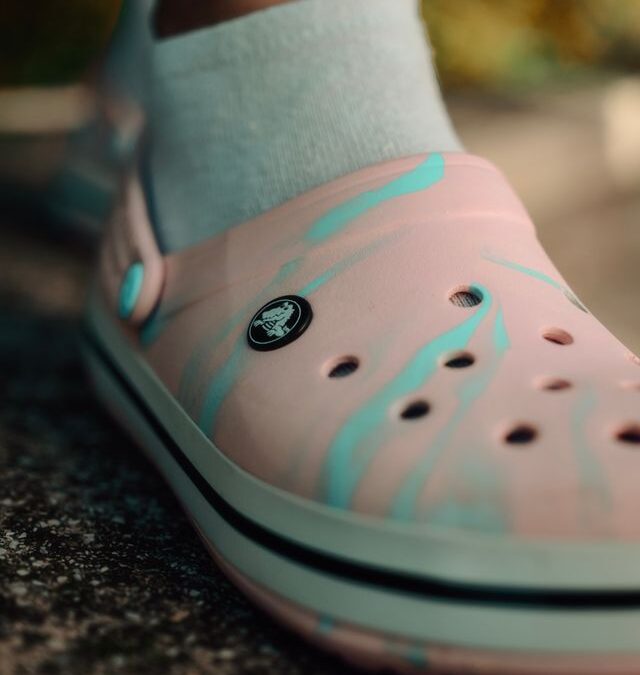
OutdoorGearLab scored the Classic Clog 62 out of 100 and rated its traction just 5.0 out of 10, while a federal lawsuit over heat and sun shrinkage survived Crocs' motion to dismiss.
The Crocs Classic Clog sells for roughly $49.99 to $50 through authorized retailers and remains one of Crocs’ best-known products, made from a closed-cell resin called Croslite that the company now formulates with 25 percent bio-circular material. Two things worth knowing sit outside the marketing: a federal class action alleges the clogs shrink under exactly the conditions – heat, sunlight, water – that Crocs markets them for, and survived Crocs’ attempt to have it dismissed. Separately, OutdoorGearLab’s independent testing gave the Classic Clog a 62 out of 100, with its traction rated 5.0 out of 10.
A Shoe Marketed for the Beach, Sued Over the Beach
Valentine et al. v. Crocs Inc., filed 1 December 2022 in the Northern District of California under case number 3:22-cv-07463, alleges that the Croslite material Crocs uses shrinks when exposed to heat, sunlight, or water – the exact conditions Crocs’ own marketing points to when it promotes the Classic Clog for pool and beach use. The claim is not that the shoes are unsafe; it’s that they don’t hold their advertised fit under normal use of the product as sold.
In April 2024, Judge Trina L. Thompson denied Crocs’ motion to dismiss on four of the claims, allowing the shrinkage allegations and the associated advertising claims to proceed. A denied motion to dismiss is not a finding that Crocs did anything wrong – it means the court found the allegations specific enough to warrant moving forward, not that the case has been decided. No CPSC recall has accompanied the litigation.
The case’s formal name, Valentine et al. v. Crocs Inc., reflects that it was filed on behalf of a named plaintiff group rather than a single individual, which is standard structure for a proposed class action. Filed in the Northern District of California, the case remains a civil product-marketing dispute rather than a safety or recall matter – the distinction that separates it entirely from a CPSC action, which has not been opened against the Classic Clog.
What the Lawsuit Does and Doesn’t Establish
It’s worth being precise about what’s actually confirmed at this stage. The lawsuit alleges shrinkage; a judge allowed the allegations to be tested in court rather than thrown out before trial. That is meaningfully different from a verdict, a settlement, or a recall, and readers should treat surviving a motion to dismiss as exactly that – the case is alive, not proven.
OutdoorGearLab’s 62 Out of 100
Independent of the litigation, OutdoorGearLab’s testing placed the Classic Clog 12th out of 16 shoes in its water-shoe category, with an overall score of 62 out of 100. Two sub-scores stand out for how low they are relative to the rest of the field: traction at 5.0 out of 10 and construction at 5.0 out of 10.
A traction score of 5.0 matters specifically because of how the Classic Clog is marketed and used – as a shoe for wet environments, docks, boat decks, and pool decks, exactly the surfaces where grip matters most. OutdoorGearLab’s mid-pack construction score points at durability concerns that echo, without directly overlapping, the shrinkage allegations in the Valentine litigation: independent testing and a federal lawsuit are, separately, both raising doubts about how well the material performs against its own marketing claims.
A 62 out of 100 overall, landing 12th of 16 shoes tested in the same category, is not a failing score, but it is a below-average one within OutdoorGearLab’s own field. For a shoe this widely recognized and this inexpensive, that ranking is worth weighing against the brand recognition that tends to put the Classic Clog on a shopping list by default.
The Material Underneath the Marketing
Crocs makes the Classic Clog from Croslite, a closed-cell resin, and the company now sources 25 percent of that material from bio-circular content certified under an ISCC PLUS mass-balance system – a supply-chain accounting method that tracks a percentage of renewable feedstock through production rather than certifying every individual unit as made from renewable material.
That sustainability detail is real, but it says nothing about the fit or traction concerns raised above. A shoe can be made with better-sourced material and still score 5.0 out of 10 on traction and be the subject of a shrinkage suit; the two facts don’t cancel each other out.
It’s also worth separating the material science from the marketing claim at the center of the Valentine lawsuit. Croslite’s basic composition as a closed-cell resin hasn’t changed because of the bio-circular sourcing shift; what the litigation contests is how that material behaves under heat, sun, and water exposure relative to what Crocs’ advertising promises, not what percentage of the resin comes from renewable feedstock.
Where That Leaves a Buyer at $49.99
The Classic Clog remains inexpensive and instantly recognizable, and neither the OutdoorGearLab score nor the Valentine litigation has stopped Crocs from selling it at roughly the same price point it has held for years. But a buyer choosing it specifically for wet, sunny, or hot conditions – exactly the use case Crocs promotes – is buying into both an active federal lawsuit about fit under those conditions and an independent traction score that ranked among the weakest OutdoorGearLab tested in that category.
For casual, dry-weather wear, none of that is likely to matter much. For the beach and pool use Crocs markets around, it’s the most relevant thing to know before buying.
None of this is likely to end the Classic Clog’s popularity – the shoe has survived plenty of criticism about its appearance without denting sales. But popular and well-suited to the wet conditions it’s marketed for are separate claims, and the evidence gathered here, a live federal lawsuit on one hand and an independent traction score on the other, supports the second claim less than the marketing does.
Sources: Crocs · OutdoorGearLab · TopClassActions
Articles on Read Vault are researched and written by the site’s editorial team.