Casper’s 100-Night Trial Includes a Mandatory 30-Night Break-In
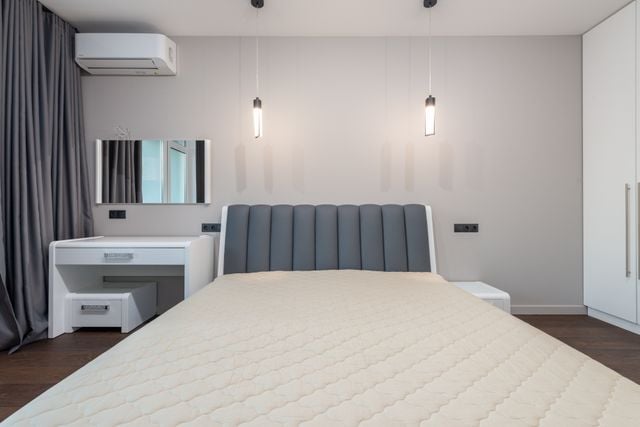
The real return window on Casper's Original mattress is about 70 nights, not 100, and the company is now a subsidiary of foam manufacturer Carpenter Co. as of November 2024.
Casper markets a 100-night trial on the Original mattress, but the first 30 nights are a mandatory break-in period during which a return cannot even be requested, according to Casper’s own trial page — the real evaluation window is closer to 70 nights. The mattress itself has also changed ownership twice since Casper’s February 2020 IPO: Durational Capital Management took the company private in a deal completed 24 January 2022, and Carpenter Co., a polyurethane foam manufacturer, announced its acquisition of Casper on 7 November 2024. Casper now operates as a Carpenter Co. subsidiary.
Key facts
- $1,295 queen ($895 twin – $1,695 king); excluded from all Casper sitewide sales
- 100-night trial includes a mandatory 30-night break-in with no returns
- 10-year warranty covers indentation over 1 inch, foam splitting and cover defects; not normal softening
- Acquired by Carpenter Co., a foam manufacturer, in a deal announced 7 November 2024
- Three CertiPUR-US certified foam layers
Thirty of the Trial’s Hundred Nights Are Off Limits
Casper advertises a 100-night trial on the Original mattress. According to Casper’s own trial page, the first 30 nights are a mandatory break-in period, and a return cannot even be requested until that period ends — so the real window in which a buyer can decide to send the mattress back is about 70 nights, not 100. A buyer who dislikes the mattress on night 10 has no formal recourse yet: they can only wait out the rest of the break-in period, by which point nearly a third of the advertised 100 nights has already passed before a return can even be requested.
The process itself is buyer-friendly once a return is actually possible — free courier pickup, no restocking fee, a refund within days, and a mattress that gets donated where possible or recycled rather than sent to a landfill. The complaint is with the marketed number, not the mechanics behind it: 100 nights overstates how long a buyer actually has to decide before that process can even begin.
- Nights 1-30: mandatory break-in period; returns cannot be requested
- Nights 31-100: the actual return window
- If a return is requested, Casper arranges free courier pickup
- No restocking fee is charged
- A refund is issued within 3-5 business days
- Returned mattresses are donated where possible, or recycled
From Public Company to Private Equity in Under Two Years
Casper went public in February 2020. Less than two years later, on 24 January 2022, Durational Capital Management completed a deal taking the company private again — a transaction Business Wire valued at roughly $286 million. A company that had just raised money from public shareholders was back in private hands within two years of its IPO, a short public life by most standards and a signal that the business Casper’s founders took public wasn’t the business investors wanted to keep funding as a listed stock.
Ownership changes of this kind don’t automatically change what a buyer receives in the box, but they do change who is answerable for the product over its stated lifespan. A 10-year warranty issued by a public company in 2020 was, in practice, a promise from a private-equity-owned company by the time it was two years old.
A Second Sale Lands Casper Inside a Foam Manufacturer
Joe Megibow became Casper’s CEO on 1 March 2024. Then, on 7 November 2024, Carpenter Co. — a polyurethane foam manufacturer, not a mattress retailer — announced its acquisition of Casper. Casper now operates as a Carpenter Co. subsidiary. Whether that reflects a strategic bet on securing raw-material supply, a manufacturer moving up the value chain, or something else, Casper has not operated as an independent company for most of its recent history: under two years as a public company, followed by two ownership changes in a row. That matters for a mattress sold with a 10-year warranty — a decade is a long time for a company to change hands twice more.
Three CertiPUR-US Foam Layers
The Original uses three foam layers, all CertiPUR-US certified. CertiPUR-US testing checks for substances like formaldehyde, heavy metals, and certain flame retardants, and for volatile organic compound emissions — useful for buyers concerned about off-gassing, but silent on how the mattress will actually feel or perform over time.
That’s an important distinction to sit with before reading the certification as a stamp of overall quality. A CertiPUR-US label tells a buyer the foam was tested against a defined chemical and emissions standard; it says nothing about firmness, how the layers respond to weight and movement, or how long the foam holds its shape under years of nightly use. Those questions are exactly what the independent testing below is measuring instead.
What NapLab Measured Underneath Them
For performance, independent testing fills the gap the certification leaves open. NapLab measured the mattress’s firmness at 6 out of 10 — medium-firm — and pressure-point sinkage of 1.69 inches, firmer than the 2.20-inch category average NapLab uses for comparison.
Motion transfer told a different story: NapLab measured 11.30 m/s2 on the Original, against a 7.82 m/s2 category average — worse than average, despite marketing that leans on motion isolation as a selling point for foam mattresses generally. That’s the more consequential number for anyone sharing the bed: firmer pressure-point sinkage suggests the surface holds its shape well under a single sleeper’s weight, but a higher motion-transfer reading means movement from one side is more likely to be felt on the other, which is the opposite of what a foam mattress is usually chosen to solve. NapLab also measured surface temperature at 85.2 degrees F after 15 minutes, a data point consistent with the heat retention foam mattresses are commonly criticized for.
Taken together, the firmness, sinkage, motion-transfer, and temperature figures describe a mattress that supports a single sleeper reasonably well but underperforms specifically on the two things — motion isolation and heat — that foam mattresses are most often marketed on. That gap between the marketing pitch and the measured result is the more useful comparison than firmness alone, since firmness preference varies by sleeper while motion transfer and heat retention are closer to fixed properties of the mattress itself.
Excluded From Every Sitewide Sale Casper Runs
The Original is priced at $1,295 for a queen, ranging from $895 for a twin to $1,695 for a king. Casper’s own product page states the Original is excluded from all sitewide sales — meaning a buyer waiting for a Casper promotion to bring the price down on this specific mattress will wait through every sale the company runs without seeing a discount on it. Shoppers who’ve learned to time a mattress purchase around a sitewide sale won’t see that strategy pay off here.
The exclusion is at least disclosed plainly on Casper’s own page rather than buried in fine print, which is worth crediting. But it also means the Original functions as a fixed-price anchor in Casper’s lineup while the rest of the range moves around it — a detail worth knowing before assuming a holiday sale banner applies to the specific mattress being shopped.
A Ten-Year Warranty That Excludes Normal Softening
Casper’s warranty on the Original runs 10 years, which is a genuinely long term for a foam mattress and matches the industry standard for the category. But the exclusion for normal softening carries real weight given how foam mattresses typically age: gradual softening, not sudden splitting or a one-inch dent, is close to the default failure mode for foam over years of use. A buyer whose Original gets noticeably softer — rather than visibly indenting past an inch — has a mattress that no longer performs the way it did at purchase, and no warranty claim to make about it. Combined with the ownership history above, the practical question isn’t only whether Casper today would honor a decade-long claim; it’s whether the company will still exist in its current form, under Carpenter Co., to honor one a decade from now.
- Covered: indentation greater than 1 inch
- Covered: foam splitting
- Covered: defects in the cover
- Not covered: normal softening
Sources: Casper · Casper · Carpenter Co. · Business Wire · NapLab
Articles on Read Vault are researched and written by the site’s editorial team.