The One 4K Upgrade That Changes Movie Night, and the Box We Would Not Buy This Month
Before spending on a panel or a streaming stick, check what your subscription is licensed to send. On Netflix's cheapest tier the answer is 1080p, with no HDR at all.
A 4K television fed a 1080p stream is a 1080p television with a larger bill attached. Netflix’s own help page is unambiguous: Standard with Ads is capped at 1080p, carries no HDR and no Netflix spatial audio, and has cost 8.99 dollars a month since 26 March 2026. Premium, at 26.99 dollars, is the only Netflix tier that outputs 4K. For a great many households that eighteen-dollar gap is the largest available improvement to movie night, and acting on it involves buying no hardware whatsoever.
The ceiling is set by the plan, not by the panel
Streaming resolution is a licensing decision before it is an engineering one, and the two big prestige services both enforce it the same way. Netflix restricts 4K, HDR and spatial audio to Premium. HBO Max restricts 4K Ultra HD, where available, to its Premium tier at 22.99 dollars a month; its Basic with Ads and Standard tiers are listed as Full HD by HBO Max’s own help centre.
That means a household on 8.99-dollar Netflix and 10.99-dollar HBO Max is watching in high definition no matter what is bolted to the wall. Any conversation about picture upgrades that skips this step is arguing about the fourth-largest variable first.
Eighteen dollars a month is the distance between 1080p and 4K
Netflix’s ladder as of 1 September 2026 runs 8.99 dollars for Standard with Ads, 19.99 for Standard and 26.99 for Premium. Only the top rung carries 4K, HDR, spatial audio and four simultaneous streams; the ad tier gets two streams and a 1080p cap. Moving from the bottom to the top is 18 dollars a month, or 216 dollars a year.
That is a real amount of money, and it is worth saying plainly that it buys resolution rather than content. The ad tier’s library restrictions are now marginal by comparison. Netflix’s own numbers, reported in April 2026, put licence-blocked titles at 0.74 percent of the US catalogue, sixty titles out of 8,107, down from 5.1 percent at launch, after a Sony Pictures deal unlocked around eighty films earlier than expected.
The honest framing is that Standard at 19.99 dollars is the worst rung on this ladder for a movie-night household. It removes advertising but not the resolution ceiling on 4K content, which is the thing you were trying to fix.
Two secondary limits on the ad tier matter for the same reason. It permits two simultaneous streams against Premium’s four, and downloads on two devices, which Netflix enabled in November 2023 at the plan’s first anniversary. Downloaded films still contain the advertising, at a reported load of roughly four minutes of commercials an hour. The Basic plan that used to sit between these rungs no longer exists in the United States for new or existing subscribers.
On HBO Max, 4K also lives only on the top tier
HBO Max’s help centre lists Basic with Ads at 10.99 dollars a month or 109.99 a year with two streams, Standard at 18.49 or 184.99 with two streams and downloads, and Premium at 22.99 or 229.99 with four streams and 4K Ultra HD where available. The 4K qualifier matters: it is not applied to the whole catalogue.
There is also a caveat buried in the Premium listing that a film-and-television buyer should read anyway. Premium’s four simultaneous streams drop to two for sports. If your household watches live sport on the same account, the top tier is not the four-stream product the summary implies.
Two hundred nits of full-screen brightness, and why the room decides
Once the source is fixed, the panel is the next lever, and the useful measurements here are not the peak-brightness numbers on the box. FlatpanelsHD measured the LG C5, the successor to the C4, at roughly 1,200 nits on a 10 percent window in HDR10 but only about 200 nits full screen, with input lag of 10.8 ms at 4K60.
That full-screen figure is the one that predicts how a film looks in a lit living room, and 200 nits is not much. FlatpanelsHD measured LG’s 2026 G6 flagship at 471 nits full white and 2,481 nits on the same 10 percent window, and noted that full-white brightness on the C-series had risen from the G5’s 356 nits only at the flagship level.
The practical conclusion is unglamorous. If your movie nights happen in a dark room, a mid-range OLED is already delivering most of what a flagship delivers. If they happen with daylight or lamps on, the brightness gap between tiers is doing real work, and closing it costs thousands rather than tens.
There is a second, cheaper lever on the same problem, and it is not brightness at all. FlatpanelsHD noted the G6 carries an anti-reflective coating measured at 0.3 percent reflectance. Reflections and brightness are two solutions to one complaint, and the free version of the fix is to move a lamp or close a curtain before spending anything. Try that on a Saturday evening before concluding that the panel is the problem.
One box we would not buy this month, and the reason is a calendar
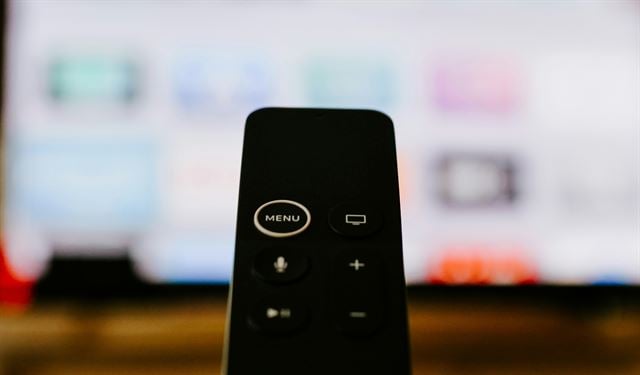
The Apple TV 4K is the streaming box we would advise against buying in September 2026, and we are not the only ones saying it. MacRumors’ buyer’s guide carries a Don’t Buy status for the Apple TV with updates coming, and recommends waiting for the refresh. The shipping model is still the third generation announced on 18 October 2022, running an A15 Bionic chip.
The price is the other half of the argument. FlatpanelsHD recorded the increase that took effect on 26 June 2026: 129 dollars became 199 for the 64GB Wi-Fi model and 149 became 249 for the 128GB Wi-Fi and Ethernet model, rises of 54.3 and 67.1 percent. Apple attributed the round to a surge in memory and storage demand driven by AI data-centre expansion.
None of the alternatives escaped either. Pocket-lint reported on 21 August 2026 that Amazon had raised the price of every Fire TV Stick without any public announcement, taking the 4K Max from 59.99 to 84.99 dollars and the Fire TV Cube from 139.99 to 199.99. FlatpanelsHD recorded the Google TV Streamer going from 100 to 150 dollars on 31 August 2026, with Google citing rising component costs.
So the recommendation is narrow rather than sweeping. If you need a box today, buy the cheapest one that passes the formats your television accepts, and check the retailer price rather than the list price, because pre-increase stock was still being cleared when these rises landed. If you do not need one today, this is a poor month to buy anything in this category, and the upgrade at the top of this page costs nothing to try first.
Sources: Netflix · HBO Max · FlatpanelsHD · MacRumors · Pocket-lint
Articles on Read Vault are researched and written by the site’s editorial team.