Apple TV 4K and the LG C4: Two Products Called Current, for Two Opposite Reasons
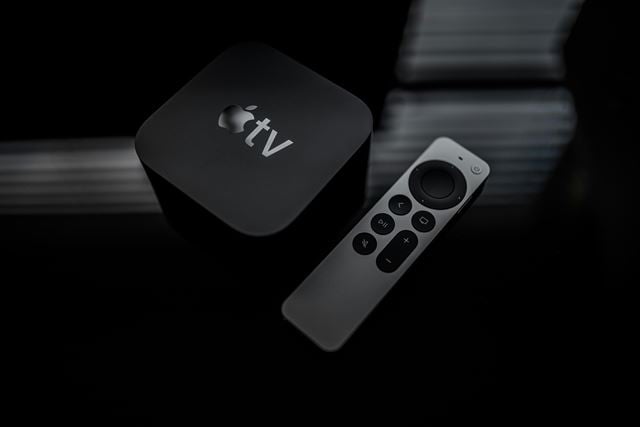
A streaming box does not compete with a television. Both are being sold as current in September 2026, though: one because nothing has replaced it, the other because two things already have.
Pairing a streaming box against a television was never a real choice, and this piece does not pretend otherwise. What the two do share, in September 2026, is a word: both are being sold as the current thing to buy, and in each case the word is doing work it should not. The Apple TV 4K has not been replaced since November 2022. The LG C4 has been replaced twice. Only one of those situations argues for waiting, and it is worth being precise about which.
Key facts
- The shipping Apple TV 4K is the third generation, announced 18 October 2022
- Pocket-lint reports it reached 1,338 days on sale without a successor on 4 July 2026
- MacRumors’ buyer’s guide lists the Apple TV as Don’t Buy, Updates Coming
- Its US price rose on 26 June 2026 from 129 to 199 dollars, and from 149 to 249 dollars for the 128GB model
- LG’s US site listed the 65-inch C4 at 2,699.99 dollars on 1 September 2026, under a newer-model banner
Nearly four years on the same A15 chip
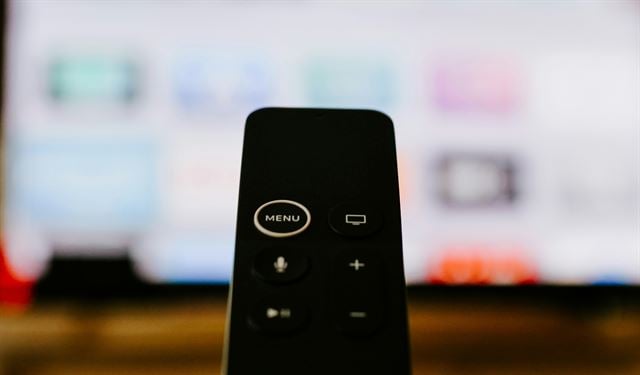
The Apple TV 4K on sale today is the third generation, announced on 18 October 2022 and built around the A15 Bionic. Apple’s own specification page still describes the same two configurations it launched with: a 64GB Wi-Fi model, and a 128GB version that adds gigabit Ethernet and Thread networking for smart-home use. The HDR support listed there is Dolby Vision Profile 5 up to 2160p at 60fps, alongside HDR10+, HDR10 and HLG. The Siri Remote is rated for months of use per charge.
Nothing on that list is bad. What is unusual is how long it has stood. Pocket-lint noted on 16 June 2026 that the box was on course to become the longest-serving Apple TV ever, reaching 1,338 days on sale on 4 July 2026 and passing the 1,337-day record held by the 2017 first-generation model. Successor rumours surfaced and evaporated in 2023, in 2024 and again in 2025.
MacRumors’ buyer’s guide has one instruction for this box
The status listed is Don’t Buy, Updates Coming, which is as blunt as that guide gets. The rumoured replacement is expected around September 2026, timed to iOS 27, and reportedly held back so it could arrive with new Siri and Apple Intelligence features. The parts list being talked about includes an A17 Pro chip, possibly newer given the delay, Apple’s N1 networking silicon with Wi-Fi 7, Bluetooth 6, Thread and hi-res lossless audio, in the same squircle body. None of that is confirmed by Apple, and it should be read as rumour rather than specification.
Software support is not the problem here. tvOS 26.5 arrived on 11 May 2026 and tvOS 26.6 on 27 July 2026, with tvOS 27 expected in September, so a nearly four-year-old box is still on the current branch. The problem is purely one of timing, and there is one more wrinkle: MacRumors does not expect the price to fall back after June’s increase. Waiting is likely to buy newer hardware at the same money rather than the same hardware cheaper.
That reframes the decision usefully. The question is not whether the current box is good, because it is, and it has just had a software update. The question is whether you would rather own the 2022 model or the 2026 one for the same 199 dollars, and there is no version of that question where buying in the last fortnight of the wait is the right answer.
Seventy dollars more for a box from 2022
On 26 June 2026 the 64GB model went from 129 to 199 dollars and the 128GB model from 149 to 249. That is 54.3 percent on one and 67.1 percent on the other. FlatpanelsHD noted that the Apple TV took the steepest percentage rise of anything in that round of Apple increases, despite having modest memory and storage to begin with. Apple’s stated reason was that the rapid expansion of AI data centers has created an extraordinary surge in demand for memory and storage, after a period of absorbing the cost.
The same round lifted Macs, iPads, HomePods and Vision Pro, while iPhone and AirPods were left alone. For context on where that leaves the box competitively, Google’s TV Streamer moved from 100 to 150 dollars on 31 August 2026, and the Nvidia Shield sits at 199. Apple’s box is no longer the obvious premium outlier it was at 129 dollars, but it is now priced against machines that have been refreshed more recently than it has.
How the C4 fell two model years behind
The C4 has not vanished. LG’s US page for the OLED65C4PUA was live on 1 September 2026 showing 2,699.99 dollars, under a banner saying a newer model of the television is available, with no discontinued or out-of-stock notice anywhere on it. That is the unchanged list price rather than a clearance price, and LG does not mark down old model years on its own storefront. What third-party retailers charge for C4 stock could not be established, because the large US chains block automated price checks.
One detail complicates the simple move-up argument. The 2026 C6 does not have HDMI 2.2 and does not support Dolby Vision 2, so newer does not automatically mean more future-proof at this rung of the range. What the C6 does bring at 77 and 83 inches is a Tandem WOLED panel that used to be reserved for the pricier G-series.
The wider 2026 range gives a sense of how far the ladder has moved since 2024. Above the C6 sit the G6, also on second-generation Tandem WOLED, and the W6 wallpaper set with its wireless connection box; below it the B6 and B6E use an OLED SE panel rated around 1,000 nits peak. The C6 itself runs an Alpha 11 Gen 3 processor at up to 165Hz on webOS 26. A C4 buyer is two processor generations and two panel revisions behind that, which is fine at the right price and indefensible at the wrong one.
- 2024: the C4 is LG’s mainstream OLED for the model year.
- 2025: the C5 takes over; FlatpanelsHD published its C5 review on 20 October 2025.
- 27 January 2026: LG details a 2026 lineup which it says will replace the M5, G5, C5 and B5 series, arriving from the spring.
- 2026: the C6 splits into two panel tiers, with Tandem WOLED at 77 and 83 inches and a conventional OLED panel at 42, 48, 55 and 65 inches.
Old because nothing replaced it, old because two things did
These are opposite conditions dressed in the same adjective. Apple’s box is current in the strict sense: there is no newer one, and Apple is still shipping software for it. The exposure a buyer takes on is timing, and it is the kind that resolves itself within weeks either way.
The C4 is current only in the sense that a page still exists to sell it. Its successors are shipping, its replacement’s replacement has been detailed since January, and the price on the manufacturer’s own site has not moved to reflect any of that. That is not a timing problem, it is a pricing problem, and no amount of waiting fixes it because there is nothing left to wait for.
Wait on the box, and price the television by hand
On the Apple TV, waiting is the honest recommendation and there is no need to dress it up. The company that follows this hardware most closely tells readers not to buy it, a replacement is rumoured within weeks, and the price is not expected to drop whatever happens. If September passes and nothing appears, you buy the same box for the same money having lost nothing but a few weeks.
The C4 is a different decision entirely. At 2,699.99 dollars from LG there is no case for it at all, because that is full price for a panel two model years behind. It becomes interesting only at a retailer’s clearance price, and nobody can quote that for you in advance. Check it yourself on the day, and hold it against a C5 or a C6 at the same size before deciding that older and discounted beats newer at whatever the shop is asking.
Sources: Apple · MacRumors · Pocket-lint · FlatpanelsHD · LG
Articles on Read Vault are researched and written by the site’s editorial team.