The Anker 737 Power Bank Is Rated 86.4 Wh. It Delivers 73.1.
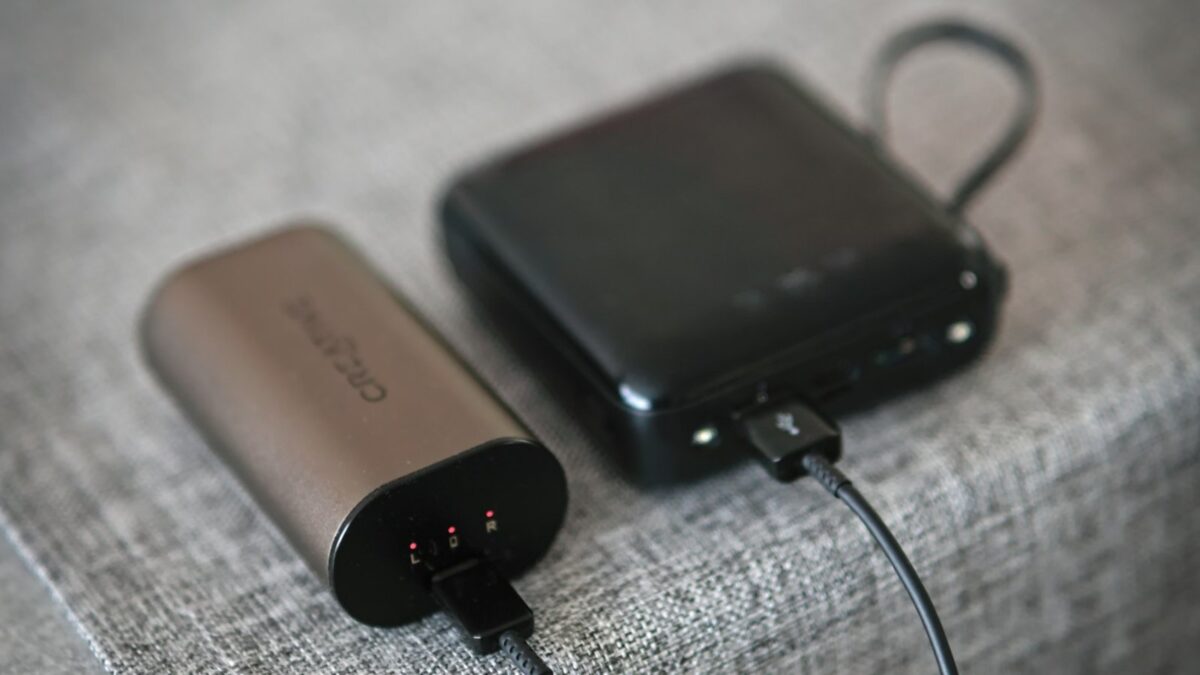
Anker's PowerCore 24K is sold on a 24,000 mAh, 86.4 Wh rating, but TechRadar's own measurement found only 73.1 Wh actually reaches your device - and only one port can recharge it at full speed.
Anker lists the 737 Power Bank, also sold as the PowerCore 24K, at 24,000 mAh and 86.4 watt-hours, for $109.99. That rating describes the energy stored inside the cells, not what comes back out. TechRadar’s own testing measured 73.1 Wh of usable output at the bank’s full 140-watt speed – about 85 percent efficiency, and a gap of over 13 Wh between the number on the box and the number that actually reaches a laptop or phone. Anker isn’t unusual in this; every power bank loses some energy to heat and conversion. The question is whether Anker says so clearly enough, and it doesn’t.
Key facts
- Rated capacity: 24,000 mAh / 86.4 Wh; $109.99 list
- TechRadar measured usable output: 73.1 Wh at 140 W, 77.1 Wh at 100 W, 70.5 Wh via USB-A
- Two USB-C ports plus one USB-A; 140 W max output combined
- 630 g; 155.7 x 54.6 x 49.5 mm
- Full recharge in under 1 hour at 140 W – but only through the right port
86.4 Watt-Hours In, 73.1 Watt-Hours Out
The 86.4 Wh figure Anker prints on the 737 comes from a standard formula: nominal voltage multiplied by the cells’ rated milliamp-hours. It’s an industry-standard way of stating capacity, and it’s also airline carry-on paperwork’s preferred number, since most airlines cap portable batteries at 100 Wh. It is not, however, a promise about how much of that energy you will get to keep.
TechRadar’s testing put real-world delivery at 73.1 Wh when pulling the full 140-watt output, 77.1 Wh at a more moderate 100 watts, and 70.5 Wh through the USB-A port. Every one of those numbers is meaningfully below 86.4 Wh, and the fastest charging speed – the one Anker markets hardest – is also the least efficient of the three.
Where the Missing Watt-Hours Actually Go
The gap isn’t a defect. Converting stored battery chemistry into a regulated USB-C output involves voltage conversion circuitry, and that circuitry dissipates energy as heat rather than delivering it downstream. TechRadar’s 85 percent efficiency figure at 140 W is a reasonable result for a fast-charging power bank at that wattage; it’s the size of the gap that makes it worth naming rather than assuming.
A buyer planning around this power bank for a specific trip – say, expecting to fully recharge a phone battery a set number of times – should plan against 73.1 Wh at speed, not 86.4 Wh on the box. That’s roughly a 15 percent shortfall against the advertised number, which is enough to be the difference between one more charge and running dry.
It’s also worth pricing the gap. At $109.99, the 737 works out to roughly $1.27 per rated watt-hour and closer to $1.50 per watt-hour actually delivered at 140 W. Neither figure is unusual for a fast-charging power bank in this capacity class, but only the second one reflects what a buyer is really paying for.
Slower Charging Wastes Less of the Battery
TechRadar’s three measurements form a pattern worth reading together, not in isolation: 73.1 Wh at 140 W, 77.1 Wh at 100 W, and 70.5 Wh through the USB-A port. Dropping from the fastest USB-C speed to 100 watts recovers about 4 Wh of usable capacity – roughly 5 percent more energy for a meaningfully slower charge. The USB-A port, meanwhile, is the least efficient path of the three despite not being the fastest, which is typical of the older USB-A standard rather than a flaw specific to Anker’s design.
The practical takeaway is that the 737’s fastest setting is also its most wasteful. A traveler trying to squeeze the most total charge out of the bank before it needs a wall outlet again is better off at 100 W than at 140 W, even though 140 W is the number Anker leads with in its own marketing.
One Port Recharges the Bank at Full Speed. The Others Don’t.
The 737 has two USB-C ports and one USB-A port, and Anker rates the combined output at 140 watts. What isn’t obvious from the spec sheet is that recharging the power bank itself back up to full – a task TechRadar clocked at under an hour at 140 W – depends on using the correct port. Plug into the wrong one and the same 140-watt wall charger won’t refill the bank at its rated speed.
This is the kind of limitation that only shows up in independent testing, not in a spec table, because a spec table lists what the hardware is capable of under ideal conditions rather than which physical port triggers those conditions. A buyer who alternates ports out of habit – whichever one happens to be free on a crowded desk – can end up recharging the 737 far slower than the headline number suggests, with no error message explaining why.
It’s a small detail next to the watt-hour gap, but it compounds the same underlying problem: the number on the box describes best-case behavior, and best-case behavior on a multi-port power bank depends on cables, ports, and settings the box doesn’t spell out. Anker’s own product page lists the port count and the 140 W ceiling; it doesn’t flag which port to use for the fastest recharge, leaving that detail for independent reviewers to find.
630 Grams of Battery, and What It’s Actually Good For
At 630 g and 155.7 x 54.6 x 49.5 mm, the 737 is a dense, pocketable brick rather than something to forget you’re carrying. That weight is the tradeoff for 140-watt output and a genuine 24,000 mAh cell count, and it’s a fair trade for anyone who wants to fast-charge a laptop, not just top off a phone.
- 140 W output can fast-charge a laptop, not only a phone
- Two USB-C ports plus one USB-A cover most device combinations at once
- Full recharge in under an hour at 140 W – through the correct port
- 73.1 Wh usable at that same 140 W speed, the number to plan trips around
What the Rated Number Is Useful For, and What It Isn’t
The 86.4 Wh rating still matters for one specific purpose: it’s comfortably under the 100 Wh threshold most airlines use to allow a power bank in carry-on luggage without special approval. As a legal and logistical figure, it’s accurate and useful. As a promise about performance, it overstates what the 737 actually delivers by roughly 13 watt-hours at its fastest setting.
None of this makes the 737 a bad power bank – TechRadar’s efficiency numbers are within the normal range for fast-charging hardware at this wattage, and the sub-hour recharge time is genuinely fast when it’s used correctly. But a buyer comparing capacity claims across power banks should treat every manufacturer’s watt-hour rating as a ceiling, not a delivered figure, and the 737’s real efficiency numbers only exist because TechRadar measured them independently.
Anker is far from alone in leading with the rated number rather than the delivered one; it’s standard practice across the power bank category, and the airline carry-on limit gives every manufacturer a reason to keep the rated figure under 100 Wh regardless of real-world output. That’s exactly why independent measurement matters here – the spec sheet and the airline paperwork are optimized for different audiences than the buyer trying to figure out how many phone charges they’re actually getting.
Sources: Anker · TechRadar · Gadgetoid
Articles on Read Vault are researched and written by the site’s editorial team.