Sonos Beam (Gen 2) and Plex Media Server: What It Costs to Keep a Five-Year-Old Setup Running
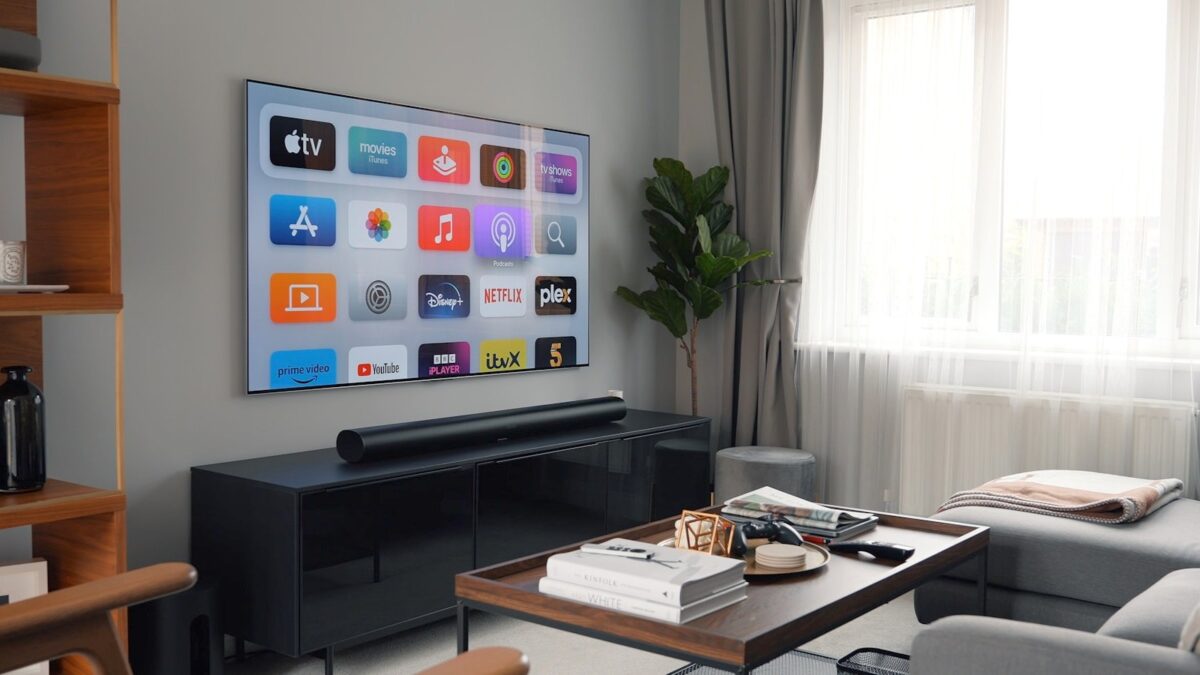
A soundbar and media server software are not rival purchases. Put them in one room and the shared question is what each asks of you every year after the first.
A soundbar has never been an alternative to media server software, and no reader has ever had to pick between them, so this is not the buying decision the original title implied. It is the question that actually connects them: both are fixtures that sit in a room for years, and both have changed what they ask of an owner who already bought in. One has quietly gained fifty dollars without gaining a successor. The other has moved its prices three times in fourteen months and put a feature that used to be free behind a payment.
Five years on sale, no Gen 3, and fifty dollars more than at launch
TechRadar’s review records the Beam (Gen 2) arriving in October 2021 at 449 dollars in the US. On 1 September 2026 Sonos’ own store listed it at 499. That is a fifty-dollar rise on a product that has not been replaced, redesigned or respecified in the intervening five years, and Sonos’ Beam page carries no newer-model notice of the sort other manufacturers use when a successor is close.
For a buyer, no successor is a mixed signal rather than a good one. It removes the risk of being superseded a fortnight after purchase, which is real enough elsewhere in this category. It also means the hardware you are paying more for in 2026 is the hardware that was designed in 2021, and everything that has changed about owning it has changed in software.
What that 2021 hardware is, per Sonos’ own listing, is a compact bar with a processor the company says is 40 percent faster than the first Beam, AirPlay 2, Trueplay tuning, and a choice of Sonos Voice Control, Alexa or Google Assistant. None of that has aged badly. The chip has to keep running an app that has been rebuilt around it since, which is the part worth thinking about.
Three ways to pay Plex, and one of them tripled on 1 July 2026
The monthly and annual Plex Pass held still at 6.99 and 69.99 dollars. The lifetime pass did not. The FPS Review reported on 20 May 2026 that it would go from 249.99 to 749.99 dollars from 1 July 2026, with a cutoff for the old price of 8:01 PM Eastern on 30 June. Plex said the new figure reflects the real, ongoing value of the software, and disclosed that it had considered abolishing lifetime purchases altogether on the grounds that recurring subscriptions are more sustainable for long-term development.
Set that against where the same pass started. Plex’s own blog puts the lifetime price at 119.99 dollars before 29 April 2025, when it went to 249.99. One product, three prices, fourteen months. Existing lifetime holders were untouched by either move, and anyone who bought before 28 April 2025 locked in the original figure, which is why the people who feel best about Plex today are the ones who paid least. A verification note belongs here too: plex.tv renders its pricing client-side and returned no figures to a fetch, so these numbers come from press coverage rather than a live reading of Plex’s own page.
Remote playback is the feature the money buys
Plex announced on 19 March 2025 that from 29 April it would no longer offer remote playback as a free feature. Watching your own files inside your own house stayed free and still is. Reaching them from anywhere else now requires either a Plex Pass held by whoever runs the server or a Remote Watch Pass held by the person watching. Nothing about the files changed; the permission to reach them did.
The structure matters if you are a guest on someone else’s server. The Plex Pass is bought by the server owner, so if that person has not bought one, every viewer needs their own Remote Watch Pass. How-To Geek reported that this pass left introductory pricing on 1 June 2026, going from 1.99 to 2.99 dollars a month and 19.99 to 29.99 a year, a rise of fifty percent. Plex’s notice told holders that renewals from that date would be at the normal subscription price, and did not say anyone would be grandfathered.
It is worth knowing exactly how little that pass buys. Plex describes it as enabling remote streaming of personal media from any server you have access to, and explicitly not as including the other Plex Pass features, so Skip Intro, Skip Credits and downloads all stay on the other side of the more expensive subscription. A viewer paying 29.99 a year is buying back one capability that used to cost nothing.
What the Beam does not do, at 499 dollars or any other price
Sonos lists five class-D amplifiers, one centre tweeter, four elliptical midwoofers and three passive radiators, with HDMI eARC and a 4.9-foot cable. The Dolby Atmos it advertises is produced through phantom height channels; there are no up-firing drivers in the cabinet. TechRadar’s reviewer put the consequence plainly, writing that they did not experience the kind of overhead sound you get from its larger sibling, the Sonos Arc.
The same review flags two other limits worth knowing before you spend. TruePlay room calibration still only works from an iOS device, so a household with no iPhone or iPad cannot tune the bar to its room at all. And the Beam costs more than the model it replaced, which was true at launch and is more true at 499.
What the app still would not do in the middle of 2026
On 14 July 2026 TechRadar reported that Sonos had begun a two-week rollout of an app update bringing tab navigation with clear selection indicators, the ability to reorder speakers and rooms, speaker pinning, and an iOS volume slider that expands to show numeric values. Sonos introduced it by saying it had a new app update and that it was a big one. Reordering a list of speakers was being announced as news in the middle of 2026.
Six days earlier the same outlet had reported that the company was only now moving from repairing the app’s technical faults to improving it, and that owners on Sonos’ own subreddit had started building third-party alternatives to do what the official app will not. The gaps it listed are not exotic.
- Adding front left and right surround speakers
- Switching between home-theatre and music arrangements without reconfiguring
- Storing more than one saved room-tuning profile
- Playing local files over UPnP
Year one, and every year after that
The soundbar is a single payment. At Sonos’ own 1 September 2026 price that is 499 dollars, and then nothing, forever, except whatever the control app becomes. The running cost of a Sonos product is not money, it is dependence on software the company keeps rewriting.
Plex is the opposite shape. Nothing at all if everyone watches inside the house. Around 69.99 dollars a year for a server owner who wants access from outside, or 29.99 a year for a viewer buying access to someone else’s server, or 749.99 once, which is more than ten years of the annual pass paid up front. Users quoted by The FPS Review pointed at Jellyfin, which is free and does much the same job, and at their own luck in buying lifetime access years ago.
There is no verdict to give here because there is no contest. If you want better dialogue out of a television, the Beam is the thing under discussion and its price is fixed and knowable. If you want your own films reachable from a hotel room, that is now a subscription decision, and it is the one of the two that will keep asking you for money.
Sources: Sonos · TechRadar · Plex · The FPS Review · How-To Geek
Articles on Read Vault are researched and written by the site’s editorial team.