One Asks You to Plan a Day Ahead, the Other Asks Nothing New
The Ninja CREAMi requires a 24-hour freeze before it does anything. The Kindle Paperwhite just needs charging. What that difference means for whether either fits a routine.
Nobody chooses between a countertop ice cream maker and an e-reader, so this isn’t a comparison of which to buy. It’s a comparison of what each one asks of the person who owns it. The Ninja CREAMi’s base recipe requires a 24-hour freeze before the machine can do anything with it — a genuine change to how someone plans a dessert. The Kindle Paperwhite (2024) asks for nothing new; it fits into an existing habit, reading, without requiring the owner to adopt a different one.
A dessert that has to be planned a day in advance
The CREAMi’s core mechanic is a 24-hour freeze: a base mixture goes into one of the machine’s 16-ounce pints, spends a full day in the freezer, and only then gets processed through one of the NC301’s eight programs. That’s not a criticism of the result, but it is a real constraint — there’s no same-day, spontaneous use of the base recipe. A household has to decide the night before that it wants ice cream tomorrow, which is a different kind of commitment than most kitchen appliances ask for.
Compare that to a blender or a stand mixer, which turn raw ingredients into a finished result in minutes. The CREAMi’s whole design depends on a step that happens away from the machine entirely, in a freezer, hours before anyone touches the appliance itself. That’s neither good nor bad on its own — plenty of cooking involves advance prep — but it means the CREAMi only fits smoothly into a household that already thinks a day or two ahead about what it wants to eat.
What happens when the freeze gets skipped
The 24-hour figure is stated as a requirement for the base recipe, not an optional suggestion — there’s no shortcut described in the facts confirmed for this piece that lets a household skip the freeze and still use the machine’s eight programs as intended. In practice, that makes the planning requirement closer to a fixed rule of how the appliance is meant to be used than a soft guideline a busy household could bend.
An e-reader that changes nothing about how someone already reads
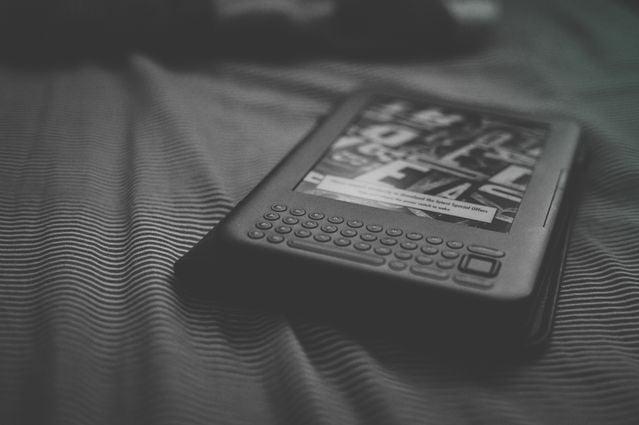
The Paperwhite doesn’t ask for planning; it asks for a charge. Amazon claims up to 12 weeks of battery life from the 1,900 mAh cell, and the device is rated IPX8 for one meter of water for 60 minutes, so it tolerates being dropped in a bag or read near a pool without changing how someone uses it. At 211 grams and 7 inches, it’s built to slot into an existing habit — reading — rather than create a new one. That’s a lower bar to clear than the CREAMi’s, and it shows in how differently the two products fit into a day.
Twelve weeks is long enough that charging stops being a planning question at all — it becomes something that happens every couple of months, in the background, rather than something a reader has to think about before picking the device up. The USB-C port and 16 GB of storage (32 GB on the Signature edition) mean the only real decision a new owner makes is how many books to load onto it before setting off; nothing about the device itself demands a change in when or how someone reads.
Fifteen pounds and a permanent spot on the counter
The CREAMi’s commitment isn’t only about timing. At 15.94 pounds and roughly 17.44 x 8.58 x 18.39 inches, the NC301 isn’t a small appliance to pull out only when needed; it’s the kind of machine that tends to claim a permanent spot on a counter once it’s used regularly, which is its own quiet demand on a kitchen. SharkNinja’s own listing puts it at 800 W with a 1-year warranty, standard territory for the category — the size and the freeze time are what actually distinguish it, not the electrical specs. SharkNinja has since expanded the line well beyond the NC301.
- NC351: $199.99
- NC301: $229.99
- NC501 Deluxe: 11-in-1
- NC601: XL
- NC701 Swirl: 13-in-1, $299.99
Two products, two different kinds of buy-in
Whether either of these fits a household has less to do with price or features than with which kind of commitment someone is willing to make. The CREAMi rewards a household that already plans meals a day or more out; sprung on it without warning, the 24-hour freeze turns a dessert craving into tomorrow’s project. The Paperwhite asks for the opposite: pick it up and read, the same as any other book, with a battery long enough that charging rarely intrudes on the habit at all.
That difference is worth naming honestly before either product ends up back in a cupboard unused. An appliance that demands a new habit isn’t a bad appliance — the CREAMi’s underlying result is presumably the reason SharkNinja has expanded the line rather than shrinking it — but it’s a worse fit for someone who wants dessert on impulse than for someone who’s willing to treat it the way they’d treat a slow cooker or a bread starter: something fed the day before it’s needed. A gadget that asks nothing new, like the Paperwhite, has a much shorter path from purchase to daily use, precisely because it isn’t replacing a routine so much as continuing one.
The test worth applying before buying either isn’t ‘do I want this result’ — almost everyone would say yes to better ice cream or a good book — but ‘am I the kind of household that already does the planning this requires.’ A family that meal-preps on Sundays already has the habit the CREAMi needs; one that decides dinner at 6 p.m. will find the 24-hour freeze a persistent source of friction no recipe can fix. The Paperwhite doesn’t have an equivalent failure mode, because it was never asking for a new one.
Sources: SharkNinja · Good e-Reader · Android Authority
Articles on Read Vault are researched and written by the site’s editorial team.