Instant Pot Survived Bankruptcy. The Warranty Is Still One Year.
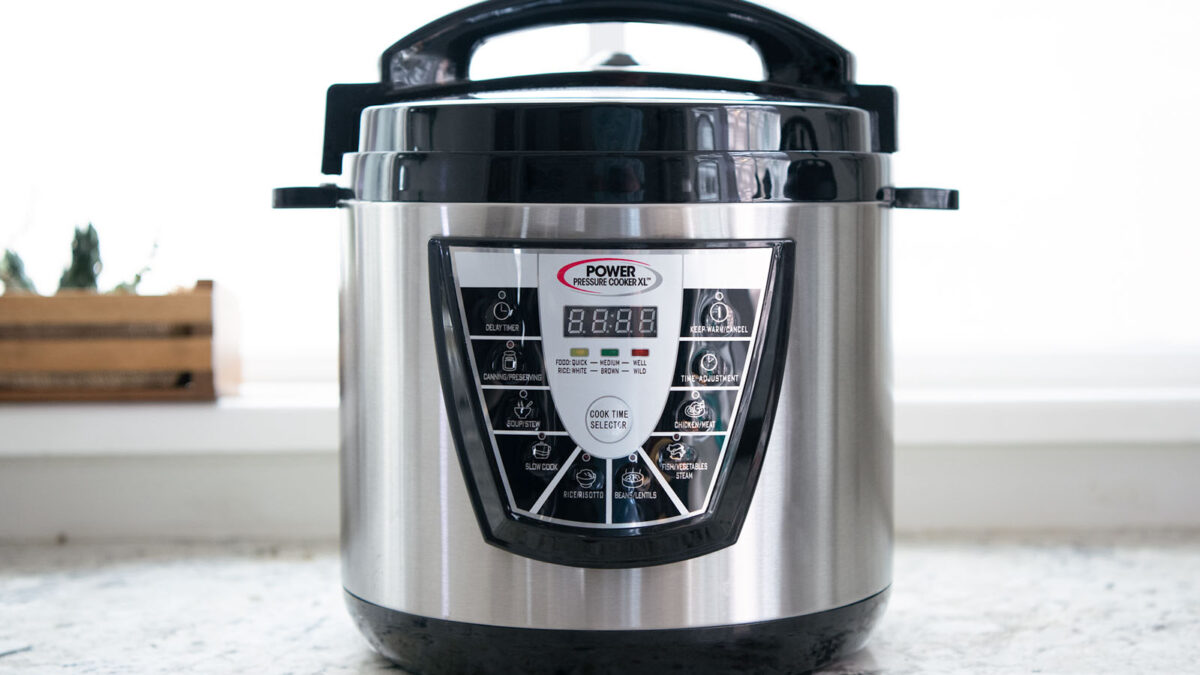
Instant Brands emerged from Chapter 11 under a private-equity owner and the Pro stayed in production, but the fine print on the warranty never changed.
Instant Brands, the company behind Instant Pot, filed for Chapter 11 bankruptcy protection on 12 June 2023. Centre Lane Partners completed its acquisition of the company around October 2023, and Instant Brands now operates as a standalone business with leadership drawn from Newell Brands, under chief executive Chris Robins, according to Retail Dive. The Instant Pot Pro made it through that restructuring and remains in production. What did not change in the process is the fine print: a 6-quart pressure cooker that still carries a one-year limited warranty, on a purchase most buyers expect to keep for a decade.
Instant Pot Pro specifications
- 1,200 watts, 6-quart capacity
- 10 functions, 28 Smart Programs
- 13.0 x 12.7 x 12.8 inches
- 1-year limited warranty
- Sits below Pro Plus and Pro Max in the current Instant Pot line
A Chapter 11 filing, a private-equity buyer, and a pot that kept selling
Instant Brands’ bankruptcy was not a small-appliance footnote. CBS News covered the June 2023 filing as the collapse of a company that had ridden a pandemic-era cooking boom and then could not carry the debt load that came with it. The Instant Pot Pro did not disappear from shelves during any of this. It kept shipping through the Chapter 11 process and into the sale to Centre Lane Partners, a private equity firm, which closed its purchase of the company around October 2023.
Retail Dive’s reporting on the aftermath is the more useful part for a buyer trying to decide whether to trust the brand again. Instant Brands now runs as a standalone company, no longer bundled with the wider portfolio that went into bankruptcy, and its leadership was rebuilt with executives from Newell Brands, including CEO Chris Robins. A standalone company under new ownership is not the same thing as the distressed conglomerate that filed for Chapter 11 in the first place, and it is a reasonable basis for buying the product again. It is not, on its own, a reason to expect more generous after-sale support than the paperwork actually promises.
For a buyer weighing a purchase today, the practical question is not whether Instant Brands survived – it did – but what kind of company it survived as. A private-equity owner reorganizing a bankrupt appliance maker is not automatically worse for customers than the pre-bankruptcy conglomerate was, but it is also not automatically better. Neither Retail Dive nor CBS News reports Centre Lane Partners making specific commitments about warranty service, parts supply or customer support beyond keeping the business running as a standalone company, which leaves that question genuinely open rather than answered in the brand’s favor.
Where the Pro sits now: below Pro Plus and Pro Max
The name still reads as a flagship, but it is not one anymore. Instant Pot now sells the Pro Plus, which adds WiFi connectivity, and the Pro Max above the Pro in its own lineup. A shopper who remembers the Pro as the higher-end Instant Pot from a few years ago is, by the current lineup, buying into the middle of the range rather than the top of it.
That matters less for cooking performance than for expectations about longevity of support. A manufacturer’s incentive to keep parts, firmware and customer service invested in a model tends to track how central that model is to the current lineup. A pressure cooker that is now the entry point into Instant Pot’s Pro-branded tier, rather than the top of it, is a reasonable one to buy, but it is worth knowing where it actually sits before assuming it gets the same attention as the newer Pro Max.
One year of warranty on an appliance meant to outlast it
A pressure cooker is a purchase people expect to keep using well past its warranty period, and the Instant Pot Pro’s coverage is a one-year limited warranty. That is a standard term for small kitchen appliances generally, not something specific to Instant Pot’s post-bankruptcy ownership. But it lands differently on a product whose manufacturer went through a Chapter 11 filing and a change of ownership within the last three years.
None of the source material here shows Instant Brands shortening or weakening that coverage after the acquisition; the warranty term is unchanged. The point for a buyer is simpler than a conspiracy about corporate neglect: a one-year warranty was already thin relative to how long people keep a pressure cooker, and a company that has been through bankruptcy once is not obviously a safer bet for support requests that come in year two or year five than one that has not. Treat the Pro as what its paperwork says it is, not what its brand history implies.
The word limited in one-year limited warranty is also worth reading literally rather than skipping past. A limited warranty typically covers manufacturing defects rather than every possible failure, and the specific exclusions in Instant Brands’ current warranty documentation were not part of the sourced material for this review. That is a gap worth naming rather than papering over: a buyer who wants the exact terms should read the warranty card in the box rather than infer them from the company’s ownership history, however reassuring that history now looks.
The spec sheet that survived the ownership change
Through all of this, the Instant Pot Pro’s physical product did not change. It runs at 1,200 watts, holds 6 quarts, and offers 10 functions across 28 Smart Programs, in a footprint of 13.0 by 12.7 by 12.8 inches. Those are the same specifications the Pro has carried since before the bankruptcy filing, and they are the more stable half of this story: a company’s ownership structure changed twice in under two years, and the appliance itself did not move.
That stability is a reasonable point in the Pro’s favor. It suggests Instant Brands treated the Pro as a product worth continuing rather than shelving or downgrading during the transition. It does not, by itself, answer the warranty question above – a product can stay identical while the company standing behind it changes in ways that matter more to a buyer three years from now than they do at checkout.
Three things to check before ordering one
None of the facts above are reasons to avoid the Instant Pot Pro. They are reasons to buy it with clear eyes about what has and has not changed since the bankruptcy.
- Confirm which tier is actually on offer – Pro, Pro Plus or Pro Max – since the Pro name alone no longer identifies the top of the range the way it once did.
- Read the one-year limited warranty as the real coverage window rather than a formality, and check what it excludes before assuming standard appliance coverage.
- Do not treat Instant Brands’ standalone, private-equity-owned status as either a red flag or a guarantee – the reporting here shows the company survived, not what its support looks like years out.
Sources: Retail Dive · CBS News · Instant Pot
Articles on Read Vault are researched and written by the site’s editorial team.