What Backs a Dyson V15 and an Instant Pot After You’ve Paid
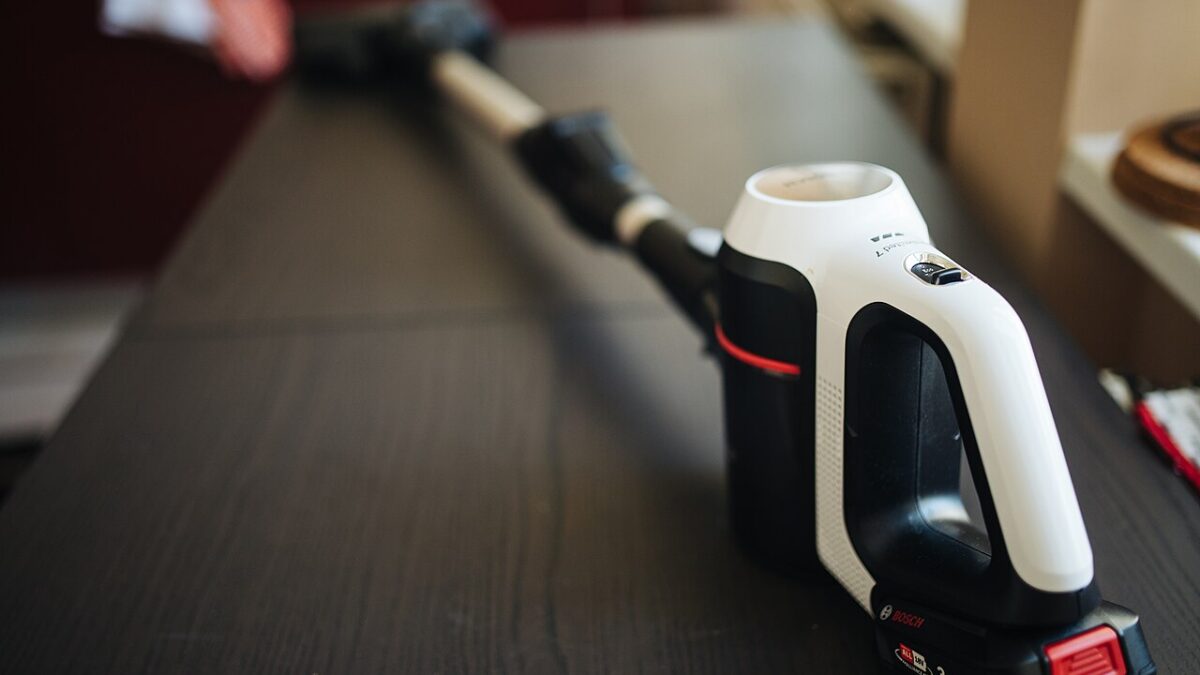
A cordless vacuum and a pressure cooker don't compete for the same purchase. Both raise the same question: what backs them up after you buy.
The Dyson V15 Detect and the Instant Pot Pro aren’t alternatives – a cordless vacuum and a pressure cooker don’t compete for the same purchase. They’re paired here because both ask the same question once the sale is done: what happens if something goes wrong, and is the company still going to be around to answer for it? Dyson backs the V15 for two years and has already replaced it twice with newer models while continuing to sell it. Instant Pot backs the Pro for one year, and its parent company went through Chapter 11 bankruptcy in 2023. Both facts matter more than either spec sheet.
Key facts
- Dyson V15 Detect: 2-year warranty. Instant Pot Pro: 1-year limited warranty
- Dyson has superseded the V15 twice: Gen5detect (2023), then V16 Piston Animal (early 2026)
- V15 still sold at $649.99, down from $849.99, as a value tier below the current flagship
- Instant Brands filed Chapter 11 on 12 Jun 2023; now standalone under Centre Lane Partners ownership
One year against two
Dyson covers the V15 Detect with a 2-year warranty. Instant Pot’s warranty on the Pro is limited to 1 year. That’s the plain comparison, worth taking at face value before getting into anything else about either company: whatever else is true about supersession or bankruptcy, Dyson is contractually on the hook for twice as long as Instant Pot is.
A vacuum Dyson has already replaced twice
The V15 Detect is not Dyson’s current flagship and hasn’t been for a while. The Gen5detect launched in 2023, and a V16 Piston Animal began rolling out in the US in early 2026 above $900. The V15 is still sold, now positioned as a value tier at $649.99, down from $849.99. Two supersessions in a few years is a fast cycle for a single product line, but Dyson keeping the V15 in its own lineup at a lower price – rather than discontinuing it outright – is a reasonable sign that parts and service support continue for a model the company is still actively selling, not quietly walking away from.
Instant Brands’ bankruptcy, and what came after it
Instant Brands, the company behind Instant Pot, filed for Chapter 11 bankruptcy on 12 June 2023. Centre Lane Partners completed an acquisition around October 2023, and the company now operates as a standalone business with leadership drawn from Newell Brands, including CEO Chris Robins. The Instant Pot Pro remains in production throughout.
The Pro has also moved within its own product line: it now sits below both the Pro Plus, which adds WiFi, and the Pro Max. That’s not a discontinuation signal by itself – companies routinely stack a base model under newer variants – but combined with the bankruptcy history, it’s worth knowing you’re buying the entry point in a lineup from a company that restructured three years ago, not the newest thing it currently makes.
What the warranty period doesn’t tell you
Modern Castle timed the V15’s run time at 68.5 minutes on Eco mode, ahead of Dyson’s own claim of up to 60 minutes – a rare case of a company underselling its own spec. But Vacuum Wars’ attachment testing scored the V15’s included tools at 1.80 out of 5, against a 4.55 out of 5 overall score for the machine as a whole – a real, specific weak point that a 2-year warranty doesn’t fix, because worn attachment performance isn’t a defect, it’s the design. Noise measured by Modern Castle ran from 71 dB in Eco up to 76 dB in Boost, and the machine weighs 6.8 lb as a stick and 4.2 lb as a handheld, with a 0.2-gallon bin.
Instant Pot Pro’s own spec sheet lists 1200 W, a 6-quart capacity, 10 functions and 28 Smart Programs, in a 13.0 x 12.7 x 12.8 in body. None of the facts here describe a defect in either product – they describe what you’re actually getting for the length of warranty each company offers, which is the part a warranty period alone can’t tell you.
What to check before buying either one
- Whether the model is the company’s current flagship or a value tier sitting below something newer
- Whether the stated warranty length matches how long you actually expect to keep the product
- Whether the company behind it has changed ownership or been through bankruptcy, and whether the product line survived that change
- Whether independent testing of the specific parts you’ll use most – attachments, functions, accessories – matches the headline spec
Sources: Vacuum Wars · Vacuum Wars · Modern Castle · Retail Dive · Instant Pot
Articles on Read Vault are researched and written by the site’s editorial team.