Class Action, CPSC Report, or Just an Older Model: Weighing Three Complaints
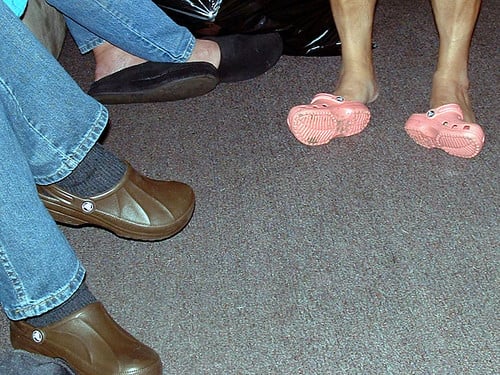
A Crocs lawsuit, an unverified Owala report and an older Sony model aren't the same kind of complaint, or the same cause for concern.
Crocs Classic Clogs, the Owala FreeSip and the Sony WF-1000XM5 aren’t alternatives – a clog, a water bottle and a pair of earbuds solve nothing in common. What they share is a complaint on record, and the three complaints are not remotely the same kind of thing: an active class action a judge has let proceed, a single unverified report in a federal database, and, for the earbuds, nothing more than the ordinary fact of being an older model. Treating those three as equally alarming is exactly the mistake worth avoiding, so this piece weighs each on its own terms.
Key facts
- Crocs: Valentine v. Crocs Inc. (N.D. Cal.), filed Dec 2022; judge denied dismissal on four claims, April 2024
- Owala: one unverified CPSC report (#20260106-93D60-2147324815, Jan 2026) describing spout mould after about a month
- Owala also scored 5.0/10 for cleaning and 7.5/10 for taste at OutdoorGearLab, separate from that report
- Sony WF-1000XM5: no lawsuit or CPSC report on file; superseded by the WF-1000XM6 (Feb 2026), now discounted to about $249.99
An active class action is the heaviest of the three
Valentine et al. v. Crocs Inc. (3:22-cv-07463, N.D. Cal.), filed 1 December 2022, alleges that Croslite – the closed-cell resin Crocs are made from, now 25 percent bio-circular material under an ISCC PLUS standard – shrinks when exposed to heat, sunlight or water, despite being marketed for exactly that kind of use. In April 2024, Judge Trina L. Thompson denied Crocs’ motion to dismiss on four claims, so the shrinkage and advertising allegations are currently proceeding through the court rather than resolved one way or the other. There is no CPSC recall attached.
That legal status is worth stating precisely: a denied motion to dismiss means the claims cleared a plausibility bar, not that a judge or jury has found them true. It is a real, ongoing legal process with a named defendant and a specific factual allegation – the heaviest-weight complaint of the three here, but still an allegation, not a finding.
One CPSC report, and why it shouldn’t be read as a pattern
The CPSC’s SaferProducts.gov database logged a single report, #20260106-93D60-2147324815, filed January 2026, describing mould in an Owala FreeSip spout after about a month of use. That is the entire record: one report, unverified by the CPSC, with no recall and no class action attached to Owala. A single unverified consumer report is real information – someone filed it, and it describes a specific, plausible failure mode for a bottle whose steel body is hand-wash recommended rather than dishwasher safe – but it is not evidence of a defect rate. Treating one filing as if it describes a widespread problem overstates what the database entry actually says.
Owala’s ordinary criticism, separate from the report
Apart from that single report, Owala has drawn the kind of routine criticism any product gets from independent reviewers. OutdoorGearLab’s testing of the FreeSip Sway scored it 75/100 overall, but marked cleaning at 5.0 out of 10 and taste at 7.5 out of 10, with testers detecting a plastic flavour when the bottle held hot water. That is a genuine, sourced limitation – and a useful contrast to the CPSC report, because it shows what an ordinary, well-evidenced complaint looks like next to a single unverified filing about the same product.
Sony’s earbuds carry the ordinary complaint: they got older
There is no lawsuit and no CPSC filing against the WF-1000XM5 in the record here. What happened to it is the routine thing that happens to nearly every electronics product eventually: Sony launched the WF-1000XM6 on 13 February 2026 at $329.99, and the XM5 has since been discounted to roughly $249.99. Sony’s own spec sheet claims 8 hours of ANC-on battery life; SoundGuys measured 9 hours and 32 minutes, ahead of the claim. Being superseded is not a complaint against the product – it is what happens to a product line when a company keeps making a newer one – and it is useful precisely because it shows what nothing wrong on record looks like, next to the other two.
Matching the response to the evidence
A pending class action with a named defendant and a judge’s ruling deserves real attention if you are weighing whether a Croslite product will hold up in the beach-and-pool use Crocs markets it for. A single unverified CPSC report deserves noting – and, for a bottle you plan to hand-wash rather than run through the dishwasher, some care about drying it out – without being treated as proof of a widespread flaw. And an older model with no complaint on file at all just needs a plain acknowledgment that a newer, pricier version exists, which is a value question, not a safety one. Conflating the three – giving a lawsuit and a single form submission the same weight – is how a shopper ends up either dismissing a real legal case or panicking over a single mould report a database hasn’t even verified.
Sources: TopClassActions · OutdoorGearLab · OutdoorGearLab · SoundGuys · SoundGuys
Articles on Read Vault are researched and written by the site’s editorial team.