86.4 Watt-Hours on the Box, 73.1 in the Lab: How Manufacturer Claims Hold Up
An Anker power bank, Bose headphones and Crocs clogs share nothing but a claim someone independently checked - and the three checks disagree.
The Anker 737 power bank, the Bose QuietComfort Ultra and the Crocs Classic Clog are not alternatives to each other – nobody cross-shops a power bank against a pair of clogs. They ended up in the same piece because each one carries a manufacturer claim that an independent party actually went and checked, and each claim held up differently: Anker’s number came in short, Bose’s number came in long, and Crocs’ claim about its own material is currently being argued in front of a judge rather than measured on a bench. That spread is the actual subject here.
Key facts
- Anker rates the 737 at 86.4 Wh; TechRadar measured 73.1 Wh usable at full 140 W output
- Bose rates the QuietComfort Ultra at about 24 hours ANC-on; SoundGuys measured 27h37m
- A federal judge let four claims proceed in Valentine v. Crocs Inc. over shrinkage and advertising, April 2024
- Crocs scored 62/100 at OutdoorGearLab, 12th of 16 water shoes tested
Anker’s number is a rating, not a delivery promise
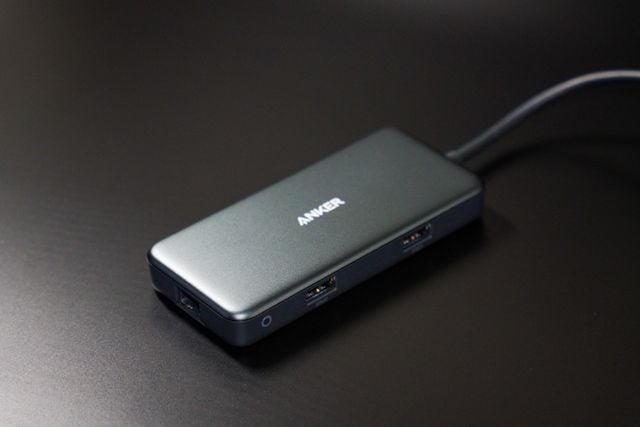
The Anker 737 (PowerCore 24K) is rated at 24,000 mAh, which Anker converts to 86.4 watt-hours on the spec sheet, with a 140 W maximum output split across two USB-C ports and one USB-A port. TechRadar’s testing measured what a device charging from it actually receives, not what the cell is rated to hold:
- 73.1 Wh usable at the full 140 W rate, about 85 percent efficiency
- 77.1 Wh usable at 100 W
- 70.5 Wh usable over the USB-A port
The physical bank behind the numbers
None of that gap is a defect – it is the conversion and heat loss inherent to any battery, and Anker’s own rated figure and the delivered figure were always describing two different things. The bank itself weighs 630 g and measures 155.7 x 54.6 x 49.5 mm, and TechRadar found it recharges in under an hour at the full 140 W rate. If the gap between the number on the box and the number that reaches your phone bothers you less than how fast the bank itself refills, that recharge time is arguably the more useful figure of the two.
Bose promised less than it delivered
Bose rates the QuietComfort Ultra at roughly 24 hours of battery life with active noise cancellation on. SoundGuys measured 27 hours and 37 minutes in its own testing, at 253 g with roughly 87 percent total noise attenuation by SoundGuys’ measurement. That is the least common outcome of the three checks here, and it is worth naming precisely because it cuts against the reflex to assume every spec-sheet number runs optimistic.
It is also worth knowing the QuietComfort Ultra tested here is the first generation. Bose announced a second generation on 10 September 2025, on sale from 2 October 2025 at $449, and continues to sell the first generation at a discount – $279 seen 31 August 2026 against a $429 list. The battery figure that beat its own claim belongs to the model now being sold at a markdown.
Crocs’ claim is being tested in a courtroom, not a lab
Crocs markets the Classic Clog’s Croslite material, now 25 percent bio-circular under an ISCC PLUS mass-balance standard, as suited to beach and pool use. Valentine et al. v. Crocs Inc. (3:22-cv-07463, N.D. Cal.), filed 1 December 2022, alleges the material shrinks when exposed to heat, sunlight or water – the exact conditions the marketing points buyers toward. In April 2024, Judge Trina L. Thompson denied Crocs’ motion to dismiss on four claims, meaning the shrinkage and advertising allegations are currently proceeding rather than resolved either way. There is no CPSC recall attached to this.
Separate from the lawsuit, OutdoorGearLab’s own lab testing scored the Classic Clog 62 out of 100, 12th of 16 water shoes tested, marking traction and construction at 5.0 out of 10 each. That is a different kind of check than the litigation – a performance opinion rather than a claim about durability under specific marketed conditions – and it is worth keeping the two apart. One says the shoe is mediocre at its job; the other says the marketing about what conditions it can handle may not hold up.
Which kind of check deserves how much weight
A lab measurement like TechRadar’s or SoundGuys’ answers a narrow, testable question and produces a number you can set directly against the spec sheet. A court’s denial of a motion to dismiss is a much lower bar than a verdict – it means the allegations are legally plausible enough to proceed, not that a judge or jury has found them true. And a review score like OutdoorGearLab’s is a holistic opinion, useful but not a claim-by-claim audit of a manufacturer’s language. A buyer weighing whether to trust the box on any of these three products should first ask which kind of evidence is actually in front of them.
Sources: TechRadar · SoundGuys · Bose · TopClassActions · OutdoorGearLab
Articles on Read Vault are researched and written by the site’s editorial team.