A Withdrawn Review, and What the Soy Candle Market Actually Looks Like
This page previously reviewed a product Read Vault could not verify exists. Here is the real regulatory history and evidence behind soy candles instead.
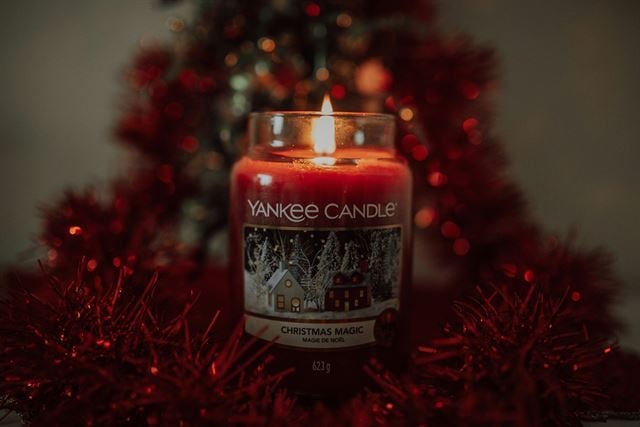
This page previously carried a review of a product called the Yankee-Free Soy Candle Set. Read Vault could not verify that this product exists: exact-phrase, brand and retailer searches turn up nothing but the real, differently named brand Yankee Candle. The likeliest explanation is a templated product name that spliced a real brand with a generic marketing suffix. We have withdrawn that review rather than leave it standing. What follows covers the real soy candle category instead: the wick regulation still governing candle safety, what soy wax actually changes, why “phthalate-free” became a label claim, and where the evidence on indoor air genuinely stands.
Key facts
- CPSC banned candles with lead-cored wicks in 2003
- Federal Register 68 FR 19071, published April 18, 2003
- The rule followed EPA report EPA/600/R-01/001 (2001) on candles and indoor air
- That EPA study found lead-core-wick candles could push indoor lead above EPA-recommended thresholds
The 2003 Rule That Still Governs Candle Wicks
The U.S. Consumer Product Safety Commission banned candles made with lead-cored wicks in 2003, publishing the rule in the Federal Register as 68 FR 19071 on April 18 of that year. The rulemaking followed a 2001 EPA report, “Candles and Incense as Potential Sources of Indoor Air Pollution” (EPA/600/R-01/001), which found that candles burning lead-core wicks could push indoor lead levels above the EPA’s recommended thresholds. Metal-cored wicks were used before the ban because a stiffer core helps a wick stand upright in wax; the rule effectively pushed the industry toward cotton and other non-metallic cores instead.
That history predates soy wax’s rise as a mainstream category by years, but it still shapes candle safety today: any wick sold in the U.S. market, in a soy, paraffin or blended candle, has to comply with the post-2003 rule. It is worth stating plainly because it is the one piece of candle safety history that is fully settled, federally documented, and traceable to a specific study, in contrast to some of the newer claims made about candle safety that the evidence does not yet support as clearly.
Soy Burns Cooler and Longer Than Paraffin
Soy wax is derived from soybean oil, a renewable input compared with paraffin’s petroleum base. It burns cooler and, per industry sources, generally longer than paraffin — estimates put the difference at roughly 30 to 50 percent longer burn time per volume of wax, largely because soy wax has a lower melting point and burns more slowly. That is a real, measurable difference in how long a candle of a given size lasts, and it is the main practical reason a buyer would choose soy over paraffin for value rather than for any claimed health benefit. A slower, cooler burn also tends to produce a more even wax pool across the top of the candle, which is why soy is generally regarded as forgiving for container candles specifically.
Soot Comes From the Wick, Not the Wax
What soy wax does not reliably change is soot. The National Candle Association attributes soot production mainly to wick length and to flame disturbance — drafts, an untrimmed wick, a candle burned too long in one sitting — rather than to the wax itself. A soy candle with an untrimmed wick in a draft will soot just as a paraffin candle would; “soy” on the label is not, by itself, a soot-free guarantee, and a buyer who wants to avoid soot is better served trimming the wick before every burn than switching wax type alone. This is one of the more common points of confusion in how soy candles get marketed: a wax-type claim gets credit for what is really a wick-maintenance outcome.
Why “Phthalate-Free” Became a Label Claim
Phthalates are a class of chemicals historically used in some synthetic fragrance oils to help scent bind and disperse. Because some fragrance suppliers used them, “phthalate-free” became a claim candle makers started printing on labels to signal a specific formulation choice to buyers asking about it. The claim is about the fragrance oil supply chain, not about wax type — a soy candle can use a fragrance oil that contains phthalates, and a paraffin candle can be phthalate-free, depending entirely on which fragrance oil the maker sources. A buyer reading “soy” as shorthand for “phthalate-free” is conflating two separate ingredient decisions that a candle maker can mix and match independently.
The Indoor Air Question the Evidence Hasn’t Settled
Beyond the lead-wick ban, which is a settled and specific regulatory fact, the broader question of whether burning scented candles poses a meaningful indoor air health risk remains inconclusive in the available literature. That is a genuinely unresolved area, not a cover for a hidden hazard, and it should be reported as such: buyers weighing scented candles against health concerns are working with real uncertainty rather than a clear verdict either way, regardless of whether the wax is soy or something else. Anyone shopping on the strength of a specific health claim about scented candles, soy or otherwise, should treat that claim with the same scrutiny as any other unsettled area of consumer health science.
Reading Wax-Type Marketing With the Facts Above in Hand
Put together, the verified facts here point to a specific way of reading a soy candle label rather than a blanket verdict for or against the category. The lead-wick ban is a genuine, settled safety baseline that applies to every candle sold in the US market today, soy or otherwise, so it is not something a soy label adds on top of a paraffin candle. The longer, cooler burn is a real and specific advantage of soy wax that a buyer can expect to see reflected in how long a candle actually lasts. Soot resistance and general indoor-air safety, by contrast, are claims that the evidence does not cleanly attach to wax type at all — the first comes down mostly to wick maintenance, and the second remains an open question industry-wide.
That leaves phthalate content as its own separate line item, tied to the fragrance oil rather than the wax, worth checking on a label independently of whether the wax itself is soy, paraffin, coconut or a blend. A shopper who wants the full picture on any specific candle — burn time, fragrance ingredients, wick material — has to check more than the word “soy” on the front of the label to get it.
Real Brands in the Soy Candle Category
Buyers looking for an actual soy candle to buy, rather than the unverifiable product this page previously reviewed, have real options across a range of price points. None of the following claims are made on these brands’ behalf beyond their existence and category — Read Vault has not independently tested them — but each is a real, findable brand selling soy or soy-blend candles, which is more than could be verified for the product this article replaces.
- Yankee Candle — the real, differently named brand behind the confusion, which sells its own soy-blend candle line
- Brooklyn Candle Studio
- Keap
- Grow Fragrance
- Slow North
- Pure Plant Home
Sources: CPSC · Federal Register · EPA · Healthline
Articles on Read Vault are researched and written by the site’s editorial team.