The Bed Says Wood. The Duvet Skips a Number.
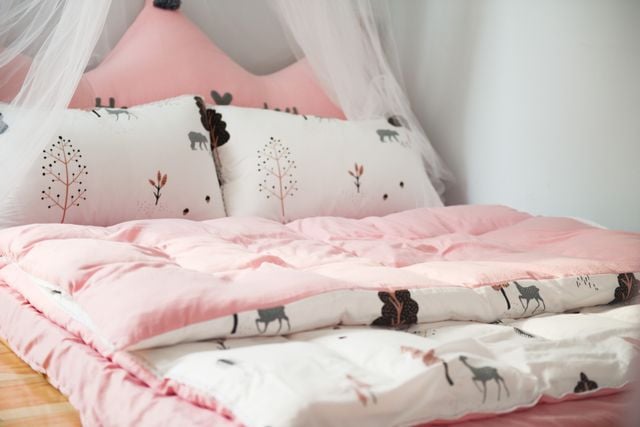
A bed frame and a duvet aren't substitutes, most buyers want both. This compares what West Elm and Boll & Branch put on, or leave off, their own product pages.
Read Vault was assigned this as a head-to-head, but a bed frame and a duvet insert aren’t alternatives; most shoppers who want one also want the other. The real comparison is what each brand’s own product page discloses. West Elm markets a bed built from wood without stating plainly that several panels are engineered wood and veneer rather than solid hardwood. Boll & Branch sells a duvet by its fill power everywhere except the one place a shopper would use it to compare: its own listing. This is about reading past the marketing copy on both.
Solid Wood, Except Where It Isn’t
West Elm’s Mid-Century Bed is built from FSC-certified wood with water-based finishes, and it carries GREENGUARD Gold and Fair Trade certification. What the listing doesn’t say up front is that construction is a solid wood frame and legs paired with engineered wood and veneer panel sections, not the solid hardwood the word wood implies to most buyers. At roughly 65 inches wide by 87 inches long, with a headboard around 48 inches and 8 to 10 inches of clearance underneath, even those secondary dimensions come from third-party sources rather than West Elm’s own page, which is JavaScript-rendered in a way that didn’t let those figures be confirmed directly. That distinction matters more on a mid-century-style piece than it might elsewhere, because the appeal of the style leans on visible wood grain and joinery; a panel that’s veneer over engineered wood can look identical in a product photo while behaving differently over years of humidity changes and moving day than the solid sections around it.
The bed runs 799 to 1,499 dollars depending on configuration, with a queen priced around 999 dollars according to a secondary source. West Elm’s warranty is a one-year limited coverage against manufacturing defects, itself sourced secondarily rather than confirmed on West Elm’s own page.
None of the certifications on the page speak to that distinction either. FSC certification confirms the wood came from a responsibly managed forest, GREENGUARD Gold speaks to low chemical emissions, and Fair Trade certification addresses labor conditions in manufacturing. All three can be true of a product that’s only partly solid wood, which means a shopper reading the sustainability badges could reasonably, if mistakenly, take them as a proxy for construction quality.
A Wobble That Keeps Coming Back
Owner reports describe the headboard developing a wobble that needs its bolts re-tightened, recurring anywhere from quarterly to annually, not a one-time assembly issue but an ongoing maintenance task built into owning the bed. One owner who received a replacement unit after complaining reported the same creak returning. Veneer panels, meanwhile, are reported to scratch and chip, which matters more on a product marketed around its wood construction than it would on furniture that never claimed to be solid in the first place. Returns are accepted within 30 days, or 7 days for quick-ship upholstery, and a buyer may be responsible for return shipping depending on the reason. A wobble that needs re-tightening on a schedule isn’t itself unusual for flat-pack or semi-assembled furniture; most beds settle and need a check after the first few months. What’s notable here is the frequency reported, up to four times a year, and that a full replacement unit reportedly reproduced the same problem rather than resolving it, which points toward a design tolerance issue rather than one bad shipment.
A Fill-Power Number That Only Shows Up Off-Site
Boll & Branch’s Down Duvet uses 650 fill power white down inside an organic cotton shell, with baffle-box construction and corner loops to keep it attached to a duvet cover. It carries International Down Standard and OEKO-TEX Standard 100 certification. Fill power is the standard figure buyers use to compare warmth-to-weight across duvets from different brands, and it does not appear on Boll & Branch’s own product page at all. The number only surfaces through Sleep Foundation’s review of the product, meaning a shopper comparing this duvet against a competitor has to leave the manufacturer’s own listing to find the one spec that would let them do it. That’s a meaningfully different situation from a brand simply not advertising a feature; fill power is the number that tells a buyer whether a duvet marketed as midweight will actually feel midweight compared with a competitor’s midweight duvet, and without it on the primary listing, the comparison shopping the fill-power system exists to enable has to happen somewhere else entirely, on a site with no obligation to keep that information current.
A Bedding Warranty That Isn’t Really One
Boll & Branch’s published limited warranty covers mattresses and foundations only, not bedding, which means the duvet, priced at 409 dollars for a full/queen in midweight, carries no warranty in the sense that phrase usually implies for a bedding purchase. Its trial period is 30 nights, considerably shorter than the 100-night trials common to mattress-style purchases. Care instructions call for two full drying cycles after washing, and the duvet reportedly comes out of the dryer heavily wrinkled even after that. Reviewers describe it as expensive relative to rivals, a harder case to make when the spec that would justify the price sits off the brand’s own page. A thirty-night trial is long enough to judge whether the duvet feels right on a given night, but short enough that a slow problem, drying-cycle wrinkling that never fully resolves, or a fill that shifts unevenly inside the baffle boxes over months of use, might not surface before the return window closes. Pairing a short trial with no warranty coverage for the product itself means nearly all of the ownership risk after thirty nights sits with the buyer.
Two Kinds of Silence on the Same Bed
West Elm’s gap is about material composition: the word wood doing more work than the construction fully supports. Boll & Branch’s gap is a missing number on a product defined by that number. Neither omission is dishonest exactly, and neither product is badly made by the evidence here; the wobble and the missing fill-power figure are real but manageable issues, not defects that should rule either out. But a buyer furnishing a bedroom with both needs a third-party review, Sleep Foundation for the duvet, independent furniture coverage for the bed, to get the comparison either brand’s own page won’t fully give them. That’s not a reason to avoid either brand outright. West Elm’s certifications and Boll & Branch’s down and cotton sourcing are both independently verifiable and both check out against the facts available here. The issue is narrower than product quality: it’s that the page each brand controls is not, on its own, enough information to make the comparison a shopper came looking for, and both brands know exactly which numbers they left off.
Sources: West Elm bed · The Furnished Review West Elm · Boll & Branch duvet · Boll & Branch warranty · Sleep Foundation duvets
Articles on Read Vault are researched and written by the site’s editorial team.