Your Bulb Needs Their Account. Your Mattress Needs Their Foam Supplier.
Assigned as a bulb-vs-mattress matchup, this instead asks what happens when the company behind a purchase changes the terms, or itself, after you've paid.
Read Vault was assigned this as a head-to-head between a smart bulb and a mattress, two products no one actually cross-shops. What they share is a company that kept a hand on the product after the sale. Philips Hue’s parent made an account mandatory just to set up a bulb you already own, and Casper has changed hands twice since its 2020 IPO, most recently into the ownership of the same industry that supplies its foam. This piece is about what you’re really buying when a company, not just a product, sits behind the purchase.
Ownership and control, in order
- Sept 2023: Signify engineer George Yianni announces a Hue account will become mandatory to use the app
- 24 Jan 2022: Durational Capital Management completes taking Casper private, a deal reported at about 286 million dollars
- 1 Mar 2024: Joe Megibow becomes Casper CEO
- 7 Nov 2024: Carpenter Co., a polyurethane foam manufacturer, announces its acquisition of Casper
- 2025-2026: Hue’s platform refresh adds Bridge Pro and an Essentials tier, gating some features behind newer hub hardware
A Bulb That Works Fine Until You Want More From It
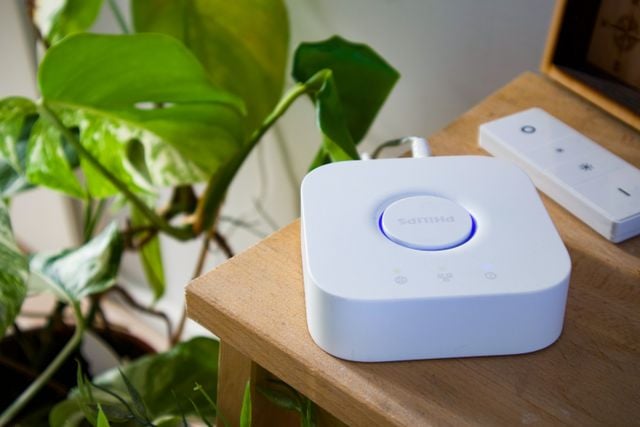
Philips Hue White Ambiance bulbs work over Bluetooth without any hub at all: on and off, dimming, and colour temperature between 2200K and 6500K all function straight out of the box. What Bluetooth alone cannot do is talk to a voice assistant, run geofencing, coordinate more than about ten bulbs, or handle full automation. For any of that, the product needs a Hue Bridge, a separate hub costing around 60 dollars, sold apart from the 30.99-dollar single A60 bulb or the 48.99-dollar A19 two-pack.
None of that is unusual for smart lighting. What changed is the account. In September 2023, Signify engineer George Yianni confirmed that a Hue account would become mandatory from 2024 onward to use the app at all. Local control still works once a system is set up, but the setup itself now requires creating an account and having an internet connection, a step that didn’t exist when many current Hue owners first bought their bulbs. Signify never published a firm date for enforcement, which has left owners of older installations checking, on their own, whether their setup still works the way it always has.
That divide between what a bulb does on its own and what it needs a hub, an account, and an internet connection to do is worth sitting with, because it’s the same divide that governs almost every smart-home product now on the market: a baseline that works locally, and a fuller feature set that runs through the manufacturer’s servers. Independent long-term reviews also report that the tunable white output renders less consistently across its range than the marketing promises, a smaller complaint on its own, but one more data point that what’s advertised and what’s delivered can drift apart over the life of the product, in ways a buyer only discovers after using it for months.
New Hardware, and Features That Stay Behind
Hue’s 2025-2026 platform refresh adds a Bridge Pro hub, an Essentials subscription tier, and a feature called SpatialAware scenes. Several of the new capabilities are gated to the newer Bridge Pro hardware, meaning a bulb bought years ago, and a Bridge bought alongside it, may not get everything the brand now advertises without another purchase. The bulb itself hasn’t changed; what it can do has, on Signify’s schedule rather than the buyer’s. For an owner who bought a starter kit years ago expecting Hue to simply keep working the way it always had, that’s a quieter kind of obsolescence than a discontinued product: the bulb still screws in and still turns on, but the ceiling on what it can do is now set by a purchase decision the owner hasn’t made yet.
A Company That Ended Up Owned By Its Own Supplier
Casper went public in February 2020, then went private again less than two years later: Durational Capital Management completed the buyout on 24 January 2022, in a deal Business Wire reported at roughly 286 million dollars. Joe Megibow took over as CEO on 1 March 2024. Eight months later, on 7 November 2024, Carpenter Co. announced it was acquiring Casper. Carpenter is a polyurethane foam manufacturer, the kind of company that makes the material inside a Casper mattress rather than the kind that historically sold finished beds to consumers. Casper now operates as a Carpenter Co. subsidiary. Three ownership changes in under five years is a fast turnover for a mattress brand that sells on the promise of a decade-long relationship with the customer who bought it, and each change brought a different set of incentives to a company whose entire pitch rests on being trustworthy enough to sleep on for years without a second thought.
That matters because a mattress purchase comes with a long tail of promises attached. Casper’s warranty runs ten years and covers indentation deeper than one inch, foam splitting, and cover defects, while excluding normal softening. A ten-year promise made in 2026 is a bet not just on the mattress but on whichever entity is answering for that warranty in 2036, and this mattress has already outlived two ownership structures inside its own warranty period. None of this means the warranty won’t be honored; Casper’s own page still lists the same ten-year terms today as it did before the Carpenter acquisition. But a warranty is only as good as the willingness of whoever holds it to pay out on a claim a decade from now, and that willingness has already survived one private-equity buyout and one acquisition by a supplier, with no guarantee it stops there.
What Buyers Are Actually Agreeing To
Neither company did anything illegal or even, by industry standards, unusual: device makers add accounts, and consumer brands get bought and sold constantly. The Casper Original, at 1,295 dollars for a queen, is explicitly excluded from all of Casper’s own sitewide sales, a small detail that underlines how much of the ownership experience is set by the seller rather than negotiated with the buyer. The honest takeaway for both products is the same: functionality and support are not fixed at the point of sale. They are administered, on an ongoing basis, by whichever company happens to be holding the account, the warranty, or the hub firmware that week. For a buyer, the practical response is less about avoiding either product and more about not mistaking either purchase for a finished transaction. A Hue bulb bought today is also an agreement to keep an account current with a company that can change the terms of that account on its own timeline. A Casper mattress bought today is also a ten-year bet on a subsidiary of a foam manufacturer honoring paperwork written by two owners ago. Neither risk is severe enough to rule the products out, but neither is the kind of thing a spec sheet or a showroom visit will tell you.
Sources: Casper warranty · Carpenter Co. acquires Casper · Business Wire Durational · Philips Hue A60 · Hueblog account requirement · 9to5Google Hue 2026
Articles on Read Vault are researched and written by the site’s editorial team.