Lifetime, Indefinite, and Ten Years: What Three Durability Warranties Actually Promise
A Dutch oven, a food container, and a mattress are each sold on the promise of lasting. What each warranty specifically covers matters more than how long it runs.
This article was assigned as a three-way matchup between the Le Creuset Dutch Oven, OXO’s POP food containers, and the Casper Original mattress — products from three different categories that no one would ever cross-shop. What they do share is a sales pitch: each is marketed on the promise that it will last, backed by a written warranty. The three warranties behind that promise are structured almost nothing alike — a limited lifetime warranty riddled with exclusions, an open-ended guarantee with no stated time limit, and a fixed 10-year warranty built around one specific, measurable threshold. What each document actually says turns out to matter more than how long each one runs.
Key facts
- Le Creuset 5.5qt Dutch oven: $455, limited lifetime warranty with broad exclusions
- OXO POP containers: $10.99-$22.99 each, “Better Guarantee” with no stated time limit
- Casper Original: $1,295 queen, 10-year warranty defined around a 1-inch indentation threshold
- Casper’s ownership has changed twice since 2020: private equity in 2022, then Carpenter Co. in 2024
Le Creuset’s ‘limited lifetime’ comes with a long exclusions list
Le Creuset’s 5.5-quart Signature Round Dutch Oven, at roughly 13.1 pounds and oven-safe to 500°F, carries a limited lifetime warranty. America’s Test Kitchen called a larger, 7.25-quart version of the same line “the gold standard” and “the best Dutch oven money can buy” — while also finding that a Cuisinart competitor at roughly a third of the price “performs almost as well,” despite being 3 pounds heavier and chipping its rim under abuse testing. That comparison matters for a warranty discussion, because it establishes that the premium buys real, measured performance, not just a name — which makes the exclusions in the warranty behind that premium more worth reading closely.
The warranty itself excludes damage from “neglect, abnormal wear or tear, overheating, or any use not in accordance with the cookware instructions” — language vague enough to give Le Creuset wide discretion over which claims it honors. Tasting Table describes enamel chipping as one of the most frequently reported complaints, and notes that claimants report paying return shipping themselves on a heavy pot even when a claim is accepted. Enamel can also crack under thermal shock, a failure mode that sits uneasily close to “overheating,” one of the excluded categories, depending on how a claims reviewer interprets an ordinary cooking accident. A 2011 CPSC recall covered Le Creuset glass lids sold between October 2010 and January 2011, about 1,800 units over five breakage incidents with no injuries — it did not involve the enameled cast-iron pot itself, and shouldn’t be read as a mark against the cookware’s own warranty history.
OXO’s guarantee has no time limit and no clearly stated scope
OXO’s POP containers are covered by the “OXO Better Guarantee,” which carries no fixed time period at all — in principle, the most generous of the three by duration. In practice, that open-endedness doesn’t prevent a specific, well-documented failure: the push-button lid mechanism’s small metal prongs bend with constant use and jam the button, a problem common enough that iFixit publishes a dedicated repair guide for it.
The 2019 POP 2.0 redesign replaced multiple moving parts with a single flexible compliant mechanism and a thinner lid, but iFixit’s guide notes the new version actually needs more disassembly to fix a stuck lid than the original design did. The lid also traps water during washing. At $10.99 to $22.99 per unit, or about $18.66 each in a 3-pack, the containers are cheap enough that many owners likely replace a jammed one rather than test how the guarantee handles a claim — which means the guarantee’s real scope, and how OXO actually interprets “better” when a customer files a complaint, may be less tested in practice than its unlimited duration implies on paper.
Casper’s warranty is the most specific of the three
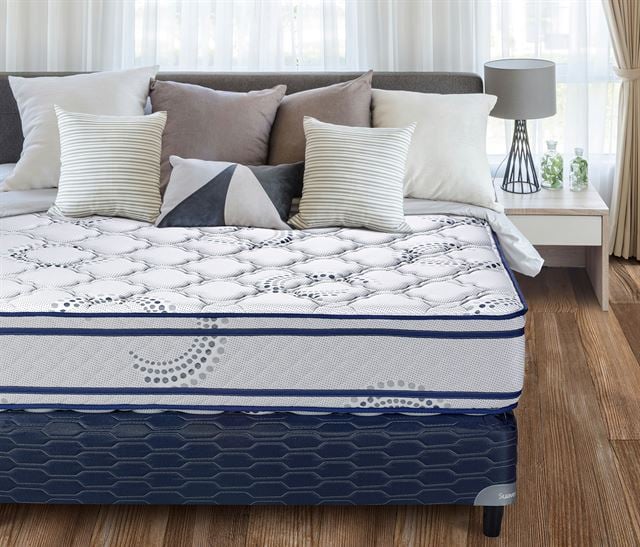
The Casper Original’s 10-year warranty covers indentation exceeding 1 inch, foam splitting, and cover defects, while explicitly excluding normal softening. That’s a narrower, more falsifiable promise than either of the other two: a buyer can measure a 1-inch indentation with a tape measure, which isn’t true of “abnormal wear or tear” or an unscoped guarantee. A defined threshold cuts both ways, though — it also tells a buyer exactly how much sagging the company has pre-decided is acceptable before the warranty even applies.
The mattress’s 100-night trial is less generous than it sounds, too: the first 30 nights are a mandatory break-in period during which a return can’t even be requested, leaving roughly 70 nights of real evaluation time. Mattress Clarity notes heavier side sleepers around 230 pounds or more can bottom out, with possible sagging in 7 to 10 years — inside the warranty’s own 10-year window, which is worth knowing given the warranty’s 1-inch indentation threshold. Casper itself has changed hands twice since its February 2020 IPO: taken private by Durational Capital Management in a deal completed January 2022, then acquired by Carpenter Co., a polyurethane foam manufacturer, in a deal announced November 2024. Casper now operates as a Carpenter Co. subsidiary — worth knowing for anyone relying on a 10-year promise from the company that sold them the mattress, since the entity backing that promise today isn’t the one that wrote it.
What a defined threshold buys that vague language doesn’t
Warranty length is the number every retailer puts in the marketing copy, but it’s the least informative part of the document. Le Creuset’s lifetime warranty is undercut by exclusion language broad enough to cover almost any failure mode a customer might actually experience. OXO’s unlimited-duration guarantee has never had to specify what “better” means in a dispute, because the failure it’s best documented against — the jamming button — is cheap enough to just replace instead of contest. Casper’s 10-year term is the shortest of the three in years, but it’s the only one written around a number a customer could actually point to and say the product failed to meet.
None of this means Casper’s warranty is the best deal, or that Le Creuset and OXO are worse products — the Le Creuset still earned America’s Test Kitchen’s top mark, and OXO’s failure is cheap to work around. It means that a shopper comparing warranties by length alone is comparing the wrong thing; the exclusion list and the threshold definition tell you what the warranty is actually for.
- Le Creuset: limited lifetime warranty, excludes “neglect, abnormal wear or tear, overheating,” or non-instructed use
- OXO: “Better Guarantee,” no fixed time period stated
- Casper: 10-year warranty, covers indentation over 1 inch, foam splitting, and cover defects; excludes normal softening
Sources: Le Creuset · Tasting Table · OXO · iFixit · Casper
Articles on Read Vault are researched and written by the site’s editorial team.