Coway Delisted Its Best-Known Purifier, and It’s the Costliest One to Run
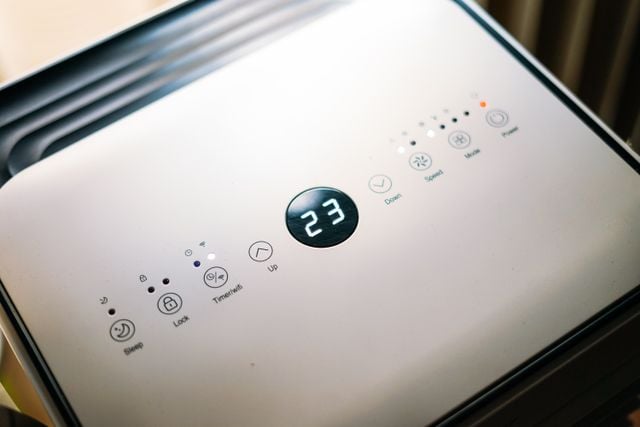
The AP-1512HH is gone from Coway's own US site, and HouseFresh measured $83.64 a year in electricity at top speed — the most of any purifier it has tested.
The Coway Airmega AP-1512HH is still sold everywhere from Amazon to Home Depot, at prices ranging from $151.99 to $239.99, but it no longer appears in the current lineup on Coway’s own corporate US site, which now promotes rental-subscription purifier models instead. The unit carries an AHAM-verified dust CADR of 247.7 CFM, one of the stronger scores at its price point, but HouseFresh’s electricity testing measured $83.64 a year in running cost at top speed — the most power-hungry purifier the outlet has tested. Both facts belong ahead of anything about filters or noise.
Key facts
- Price: $239.99 common listing; Consumer Reports lists $219.99; seen as low as $151.99
- AHAM-verified CADR: 247.7 CFM dust, 233.6 CFM smoke, 232.2 CFM pollen
- HouseFresh-measured electricity: $83.64/year at top speed, the highest of any purifier it has tested
- Filters: carbon pre-filter every 6 months, HEPA every 12; replacement set $54.99 at Home Depot
- No longer listed on Coway’s own US corporate site, which now features rental-subscription models
Still at Retail, Missing From Coway’s Own Site
Coway’s US corporate site, coway-usa.com, has moved to promoting rental-subscription air purifier models and does not include the AP-1512HH in its current lineup. That is not the same as the product being discontinued: it remains widely available through third-party retail, with prices ranging from a common $239.99 listing down to $151.99 in some listings, and Consumer Reports lists it at $219.99. A manufacturer stepping back from a product on its own storefront while that product keeps selling through other channels is the kind of detail a shopper researching only the retail listing would never see. For a shopper comparing options only on Amazon or at Home Depot, none of this shows up — the listing looks like any other current product.
AHAM-Verified Numbers That Still Hold Up
Clean air delivery rate, or CADR, measures how many cubic feet of filtered air a purifier delivers per minute for a given contaminant; a higher number means faster clearing of a room of a given size, and AHAM verification means the figure was tested by the industry body rather than self-reported by the manufacturer alone. The Association of Home Appliance Manufacturers verified the AP-1512HH’s clean air delivery rate at the figures below. Coway claims coverage of 361 square feet at 4.8 air changes per hour, which works out to roughly one full air change every 12 to 13 minutes in a room that size — a reasonable turnover rate for a mid-size bedroom or living room.
- Dust CADR: 247.7 CFM
- Smoke CADR: 233.6 CFM
- Pollen CADR: 232.2 CFM
HouseFresh’s $83.64 a Year, Against CR’s $59 Estimate
Consumer Reports estimates the AP-1512HH costs about 59 dollars a year in electricity and 43 dollars a year in filters. HouseFresh’s own testing measured 83.64 dollars a year in electricity when the unit runs continuously at top speed, and the outlet called it the most power-hungry purifier it has tested. The gap between the two figures likely comes down to what speed each outlet assumed for a year of typical use — but AHAM’s CADR ratings, the numbers Coway advertises, are themselves measured at high fan speed, so the top-speed electricity figure is the one that matches the performance being marketed.
Filter costs stack on top of that. The carbon pre-filter is rated for six months and the True HEPA filter for twelve, and a replacement set runs 54.99 dollars at Home Depot. Over the twelve-month cycle before the HEPA filter needs replacing, the carbon pre-filter will already be due for its own swap at the six-month mark, meaning owners buying only what’s needed still work on two different clocks.
The Ionizer Is Doing Real Work, and Some Owners Turn It Off
An ionizer works by electrically charging airborne particles so they clump together and fall out of the air faster, a mechanism separate from HEPA filtration itself. With its ionizer switched off, the AP-1512HH took three minutes longer to clean the same test room to the same standard. That means the performance figures Coway and reviewers publish lean in part on a feature that some owners disable specifically because ozone is a known byproduct of some ionization technologies, and that is the concern driving those owners to switch it off in the first place.
Odor control is a related soft spot: the unit uses impregnated-fabric carbon rather than pelleted carbon, which is generally the weaker of the two at absorbing smells, and Consumer Reports separately notes it performs less effectively at low fan speed than at high. Both weaknesses point the same direction: the AP-1512HH’s advertised numbers depend on running it at settings and with features that not every owner will choose to keep on.
Sixty Decibels at the Speed That Delivers the Rated CADR
HouseFresh measured 60.1 dB at the AP-1512HH’s maximum setting — loud enough to be intrusive in a bedroom overnight. That noise level and the 83.64-dollar electricity figure both apply at the same setting: the top speed needed to actually reach the CADR numbers on the spec sheet. Running it quieter and cheaper means accepting weaker real-world performance, a trade-off the spec sheet does not spell out.
The Real Annual Cost Behind a 151-Dollar Listing
At its lowest observed retail price of 151.99 dollars, the AP-1512HH still looks competitive against newer purifiers with similar CADR ratings. That price does not include HouseFresh’s 83.64-dollar electricity figure or Consumer Reports’ 43-dollar annual filter estimate, which together add roughly 125 dollars a year to keep the unit running at the speed its own CADR numbers assume — on a model its manufacturer no longer lists on its own US site. Over three years, that running cost alone adds up to roughly 375 dollars on top of whatever the unit was bought for, which puts the true multi-year cost of the cheapest listing closer to 525 dollars than to 152. None of that erases the AHAM-verified CADR scores that make the unit worth considering in the first place; it just means the sticker price is not the full price, and a buyer comparing it against a newer purifier on price alone is comparing incomplete numbers.
Sources: HouseFresh · Consumer Reports · Coway Mighty product page · Coway USA
Articles on Read Vault are researched and written by the site’s editorial team.