The Only Real Air Purifier in This Lineup, and What Actually Clears the Air
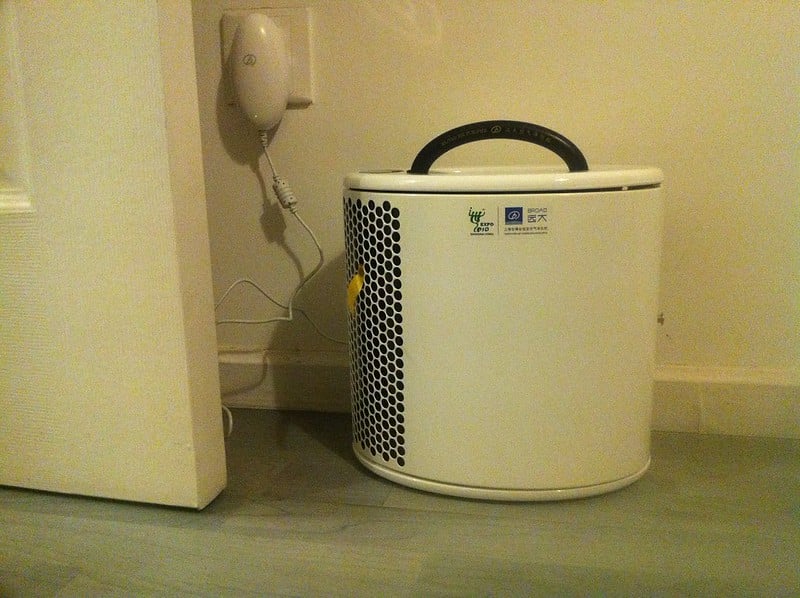
Of fourteen products in this roster, exactly one changes indoor air quality. Here is what the Coway Airmega's CADR numbers mean, what it costs to run, and the one settled candle fact.
Search this roster for anything that measurably changes the air inside a home and one product qualifies: the Coway Airmega AP-1512HH. The other thirteen items are furniture, bedding, cookware, storage and lighting — genuinely useful in their categories, but none of them filter, ventilate, or otherwise touch what is suspended in a room’s air. That is worth saying plainly rather than stretching a stray fact about a candle or a bulb into an air-quality argument. What follows covers the Coway’s actual filtration numbers, its real running cost, and the one candle-related claim in the historical record that is fully settled rather than merely marketed.
Key facts
- AHAM-verified CADR: dust 247.7, smoke 233.6, pollen 232.2 CFM
- Coway claims coverage of 361 sq ft at 4.8 air changes per hour
- Consumer Reports estimates $43/year in filters plus $59/year in electricity; HouseFresh measured $83.64/year at top speed alone
- HouseFresh measured 60.1 dB at maximum speed and called it the most power-hungry purifier it has tested
- CPSC banned lead-cored candle wicks in 2003, following a 2001 EPA report on indoor lead levels
What Actually Moves Indoor Air Quality
Indoor air quality changes through a small number of real mechanisms: filtering particulate matter out of circulating air, removing the source of a pollutant, or ventilating a space with outside air. Marketing copy stretches the phrase to cover almost anything with a plug or a scent, but only the first of those has independently verified numbers behind it in this roster, and only one product supplies them.
That absence is itself useful information for a reader scanning this roster for an air-quality fix: a duvet, a rug or a smart bulb can make a room feel better, but none of them change what is actually suspended in the air being breathed. Only the purifier does, which is why this piece treats it as a single deep look rather than a ranked list padded out to meet a quota.
- Mechanical filtration, measured independently through CADR testing
- Source control — removing what is polluting the air rather than masking it
- Ventilation, which nothing in this roster provides
The AHAM-Verified Numbers Behind the Coway Airmega
The Coway Airmega AP-1512HH carries AHAM-verified Clean Air Delivery Rate scores of 247.7 for dust, 233.6 for smoke and 232.2 for pollen, measured in cubic feet per minute. Coway’s own claim built on those numbers is coverage of 361 square feet at 4.8 air changes per hour — a specific, checkable figure rather than a vague ‘great for large rooms’ line.
Coway frames that 4.8 air-changes-per-hour rate as applying at 361 square feet specifically, which implies the number drops as a room gets larger — worth checking against an actual room’s footprint rather than assuming identical performance in a 200-square-foot bedroom and a 500-square-foot open-plan living room.
Those figures are also the reason to treat this as a one-item category rather than force a runner-up. Nothing else in this lineup — not the bulbs, not the bin, not the containers — has a CADR score, because none of them are designed to move or clean room air in the first place.
The Running Cost Is Bigger Than the Sticker Price Suggests
At $239.99 list (Consumer Reports lists it at $219.99, and it has been seen as low as $151.99), the Airmega looks like the cheapest way into serious filtration. Consumer Reports estimates ongoing costs at $43 a year in filters and $59 a year in electricity. HouseFresh measured higher: $83.64 a year in electricity alone at top speed, and called the AP-1512HH the most power-hungry purifier it has tested.
The gap between the $239.99 list price and the $151.99 low sighting matters for a running-cost comparison: at the lower purchase price, filters and electricity make up a larger share of total three-year ownership cost than the purchase price does, which is the opposite of how most buyers budget for an appliance.
Replacement filters — a carbon pre-filter good for six months and a True HEPA filter good for twelve — run $54.99 for the set at Home Depot. HouseFresh also measured 60.1 decibels at maximum speed, loud enough that running it at the speed that produces those CADR numbers is not something most owners will want overnight.
The Ionizer Is Doing Some of the Advertised Work
HouseFresh found that with the ionizer switched off, the Airmega took three minutes longer to clean the same test room — meaning the performance numbers Coway advertises lean on a feature some owners turn off over ozone concerns. Consumer Reports separately notes the unit is less effective at low fan speed, and its carbon filter is an impregnated fabric rather than pelleted carbon, which HouseFresh flags as weaker against odors than the alternative.
None of that makes the ionizer a dealbreaker — HouseFresh’s complaint is about honesty in benchmarking, not about the feature causing harm on its own — but a buyer comparing the advertised numbers to their own experience with the ionizer off should expect a real difference, not a marketing rounding error.
Current at Retail, Missing From Coway’s Own Site
The AP-1512HH remains widely stocked at retailers and current as of this check, but it is absent from Coway’s own corporate product lineup, which has shifted toward rental-subscription purifier models instead. That is worth knowing before searching Coway’s site for it directly — the model is real and current, just not one Coway is promoting on its own storefront anymore.
For a buyer, the practical takeaway is to shop it like any other current appliance — check price across a few retailers — rather than treating its absence from Coway’s corporate site as a discontinuation signal.
The One Candle Finding That Is Actually Settled
This roster does not include a candle — a soy candle set once listed here under the name ‘Yankee-Free Soy Candle Set’ does not exist as a real product, by any brand, and should not be confused with the actual Yankee Candle company. But indoor air quality coverage keeps circling back to candles, so it is worth being precise about what is proven. The CPSC banned candles made with lead-cored wicks in 2003 (Federal Register 68 FR 19071, April 18, 2003), a rule that followed a 2001 EPA report finding that lead-core-wick candles could push indoor lead levels above the agency’s recommended thresholds. That is a specific, dated finding, not a blanket claim.
Everything softer stays genuinely unresolved: the National Candle Association attributes soot mainly to wick length and flame disturbance rather than wax type, and the broader literature on health risk from scented candles remains inconclusive despite the popularity of ‘phthalate-free’ marketing. A buyer who wants both clean air and a scented room is, in effect, shopping two different questions — one with an independently measured answer, and one that no amount of label language actually settles.
Sources: Consumer Reports · HouseFresh · Coway · CPSC · EPA
Articles on Read Vault are researched and written by the site’s editorial team.