Lifetime Warranty, One-Year Battery: What Stanley and Apple Actually Promise
An AirTag 4-Pack and a Stanley Quencher aren't alternatives. But both make a promise about how long they last, and the promises aren't equal.
Apple’s AirTag 4-Pack and the Stanley Quencher H2.0 show up together in gift guides, but nobody actually chooses between a Bluetooth tracker and a 40-ounce tumbler. They don’t solve the same problem, so this isn’t a buying-guide comparison. What they share is a question worth asking about any purchase: what does the company actually promise once you’ve paid, and what wears out no matter what they promise? Stanley has made a specific, testable warranty commitment tied to a real defect. Apple’s AirTag runs on a battery with a fixed, foreseeable life. Here is what each promise is actually worth.
What Stanley promised when the lead question came up
In January 2024, parent company Pacific Market International confirmed that the Quencher’s base uses what it called an industry standard pellet to seal the vacuum insulation that includes some lead. PMI said the lead sits under a layer of stainless steel, is not accessible to a user under normal conditions, and committed to a lifetime-warranty replacement if a Quencher’s base cap ever comes off. That is a specific, checkable promise: not we stand behind our products as a slogan, but a named failure mode with a named remedy attached to it.
A class action over the lead disclosure was filed 1 February 2024 in LA County Superior Court. It is worth being precise about a separate incident, because the two get confused: Stanley’s December 2024 CPSC recall of roughly 2.6 million units covered Switchback and Trigger Action travel mugs, not the Quencher. Those mugs’ lids could shrink after repeated heat and torque and detach, and the recall logged 91 lid-detachment reports and 38 burn injuries worldwide; a May 2025 proposed class action argues the lid-only replacement remedy was not adequate. None of that touches the Quencher’s own base-seal warranty, and the Quencher itself has not been recalled.
A battery you will replace, on a schedule Apple doesn’t hide
AirTag 2 runs on a CR2032 coin cell that Apple rates at roughly a year before it needs swapping. That’s a fixed, recurring cost built into owning four of them, not a defect anyone could warranty against. Tom’s Guide’s side-by-side testing found the 2nd-generation UWB chip and Precision Finding held a connection out to roughly 74 feet, against about 50 feet for the original AirTag – a real improvement in the thing an AirTag is actually for. But the battery clock runs on the same schedule regardless of how far it can reach: there is no lifetime promise to make about a part that is designed to be swapped every year.
AirTag also carries an IP67 rating, so ordinary water and dust exposure is not the failure point most owners will hit. What Apple has committed real engineering to instead is misuse: unwanted-tracker alerts on iPhone, a standalone Android detection app, an audible chirp after prolonged separation from its owner, and, in the 2nd-generation hardware, cross-platform alerts and Bluetooth identifiers that rotate more frequently.
Why those protections still draw lawsuits
AppleInsider reported in August 2026 that a group of Michigan women is suing Apple, alleging its anti-stalking protections have continued to fail in practice. That is a fair thing to weigh against the feature list: Apple’s protections are reactive by design. An unwanted-tracker alert fires after an AirTag has been placed and has travelled with someone for a while, not before. That is a real limitation of the category, not a defect Apple can fix with a battery swap or a warranty claim.
Two different kinds of durability, two different prices
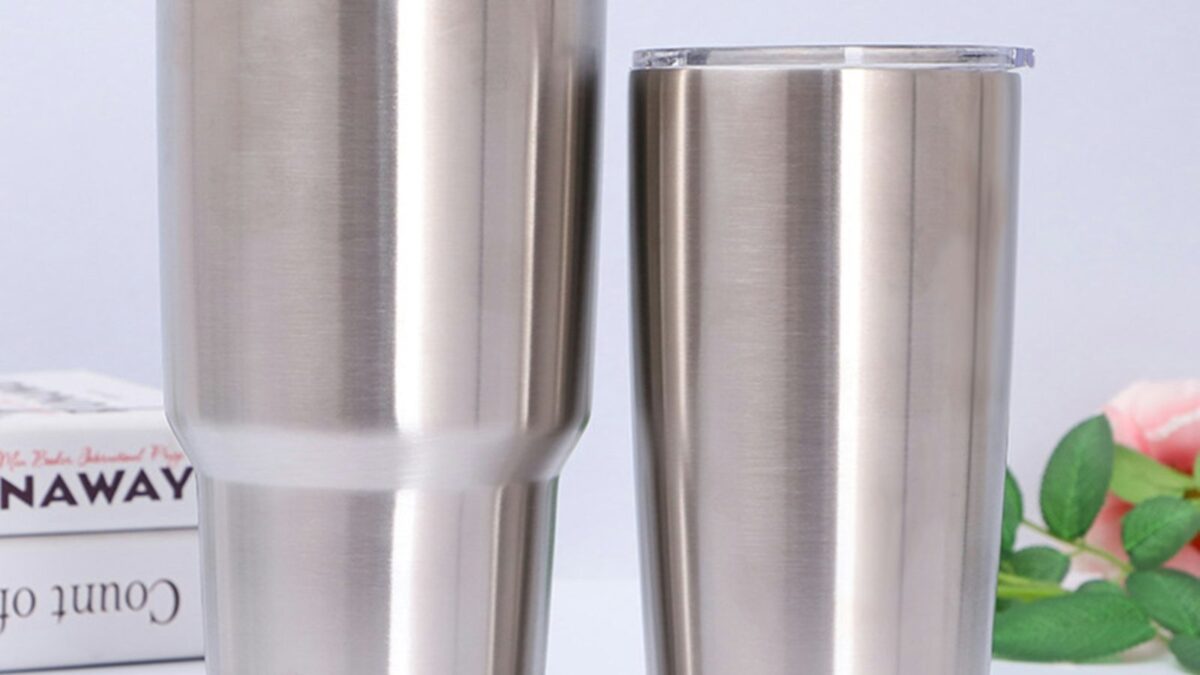
The Quencher is 90 percent recycled 18/8 stainless steel, double-wall vacuum insulated, and dishwasher safe, at $45 for the 40-ounce size. There is no battery, no chip, and nothing inside it to go obsolete – its one identified failure mode is the base seal Stanley already wrote a specific warranty for. The AirTag 4-pack is $99, and each unit is a sealed electronic device: a battery running down after about a year is not a warranty situation, because it is the design working exactly as intended.
That is the honest comparison. Stanley’s promise covers what happens if a specific part fails. Apple’s product does not need anything to fail before it eventually needs attention, because a coin cell has a shelf life that no warranty extends. Buy the Quencher for a container that, short of the base-seal issue Stanley has already addressed, has nothing scheduled to wear out. Buy the AirTag pack knowing that year one ends with four battery changes, not a warranty claim – and that its stalking protections work after the fact, not before it.
Sources: ClassAction.org · CPSC · Apple · Tom’s Guide · AppleInsider
Articles on Read Vault are researched and written by the site’s editorial team.